Five Homemade Sail Repair and Splicing Tools Cruisers Can Build
Make five shop-built staples, a sheep’s‑foot sailmaker’s knife, wooden and wire‑pulling fids, a seam rubber, a wooden board and a finishing bench, to handle most afloat sail fixes.
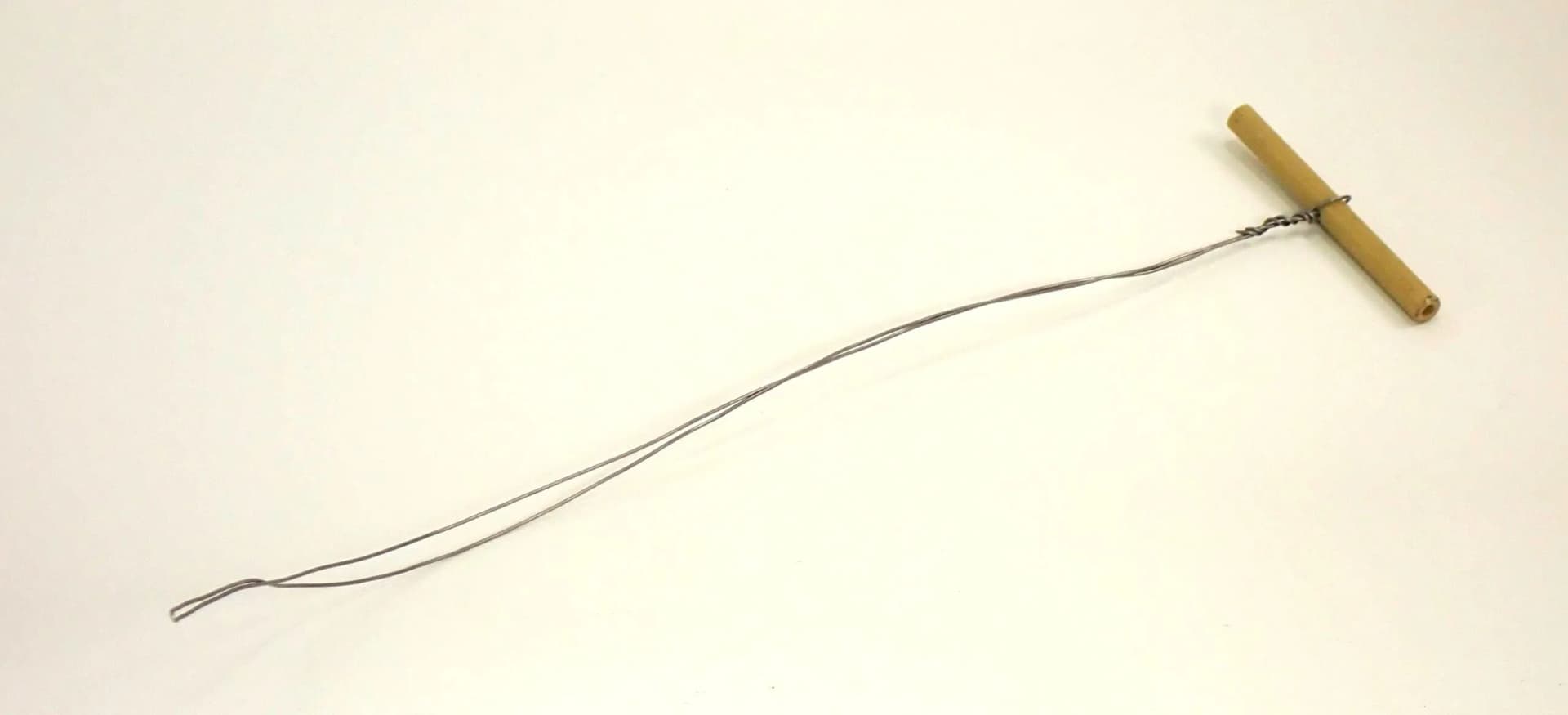
With these DIY sail repair tools at hand, you'll have comfortable, bespoke tools to keep your sails in top condition." That Practical Sailor line is the upside: a handful of shop‑built items will save time and keep you off the sail loft for small repairs. Below are the five homemade tools Practical Sailor recommends, how to make and use them, and when to pair them with modern commercial gear for Dyneema and double‑braid work.
1. Sailmaker’s knife
Practical Sailor lays out a dead‑simple build: "Take a quality kitchen knife that your partner has rejected from the kitchen that has a feel you like. Cut at least half the blade off by scoring with a grinder or a cut‑off wheel and snapping the end off. Reshape the tip to a blunt, sheep’s foot profile, being careful to use a light touch and dipping it in water every few seconds to prevent overheating. Sharpen to a razor’s edge." The result is a short, stiff blade that gives better leverage for cutting line, tapering strands, and ripping seams, the shorter blade “is generally handier for ripping seams (the tip does not catch).” Practical note: a folding knife “doesn’t have the same feel,” so make several fixed‑blade versions and keep one in the workshop and one in the tool bag.
2. Wire pulling fid (and homemade wooden fids)
Practical Sailor counts a wire pulling fid among the five essentials and also notes: "I also have homemade wooden fids (easily made on a drill press from hardwood dowels and sandpaper) and Swedish fids for splicing 3‑strand." A basic wire‑pulling fid built from hardwood will let you feed small wire and cores through sleeves, splice 3‑strand, and dress up eyes without buying expensive gear. For modern ropes and HMPE you’ll want to augment DIY fids with sized commercial fids: Sailingchandlery lists a Selma 4mm fid and a Selma 5.5mm fid ("The same as number #2 but this version supports ropes up to 5mm thick"), and West Coast Sailing recommends "fids in various sizes" as part of a splicing toolkit. Bottom line: make wooden fids for common 3‑strand tasks, but carry a 4mm or 5.5mm Selma fid (or equivalent) when you plan to splice Dyneema or 2–10mm double‑braid control lines.
3. Seam rubber
“Mostly I use this for rubbing down self‑adhesive sail numbers and sail repair tape," Practical Sailor says, and gives construction specifics: "Make it from a hard, fine‑grained wood and sand very smooth, but apply no finish. I used walnut." A seam rubber is a small, low‑tech finishing tool: use the smooth hardwood face to burnish tape edges, force out air under patches, and press adhesive numbers or doubling patches firmly into place. Because you apply force and abrasion, choose a hard wood (walnut as Practical Sailor does), sand to satin smoothness, and leave it unfinished so the rubber bites the fabric instead of sliding.
4. Wooden board
Practical Sailor includes a "wooden board" as one of the five shop‑built items; its virtue is plain and practical. A flat, straight wooden board gives you a backing for sewing patches, holding seams square while you stitch, and a surface to press tape against, Cmsails’ "Sew a Patch" how‑to even starts by cutting a patch 2–3 cm larger than the tear, rounding corners, and using "double‑sided tape to hold patch in place" before stitching. Keep a board sized to your boat’s sails (something around 600–900 mm long and 200–300 mm wide is typical in small lofts) so you can clamp a patch or drape a sail over it for controlled hand‑sewing or burnishing with the seam rubber. Treat the board as a sacrificial surface: stain or paint sparingly only if you want to protect it from adhesive transfer.
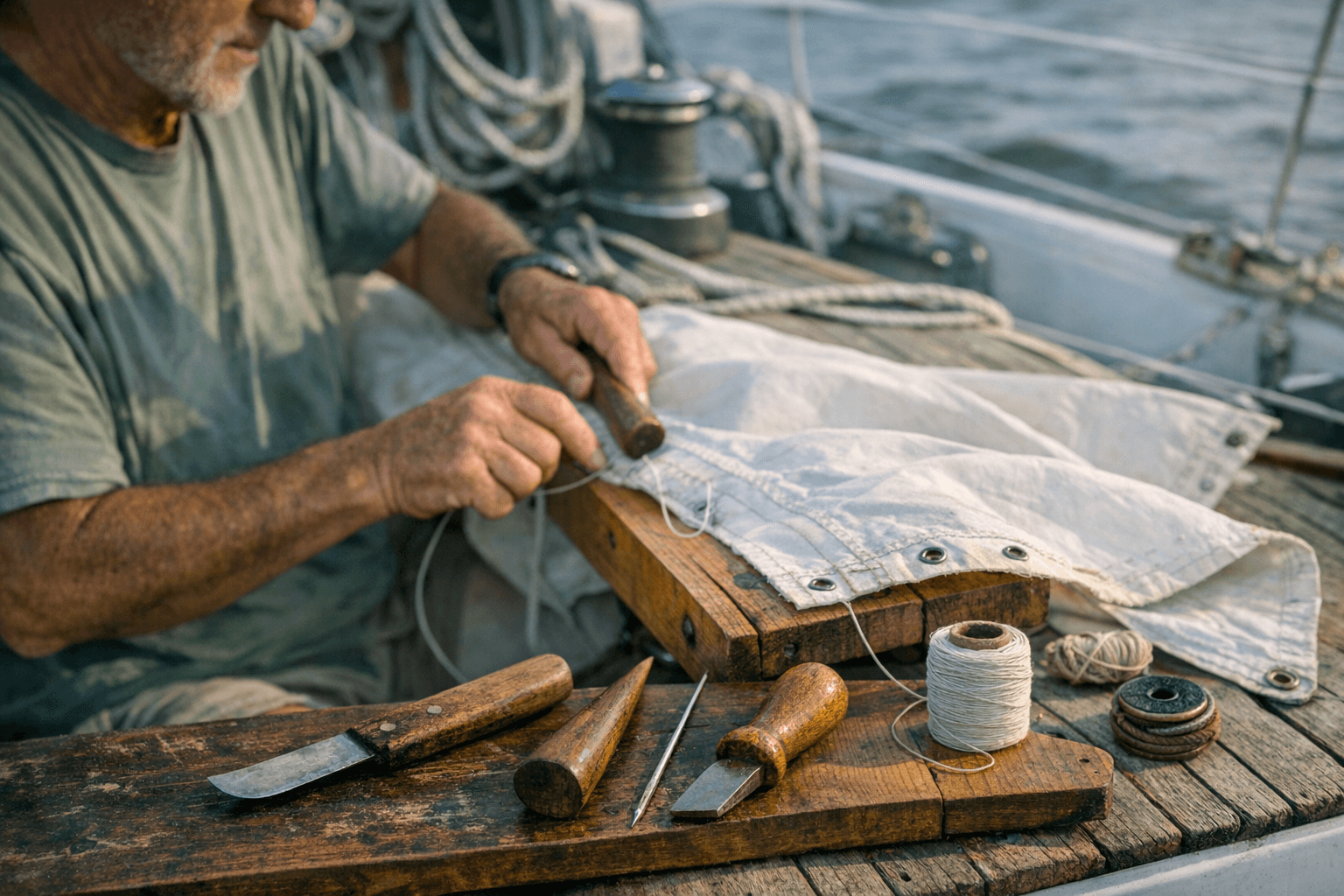
5. Sailmakers’ finishing bench
"This finishing bench is a rough copy of one I saw in a sailmaker’s workshop. It is both a piece of furniture and an efficient tool for periodic sail maintenance. (Photo/ Drew Frye)" Practical Sailor’s finishing bench is literally workshop ergonomics: a low, sturdy bench with a clamped surface and edge to hold panels and allow long, uninterrupted seam work. You won’t find step‑by‑step plans in the excerpt, but the concept is clear, build a bench sized to your lofting needs and stash the shop‑built knife, seam rubber, and fids nearby. The bench doubles as storage and a controlled place to lay out fabric scraps, grommet kits, and the items from a "Sample Onboard Sail Repair Kit (Cruising‑Ready)", Cmsails lists those consumables (waxed sail thread, sail needles #13–16, heavy‑duty scissors, two rolls of Dacron and spinnaker repair tape, fabric scraps, hot knife, double‑sided tape, etc.) that you’ll use at the bench.
Putting these five homemade tools to work, and when to buy commercial gear Practical Sailor sums the mindset: “I doubt there is a sailmaker out there who doesn’t have a few shop‑built tools in daily use.” Those bespoke tools handle most canvas and polyester repairs: use the sailmaker’s knife for shaping and seam ripping, wooden fids for 3‑strand splices, the seam rubber to seat tape, the board as a backing, and the finishing bench for sustained work. But "new textiles require new tools." West Coast Sailing warns that HMPE (Dyneema/Spectra) is "strong, low stretch, and light weight" and often needs different splicing tools; Sailingchandlery’s D splicer scissors will "glide through 12 strand dyneema" and Selma fids (4mm, 5.5mm) are sized to support ropes up to 5 mm thick. For sealing synthetic ends, Cmsails and Sailingchandlery recommend a hot knife or gas‑powered rope knife, these melt and seal as they cut.
Practical takeaway and next steps Build the five tools Practical Sailor highlights, follow the knife‑reshaping steps, turn a few hardwood fids on a drill press, sand a walnut seam rubber smooth, keep a stiff wooden board, and fashion a low finishing bench along the lines of the Drew Frye photo, and stock the on‑board kit Cmsails recommends (one hot knife, sail needles #13–16, waxed thread, repair tape, fabric scraps, grommet kit, double‑sided tape, zip ties, waterproof box). Pair handmade tools with a Selma fid and D splicer scissors when you work on Dyneema or double‑braid. With that combination you’ll handle quick tape jobs that "can often last surprisingly long if well done," and you’ll be prepared to do stronger sewn patches following the exact "Cut a patch 2–3 cm larger… Use double‑sided tape… Stitch around the edges" workflow. Build these five, add a few modern splicing purchases, and you’ll be set to keep sails serviceable both at anchor and in the boatyard.
Know something we missed? Have a correction or additional information?
Submit a Tip

