Five more states join antitrust suit to block Nexstar Tegna merger
Five more states joined the effort to stop Nexstar’s $6.2 billion Tegna takeover, turning the case into a bipartisan fight over local TV news and higher bills.
The fight over Nexstar’s $6.2 billion bid for Tegna has become a national test of how much local TV consolidation is too much. Beyond Wall Street, the case goes to newsroom staffing, advertising power, retransmission fees and whether viewers in dozens of markets will still hear a range of local voices or only the version produced by one giant broadcaster.
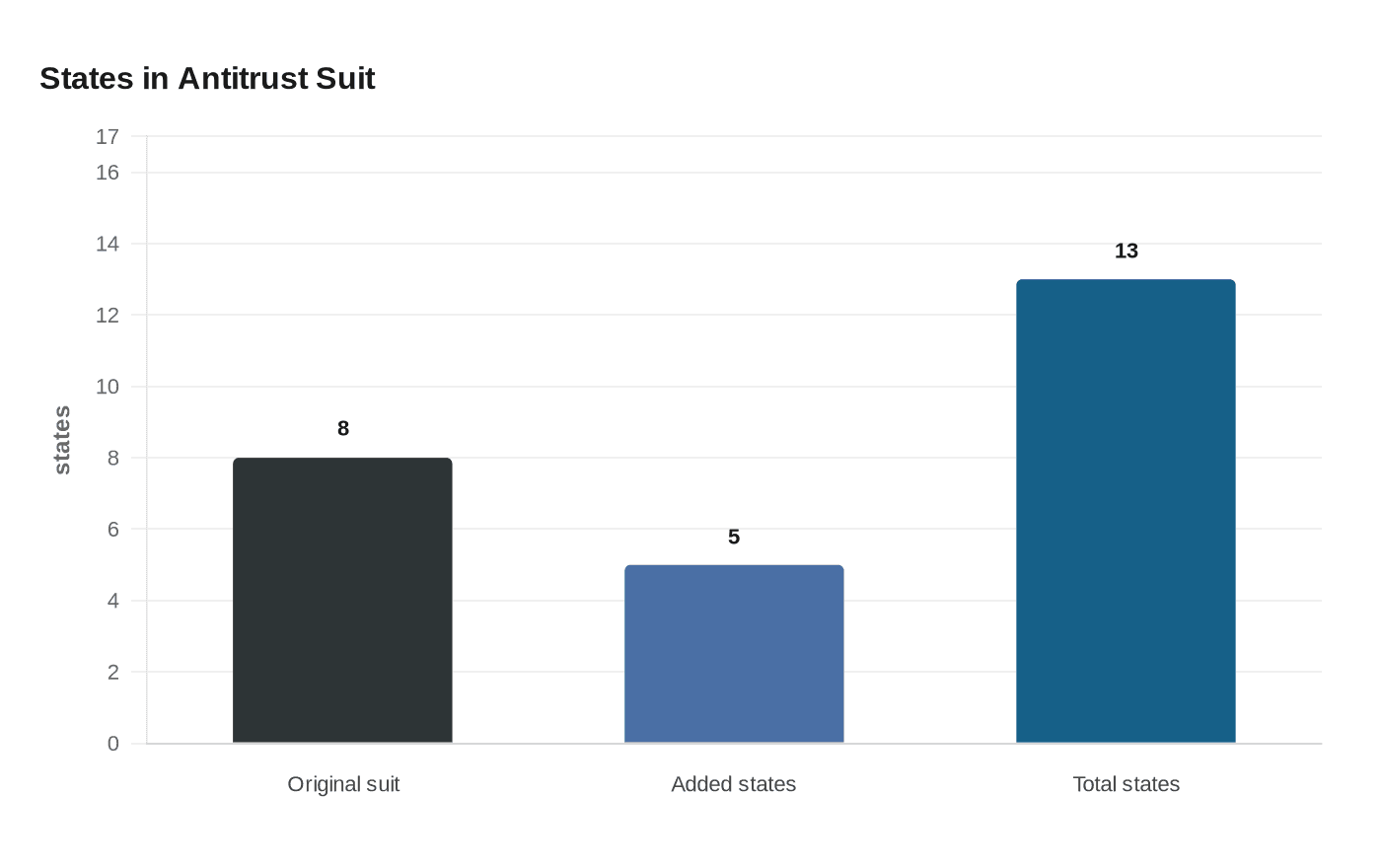
Massachusetts, Vermont, Indiana, Kansas and Pennsylvania joined the federal antitrust lawsuit, expanding the coalition to 13 states and making it bipartisan. Republican attorneys general Dave Sunday of Pennsylvania, Kris Kobach of Kansas and Todd Rokita of Indiana signed on alongside Democratic-led states. The amended complaint filed April 30 says the merger would create the largest broadcast station group in the country, with more than 200 stations reaching about 80% of U.S. television households.
The states argue that size would not simply produce efficiencies. It would reduce competition in local markets where Nexstar and Tegna now go head-to-head, giving the combined company more leverage over ad sales and retransmission fees paid by cable and satellite providers. The states say those costs could filter down to consumers in the form of higher bills, while newsroom cuts would reduce the quality and diversity of local news.
California Attorney General Rob Bonta led the original eight-state case filed March 18 in U.S. District Court for the Eastern District of California, one day before the Justice Department and the Federal Communications Commission approved the transaction. Nexstar closed the deal shortly after getting those approvals, prompting emergency court action from the states and DirecTV.
U.S. District Judge Troy Nunley granted a preliminary injunction on April 17, stopping Nexstar from consolidating operations with Tegna while the litigation continues. The order did not unwind the deal, but it blocked integration of the two companies as the case proceeds. Nexstar has appealed to the Ninth Circuit, where its opening brief is due May 20.
The states say the harm is especially clear in markets where Nexstar and Tegna both own Big Four network affiliates. California officials said the combined company would own half of the Big Four-affiliated stations in the state, including stations in the Sacramento-Stockton-Modesto and San Diego markets. Pennsylvania officials said 31 media markets nationwide would lose competition, including Harrisburg and Scranton/Wilkes-Barre, and argued the deal would reunite stations Nexstar had divested in the 2020 Tribune Media settlement.
Nexstar says the merger would strengthen local stations and support investment in local journalism. The states counter that recent layoffs and station consolidation point in the opposite direction. The broader question now is whether bigger station groups will deliver better local service or simply hollow it out under the banner of scale.
This article was produced by Prism’s automated news system from verified source data, official records, and press releases, then run through automated quality and moderation checks before publishing. The system is built and supervised by the people who set the standards it runs under. Read our full AI policy.
Did this article answer your question?
%3Amax_bytes(150000)%3Astrip_icc()%2FCertificate-of-deposit-2301f2164ceb4e91b100cb92aa6f868a.jpg&w=1920&q=75)