Flipkart expansion, deep discounts pressure India's quick commerce startups
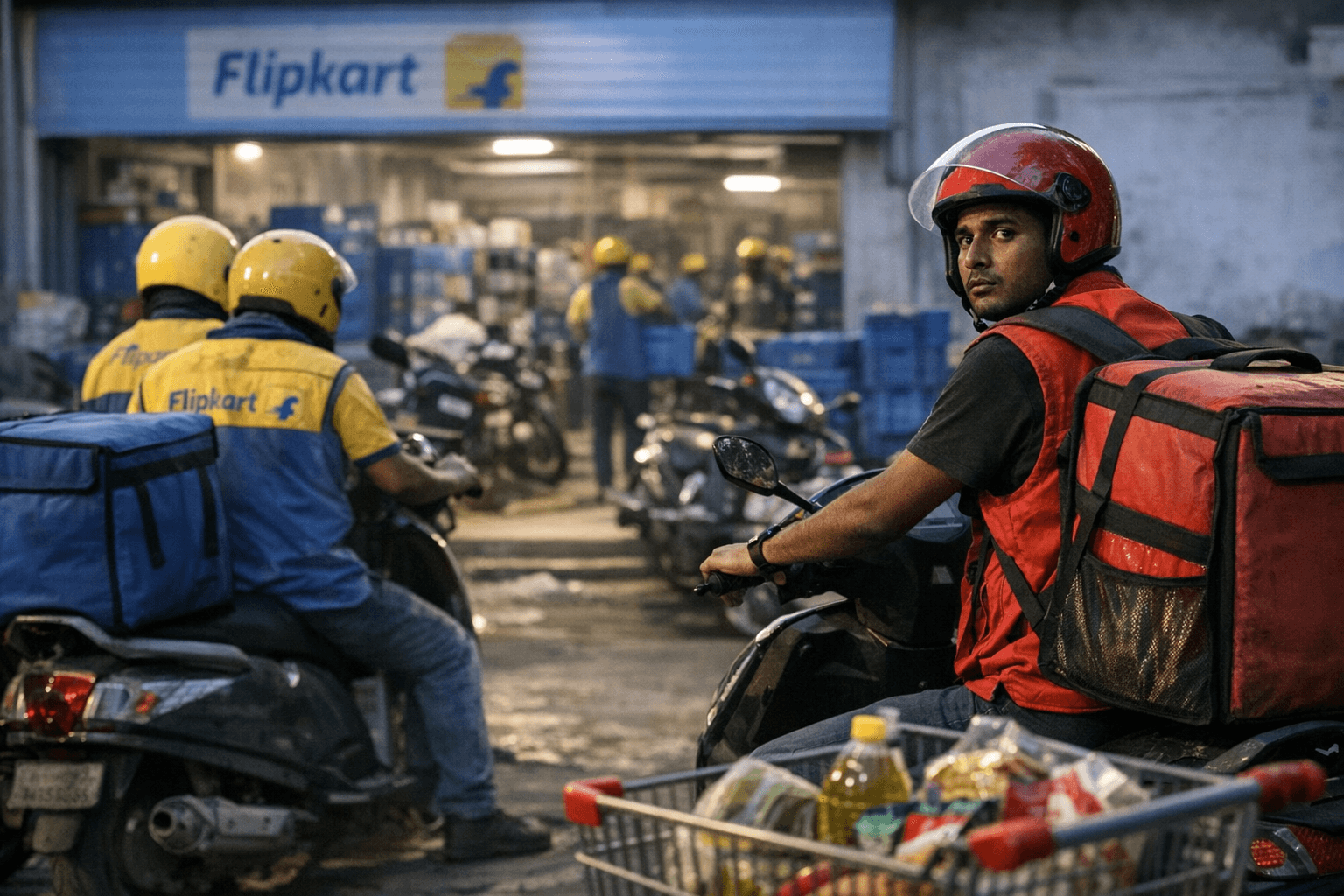
Flipkart Minutes scaled from pockets of Bengaluru in August 2024 to 200+ dark stores by April 2025, and Flipkart now targets 800 dark stores, squeezing smaller quick-commerce rivals.

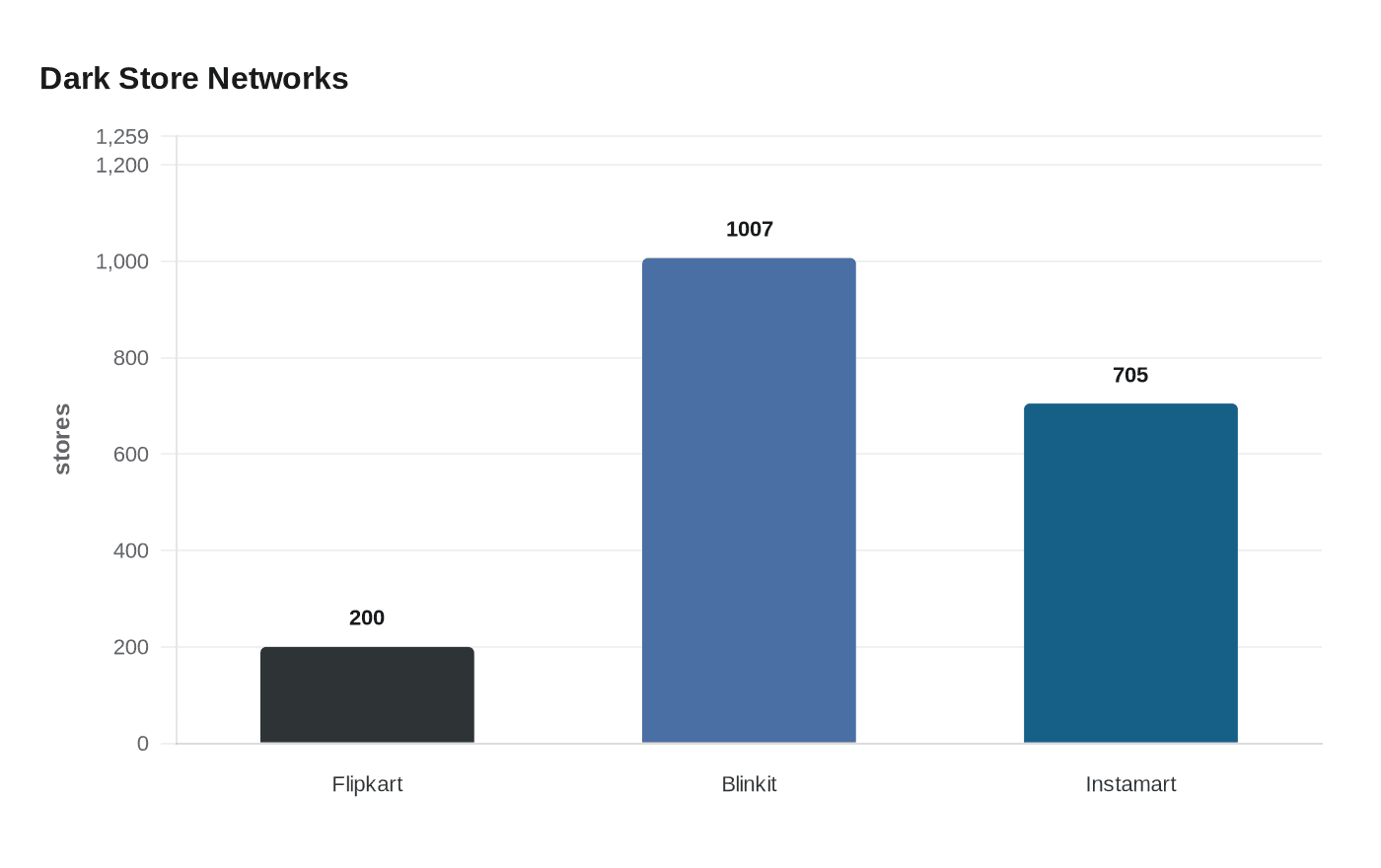
Flipkart’s rapid rollout of Flipkart Minutes has transformed a niche 10–15 minute delivery model into a mainstream competitive front, with the service launching in August 2024 in pockets of Bengaluru and operating more than 200 dark stores across 14 cities by April 2025. Group CEO Kalyan Krishnamurthy said the business started “around nine months back,” grew from roughly 100 stores at launch to close to 300 stores, and was targeting 800 dark stores by end-2025, a scale that shifts the strategic calculus for smaller quick-commerce players.
Amazon has followed suit, moving into Bengaluru with Amazon Now in a beta across three pin codes, setting up about 10-15 dark stores for the initial rollout and waiving some fees as it enters the market. An Amazon spokesperson told reporters, "We will expand the service over the next few months," signaling Amazon’s intent to use discounts and fee waivers to win share in the same urban corridors where Flipkart has been expanding since 2024.
The competitive pressure comes against a backdrop of fast category growth and fragile unit economics. RedSeer estimated quick commerce had reached over $10 billion in GMV and about 30 million monthly transacting users, representing approximately 15 percent of all e-commerce GMV as of its 2025 analysis. At the same time, incumbents already run large dark-store networks: Blinkit had about 1,007 stores at end-December 2023 and Swiggy Instamart about 705, while Blinkit once aimed to scale toward 2,000 stores—figures that illustrate the pace of the dark-store arms race.
Capital intensity is central to the story. A Moneycontrol analysis from December 11, 2025 found Blinkit parent Eternal, Swiggy, and Zepto together held over ₹40,000 crore in cash even after burning nearly ₹9,000 crore across the prior 9–11 months, underscoring how much funding is required for sustained discounting, dark-store buildouts, and delivery subsidies. Flipkart’s financial backing matters here: Walmart is the majority owner and Google invested $350 million as a minority investor in a Walmart-led round reported May 25, 2024, at a valuation near $36 billion, giving Flipkart deeper pockets to sustain losses while scaling Minutes.
That scale enables differentiated tactics. Analysts note Flipkart’s sourcing strength in electronics and smartphones allows aggressive price points on Minutes that standalone startups may struggle to match, intensifying pricing pressure in categories where higher average order values matter. The category’s growth model—dense dark stores, steep promotions and subsidized delivery—creates a tradeoff between lower prices and faster delivery for consumers and longer-term risks including concentrated market power, displacement of small shops, and pressures on labor economics tied to dark-store staffing and courier work.
Regulators and investors are watching those tradeoffs closely: the Ministry of Corporate Affairs approved Zomato’s corporate name change to Eternal Limited effective March 20, 2025, a legal development that matters for market-share reporting, while investors track cash reserves and burn rates across Blinkit parent Eternal, Swiggy, and Zepto. As Flipkart and Amazon press beyond major metros using pricing, logistics and data advantage, the quick-commerce chapter is shifting from expansion to consolidation, with the outcomes for competition, workers and local merchants still to be decided.
This article was produced by Prism’s automated news system from verified source data, official records, and press releases, then run through automated quality and moderation checks before publishing. The system is built and supervised by the people who set the standards it runs under. Read our full AI policy.
Did this article answer your question?

