Florida sues TikTok over child safety violations and underage accounts
Florida has launched the first major enforcement action under its child social-media law, accusing TikTok of letting under-14 users in and misleading parents about online harms.
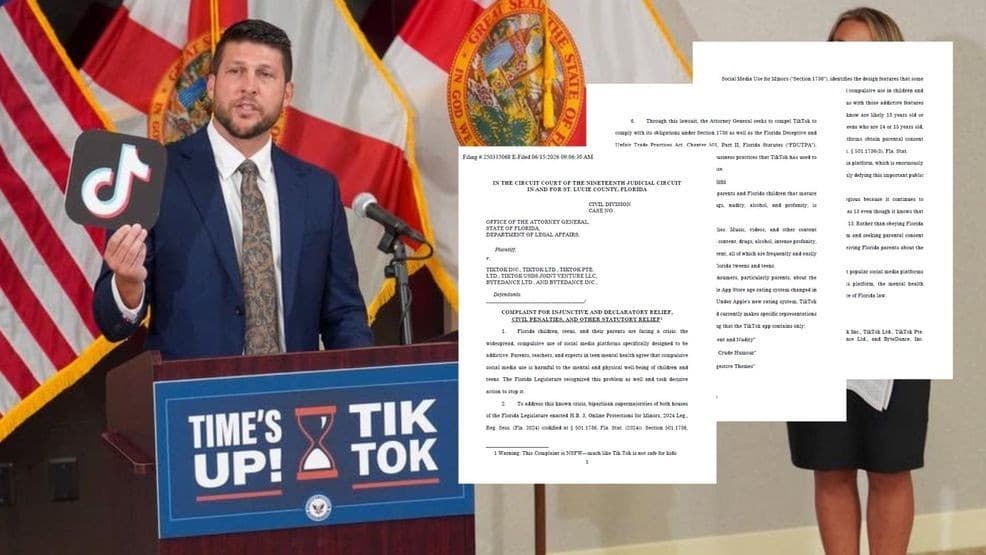
Florida has opened a new front in its fight with Big Tech, accusing TikTok of letting children under 14 create accounts and of misleading parents about the dangers young users face on the platform. The lawsuit, filed in St. Lucie County state court, turns Florida’s child social-media law into a national test of how far states can go in forcing age-based restrictions on one of the world’s largest apps.
Attorney General James Uthmeier, a Republican, said TikTok violated Florida law by allowing underage users onto the platform and by downplaying how much violent or sexual content children could encounter. Uthmeier said TikTok “knowingly deceives parents” and added that Florida has “zero tolerance” for companies that put profit ahead of children’s safety. The state is seeking damages and court-ordered changes that would force TikTok to bring its platform into compliance.
The case is the first major enforcement action under HB 3, the law Governor Ron DeSantis signed on March 25, 2024. The measure bars children under 14 from becoming social-media account holders and requires parental consent for 14- and 15-year-olds. It took effect on January 1, 2025, setting up the legal fight now moving through Florida courts.
TikTok said it has been engaging with Uthmeier’s office, has informed Florida users under 14 that their accounts will be suspended, and is continuing to update its platform to comply with the law. The company also said it is evaluating the complaint and is prepared to defend its record on minor safety. TikTok is owned by ByteDance.

Beyond Florida, the lawsuit lands in the middle of a broader push by states to police social-media harms aimed at children and teens. TikTok already faces lawsuits from more than 25 state attorneys general over claims that the platform is designed to be addictive to young users and contributes to a mental-health crisis among children and teenagers. Florida’s case will likely become a benchmark for whether states can require stricter age screening, stronger monitoring and tighter content controls without running into constitutional challenges over speech and the burdens of verifying users’ ages.
If Florida prevails, other states could lean on the ruling to justify tougher limits on youth access to social platforms. If TikTok succeeds, the decision could slow a fast-growing wave of state efforts to reshape how apps screen minors, deliver content and enforce safety rules.
This article was produced by Prism’s automated news system from verified source data, official records, and press releases, then run through automated quality and moderation checks before publishing. The system is built and supervised by the people who set the standards it runs under. Read our full AI policy.
Know something we missed? Have a correction or additional information?
Submit a Tip

