Flour Choice Shapes Sourdough Bacteria as Kazachstania Dominates Across Starters
Lab research summarized in a science/tech feature on February 27, 2026 found flour choice strongly alters sourdough bacterial communities while the yeast genus Kazachstania dominated across starter types.
Laboratory research summarized in a science and technology feature published February 27, 2026 showed that what you feed a starter matters a lot: the choice of flour was a primary driver of bacterial community composition in sourdough starters. The report distilled controlled lab work that linked different flours to distinct bacterial assemblages, and it positioned that finding as a sharper lever for bakers and mills than previously appreciated.
The same feature made a counterintuitive point about yeast: across the range of starter types sampled in the lab work, a single hardy yeast genus, Kazachstania, tended to dominate. That pattern held even when bacterial profiles varied with flour source, meaning yeast community turnover was far less dramatic than bacterial turnover in those experiments. The persistence of Kazachstania across starters suggests that yeast-driven branding of starter character will be harder to sustain than strategies built around flour-driven bacterial differences.
For bakers who scale small-batch lines or source specialty flours, the February 27, 2026 summary implies a practical change in where to focus quality control. The lab research linked flour inputs directly to bacterial community outcomes, which affects fermentation kinetics and starter stability in ways the report flagged as meaningful for production. If you sell a “rye” or “whole-grain” starter, the underlying bacterial signature tied to that flour may be the real differentiator customers taste more than yeast genus differences.
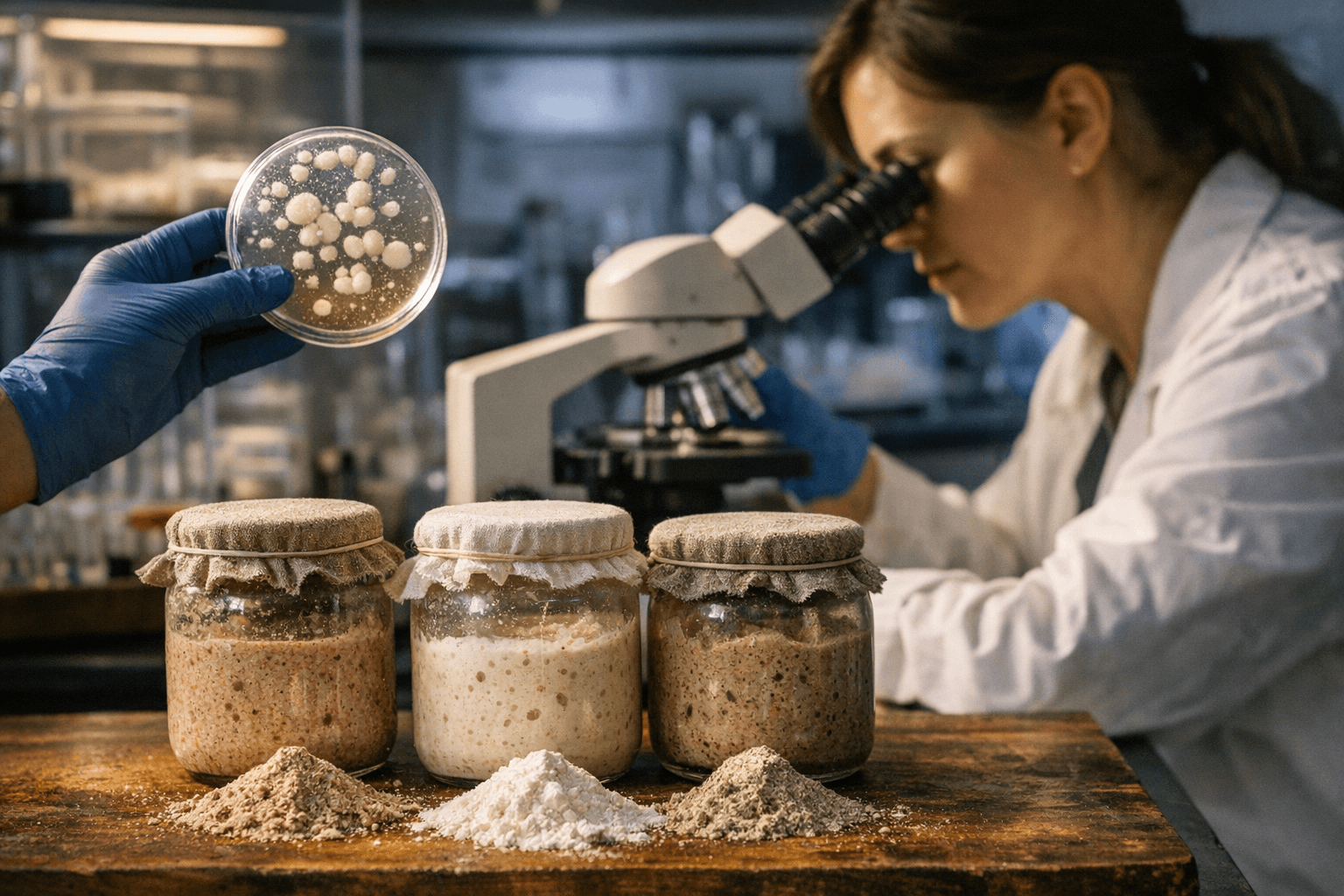
From a miller and product-development perspective the research summarized on February 27, 2026 opens opportunities to tune microbial outcomes by adjusting flour treatment and blends. Because Kazachstania was widespread across starter types in the lab work, mills that want to create microbial variety need to focus on flour chemistry and microbial seeding rather than expecting varied yeast lineages to emerge naturally. That shifts the levers of product design toward sourcing and processing choices.
After reading the February 27, 2026 feature and the underlying laboratory findings, I adjusted my own bench trials: I now run parallel starters with identical hydration and maintenance but different flours to observe the bacterial shifts the study described. The takeaway from the lab work is concrete: flour choice strongly shapes starter bacteria, and Kazachstania’s dominance across starters changes how you should think about starter differentiation and quality control going forward.
Know something we missed? Have a correction or additional information?
Submit a Tip