Folkweave Revives Koraput Weavers With Slow-Fashion Heritage Shirts in Odisha
Folkweave revived Koraput looms, set up a Deula dye centre and brought back over 50 women to handweaving in eight months, now working with 120 women in Rayagada.
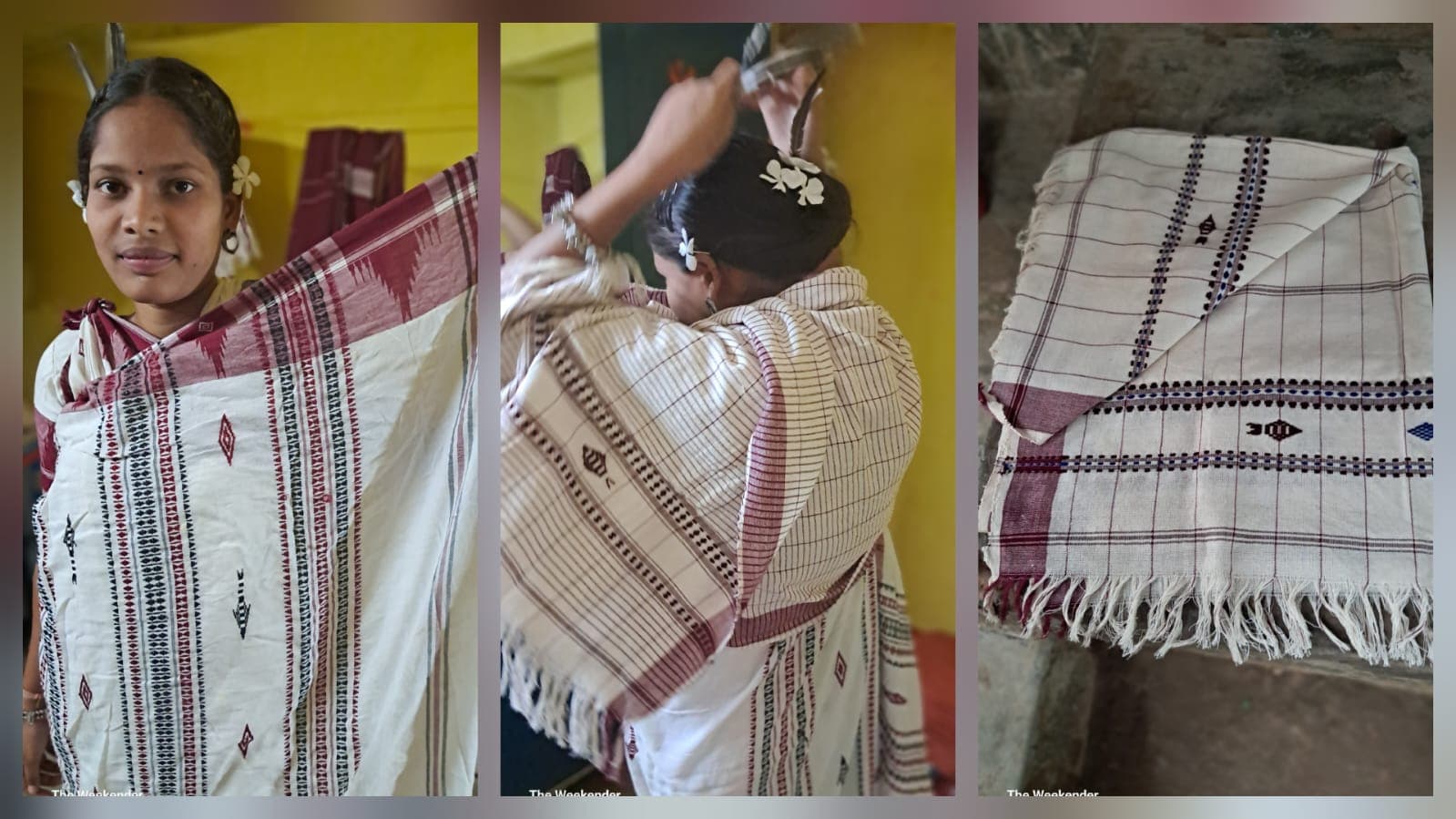
In Koraput, Odisha, Folkweave has restarted looms and reintroduced natural-dye practice so fast that "the changes were visible within months." The program restored traditional tension techniques and pattern logic, documented looms, and reopened markets for Kapadganda / Kapadaganada shawls that once powered village livelihoods.
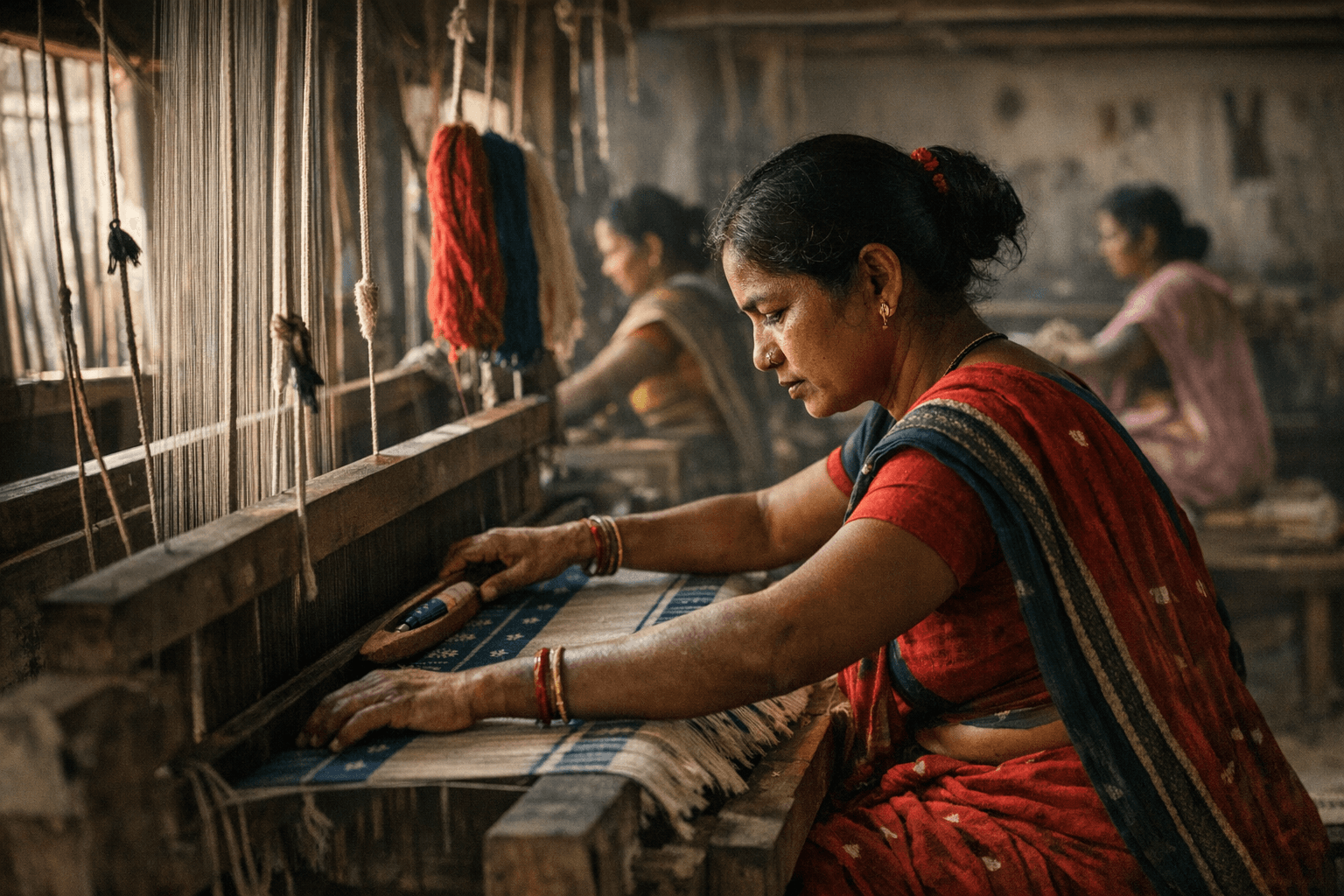
The scale of what’s at stake is stark: fast fashion has, as reported, cut local weaving employment from 9,000 to 400 workers. Folkweave - also written as Folk Weaves in some accounts - set up a natural dye preparation and weaving centre at Deula and used that infrastructure to pull people back into craft work. "In the first eight months alone, over fifty women returned to weaving," VillageSquare reports, and "today, Folkweave is working with 120 women in Rayagada, extending the circle of revival."
Operations are pragmatic and technical. At Deula, artisans relearned indigo vats and alternatives when roots ran short; the Kotpad area's historic reliance on Aal-tree roots has been disrupted by scarcity, so Folk Weaves trained women to use a wider range of natural resources. Where pigments could not be sourced, the initiative shifted carefully to certified azo-free dyes to keep processes non-toxic and safe. Motifs were "gently reinterpreted with the help of design experts to speak to contemporary markets without losing their essence," while teams documented loom tension and pattern logic so pieces can be reproduced at quality and scale.
The economics are measurable. Revived textiles began travelling to exhibitions and government festivals, and the work reports "average margins of around 40 percent made room for fair wages and reinvestment in training." That margin, coupled with new market exposure, has let the program pay artisans more and train the next cohort; many returning weavers "stepp[ed] naturally into the role of mentors for younger artisans."
Cultural depth anchors the product. Folkweave strengthened livelihoods around heritage items such as the Dongria Kondh Kapadaganada shawl, a handwoven textile that received a GI tag in 2024, and kept the palette rooted in local meaning: "off-white bases anchored by reds, greens, and yellows - shades tied to sacrifice, nature and peace in tribal communities," while "for the Gadaba community, indigo continued to hold a sacred place." Dr. Anuradha reports that "women from tribal communities like Dongaria Kondh, Paraja, Durua, and Gadaba are now creating 22 different fabric items using natural dyes derived from their indigenous methods," and that the organization plans to expand product ranges for all age groups and markets.
The work is explicit and measurable: Deula’s dye centre, 50-plus women back at looms within eight months, 120 women active in Rayagada, 22 product types, a 2024 GI tag and reported margins near 40 percent. Slow fashion here is practical economics and heritage preservation, not a trend - "Slow fashion is not a trend here. It is" - and if Deula and the Rayagada network scale as intended, Koraput could genuinely become a hub for eco-friendly textile production rooted in tribal technique and fair pay.
Know something we missed? Have a correction or additional information?
Submit a Tip