Tongbram Bijiyashanti Weaves Loktak Lotus Fiber into Eco-Luxury Silk Empowering Local Women
Tongbram Bijiyashanti turns Loktak lotus stalks into silk-like fabric; after Prime Minister Narendra Modi mentioned her on Mann Ki Baat her stock sold out within 24 hours.
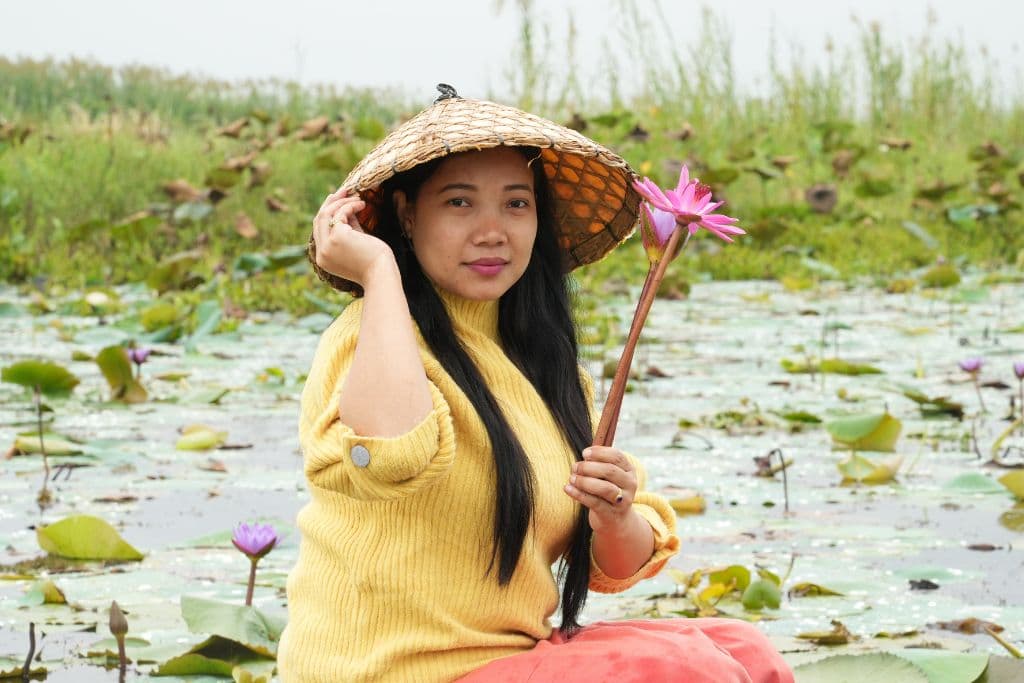
Tongbram Bijiyashanti Devi has built Sanajing Sana Thambal in Thanga village, Bishnupur district, Manipur to do something rare in textile craft: extract fibre from lotus stems on Loktak Lake and handweave it into a silk-like, eco-luxury fabric. The process uses thumb-length pieces of stalk, wooden planks, a spinning wheel and an age-old wooden loom, and the enterprise gained national attention after Prime Minister Narendra Modi mentioned her work on Mann Ki Baat, an event she says "changed my life forever. In less than 24 hours, whatever stock I had was completely sold out, and I was inundated with orders."
Bijiyashanti trained as a botanist in Imphal and first sketched the idea in 2017. She spent two years developing the extraction technique while attending an entrepreneurship training programme organised by the Ministry of Micro, Small & Medium Enterprises. She told reporters, "I understood from my research that the lotus plant has a lot of medicinal values–tea can be made from lotus petals and the stalk is one of the most eco-friendly fibres. It is a naturally soft and breathable fabric and almost wrinkle-free."
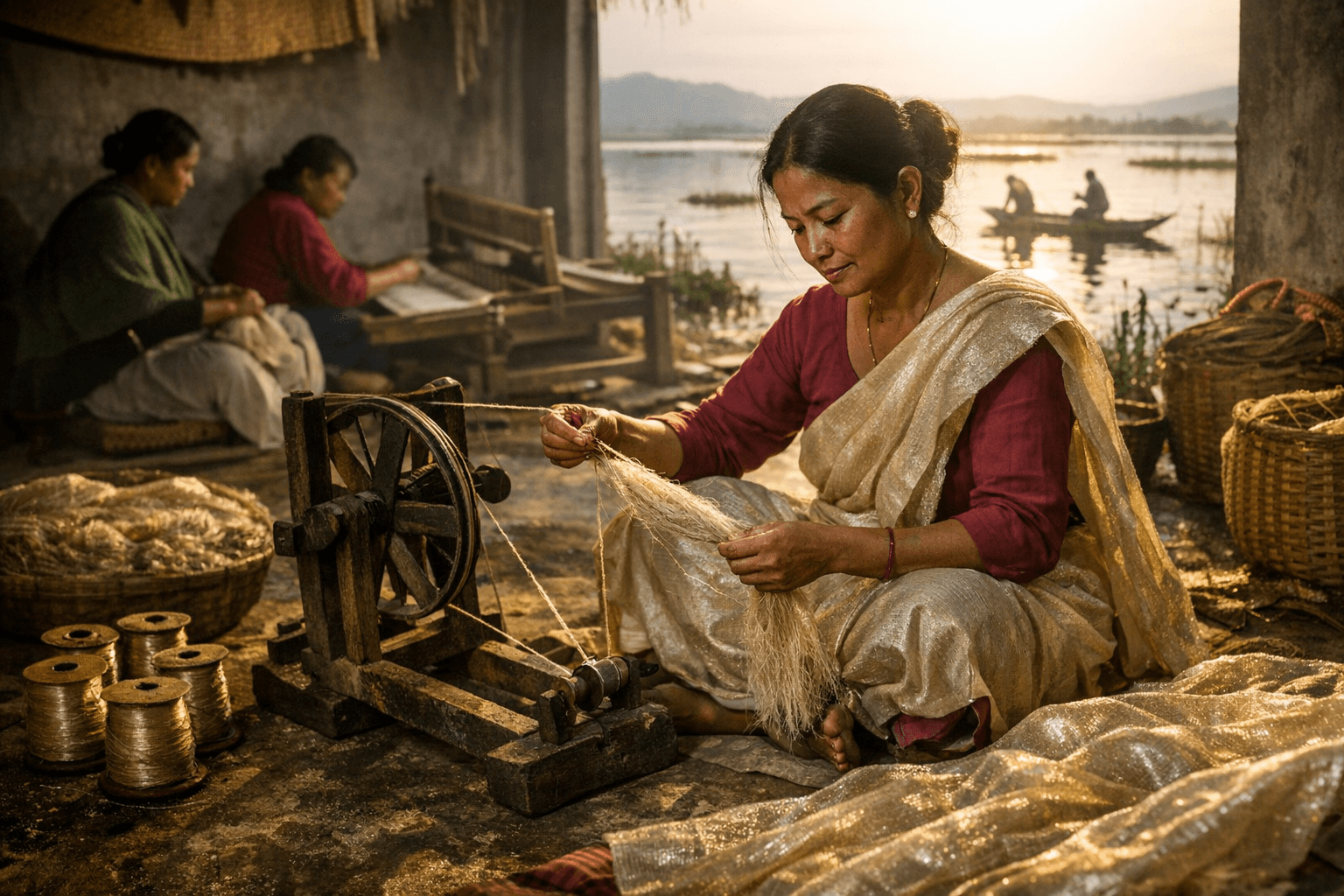
The craft itself is painstaking and low-tech. Women harvest lotus stems from Loktak Lake, the largest freshwater lake in Northeast India known for phumdis and thousands of lotuses. Workers break stalks into thumb-length pieces, then stretch and roll fibres against a wooden plank to gather soft threads on a plate. Those threads are hand-spun on a wooden table and spinning wheel, then brought to a traditional loom where the delicate lotus yarn is woven into stoles, scarves, mufflers, neck ties, shawls, cushion covers and masks, all dyed using natural dyes.
The enterprise has become a small local employer and a site of skill preservation. Reports variously state Sanajing Sana Thambal "employs over 40 local women" and an original brief names "over 50 women" as beneficiaries; one named worker, Ayingbi, joined in 2019 and describes working from home: "I have a wooden table and spinning wheel in my home so I can extract fibre and spin the thread. The finished product is as good as silk, and it can be woven using a traditional loom because the thread is very delicate."
Commercial traction arrived after early struggles. Bijiyashanti tried for two years to find buyers and showcased lotus fabric items at the Crafted of India exhibition in Manipur before the Mann Ki Baat mention triggered the sell-out and surge of orders. She has publicly stated plans to open an online store and to export products by February 2021, and her work has been described in some outlets as "India's first eco-luxury silk."
What makes Sanajing Sana Thambal unusual is the combination of botanical training, MSME support and a hyper-local supply stream from Loktak Lake that turns otherwise discarded stalks into a breathable, wrinkle-resistant luxury textile. Similar practices exist only in a few places worldwide, reporters note, with Myanmar and Cambodia named as comparators. Bijiyashanti's project places a remote fishing and reed community on a craft map while insisting that luxury can be woven from the lake's overlooked stems using simple tools and women’s labour.
Know something we missed? Have a correction or additional information?
Submit a Tip