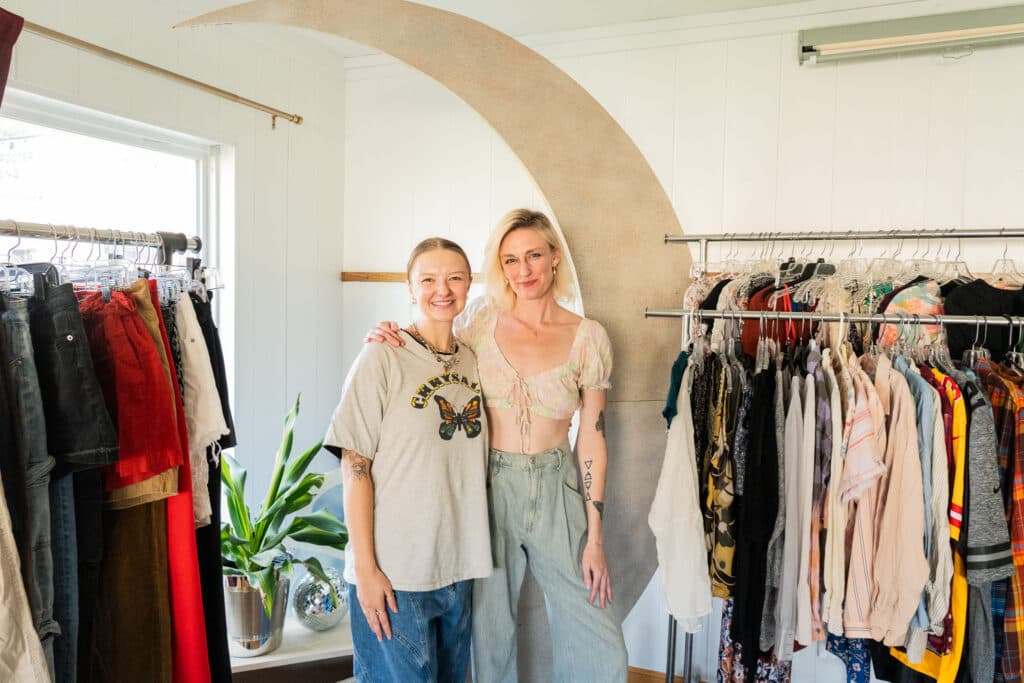
UBC Researchers, Local Projects Showcase Creative Solutions to Fast Fashion
UBC researchers are converting wine vinegar and discarded plastics into wearable textiles at the Slow Fashion Lab Exhibition, on view Feb. 25–March 20 at UBC's AHVA Gallery.

UBC researchers are turning unexpected waste streams - from wine vinegar to discarded plastics - into textiles that will be on public display at the Slow Fashion Lab Exhibition at the AHVA Gallery, UBC Vancouver, running Feb. 25 to March 20, 2026. Admission is free; media were invited to an opening reception on Feb. 27 from 5:00 to 7:00 p.m., and a Slow Fashion Show on March 12 will stage runway debuts of garments made with these innovative materials.
The exhibition is led by Germaine Koh, visual artist and lead researcher of UBC’s Slow Fashion research cluster, who frames the work broadly. “We are working to address sustainability on several fronts, including circular materials- textiles designed to be reused, repaired and recycled rather than discarded- as well as plant-based fibres and traditional knowledge that shaped clothing long before industrial production,” Koh said. Koh adds a creative imperative: “Creative production has to be part of the answer. Putting new science and traditional knowledge into wearable objects is how people come to want something different.”
UBC’s cluster is formally named Slow Fashion: Circular Textiles, Sustainable Fibre Research Cluster and sits within Research Excellence Clusters at UBC Vancouver, a joint initiative of the Provost and Vice-President, Academic, and the Vice-President, Research and Innovation, with funding support from Academic Excellence Funds - UBC Vancouver. The cluster’s site poses targeted research questions such as “How can textiles be made more sustainable?” and “How can artist-led research-creation methods develop technologies for effective de- and re-fabrication of textile waste?” The site also acknowledges that the UBC Vancouver campus is situated on the traditional, ancestral, and unceded territory of the xʷməθkʷəy̓əm (Musqueam).
The exhibition arrives against stark figures: “Fashion produces an estimated two to eight per cent of global carbon emissions, and the textile sector recycles less than one per cent of material back into fibre.” The broader teaching around consumption and labour appears in UBC resources that explain production patterns - “Most of our clothing is manufactured in countries like Bangladesh, India, and China, then transported to Canada to be sold in stores” - and urge different habits. One UBC guidance passage states, “By taking any of these steps, you are helping to acknowledge and honour the human labour involved in clothing production. Instead of being easily thrown away and replaced, clothing should be recognized as the product of a person’s work- and one that is often very resource-intensive to create.”
Practical entries and further reading linked to the university’s materials include Edwards, Z., Mend it, wear it, love it (2021); Klepp and Tobiasson, Local, Slow and Sustainable Fashion (2022); and Thomas, Fashionopolis (2019). A Feb. 25 CityNews video segment also featured UBC researchers and local practitioners discussing slow fashion actions to reduce textile waste; that segment’s highlights include: university-led research into behaviour change and repair, pilot programs that teac
Visitors and journalists seeking images or more detail about the March 12 runway can contact UBC media: deb.pickman@ubc.ca. For cluster inquiries and research coordination, contact slow.fashion@ubc.ca. The AHVA Gallery presentation and the runway show crystallize UBC’s push to convert laboratory experiments into wearable work that aims to reshape both supply chains and daily clothing choices.
Know something we missed? Have a correction or additional information?
Submit a Tip