Foreign holdings of U.S. Treasuries fell in March, Japan and China lead decline
Foreign Treasury holdings slipped 1.5% to $9.348 trillion in March, even as net TIC inflows still reached $150.7 billion.
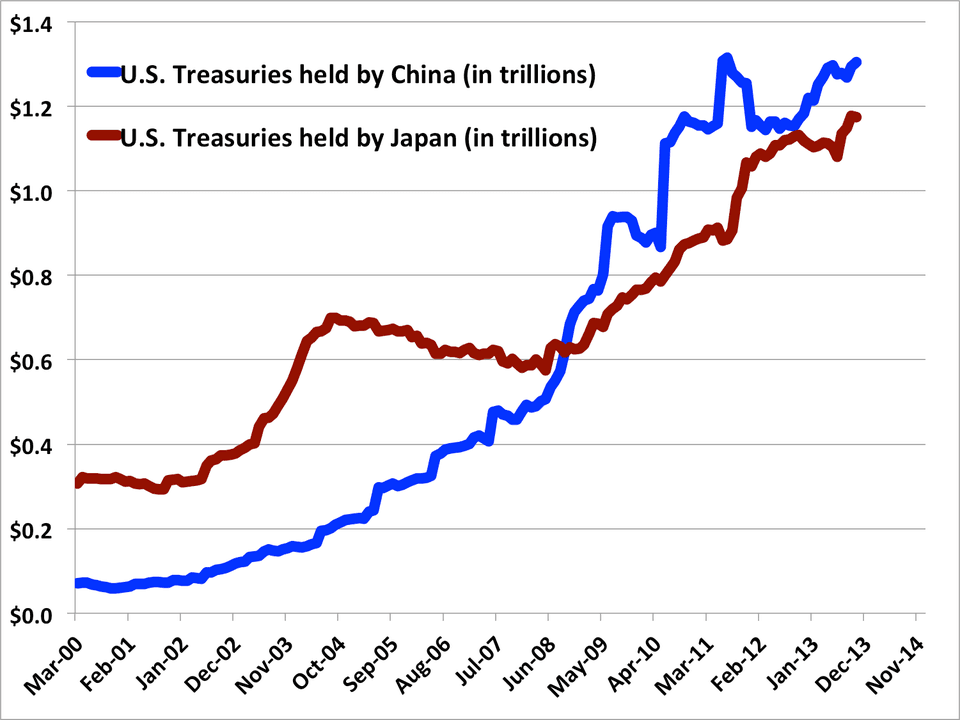
Foreign investors pared back U.S. Treasury holdings in March, with Japan and China accounting for the sharpest declines, but the monthly data did not point to a broad pullback from U.S. assets. The Treasury’s latest international capital figures showed total foreign-owned Treasuries falling 1.5% to $9.348 trillion from a record $9.487 trillion in February.
The decline came as the Treasury International Capital system recorded a net inflow of $150.7 billion for March, including $162.1 billion in net foreign private inflows and $11.4 billion in net foreign official outflows. Foreign residents added $96.5 billion of long-term U.S. securities while cutting Treasury bill holdings by $16.8 billion, a pattern that suggests portfolio reshuffling rather than simple capital flight.
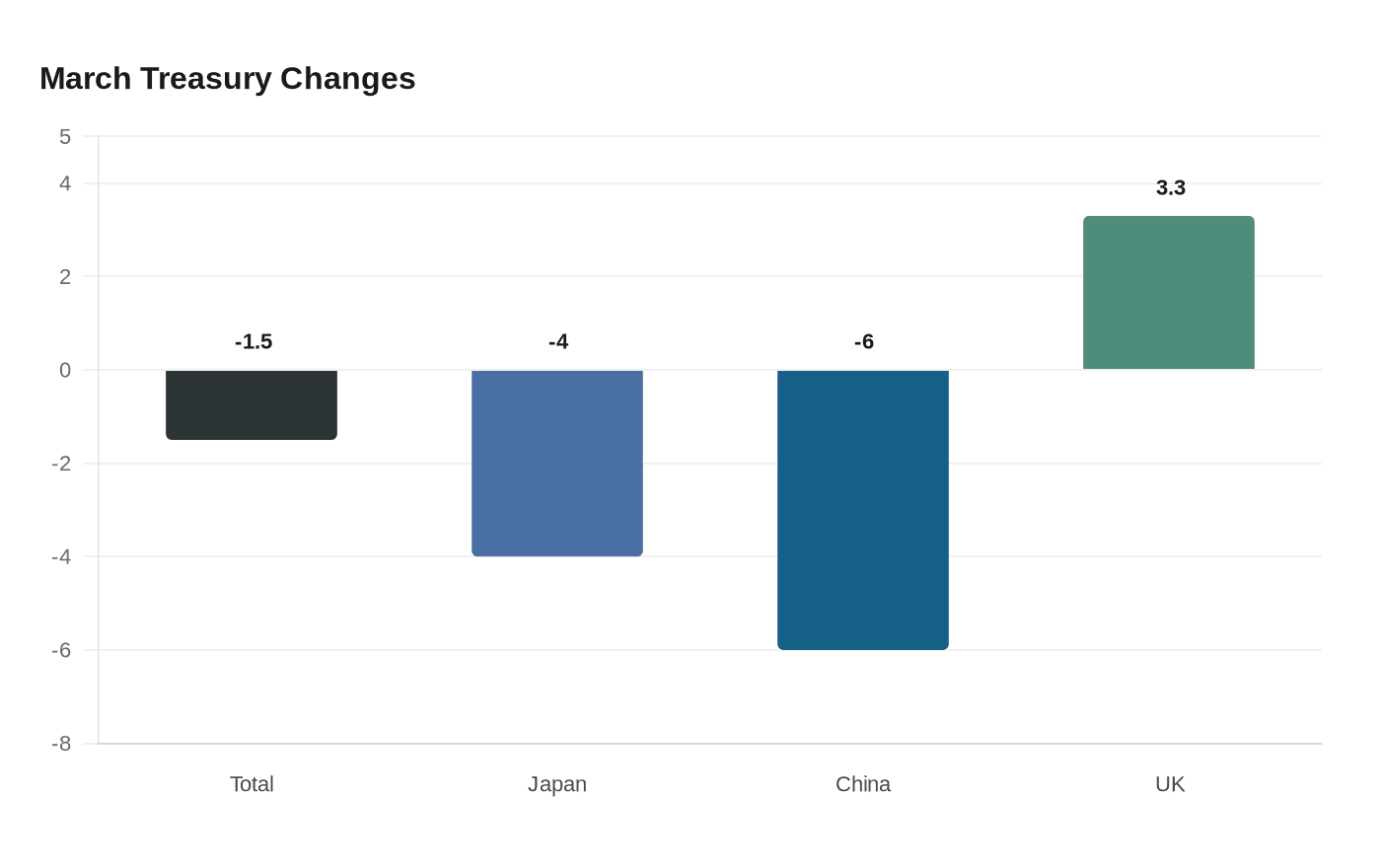
Japan remained the largest foreign holder even after its Treasury stash fell nearly 4% to $1.192 trillion. That was well below Japan’s November 2021 peak of $1.325 trillion, underscoring how much the country’s position has come down over the past several years. China’s holdings dropped 6% to $652.3 billion, the lowest level since September 2008 and more than 14% below where they stood at the start of 2025.
The United Kingdom moved in the opposite direction, with holdings rising 3.3% to $926.9 billion. Because the UK is widely used as a custody hub for global investors, its position is often read as a window into hedge fund and institutional positioning rather than a pure national tally. Treasury also cautioned that its custodial data cannot perfectly identify ultimate ownership when securities pass through third-country custodians or foreign portfolio managers.
The March data arrived against a backdrop of still-heavy foreign involvement in U.S. debt markets. Foreign holdings of federal debt were about $9.2 trillion at the end of December 2025, roughly 31% of publicly held U.S. debt, with Japan, the United Kingdom and China the top three estimated foreign holders. For markets, the key issue is not whether foreign demand has vanished, but whether shifts in reserve management, currency intervention, yield expectations and geopolitical caution are changing who holds Treasuries and for how long. That distinction matters for borrowing costs: a routine monthly shift can move yields at the margin, but it is not the same as a structural retreat from U.S. government debt.
Know something we missed? Have a correction or additional information?
Submit a Tip