Former Google executives deny link to Indonesia Chromebook corruption case
Google alumni told Jakarta judges their GoTo investment had nothing to do with Chromebooks, challenging a corruption theory tied to 1.2 million laptops and $125 million in losses.
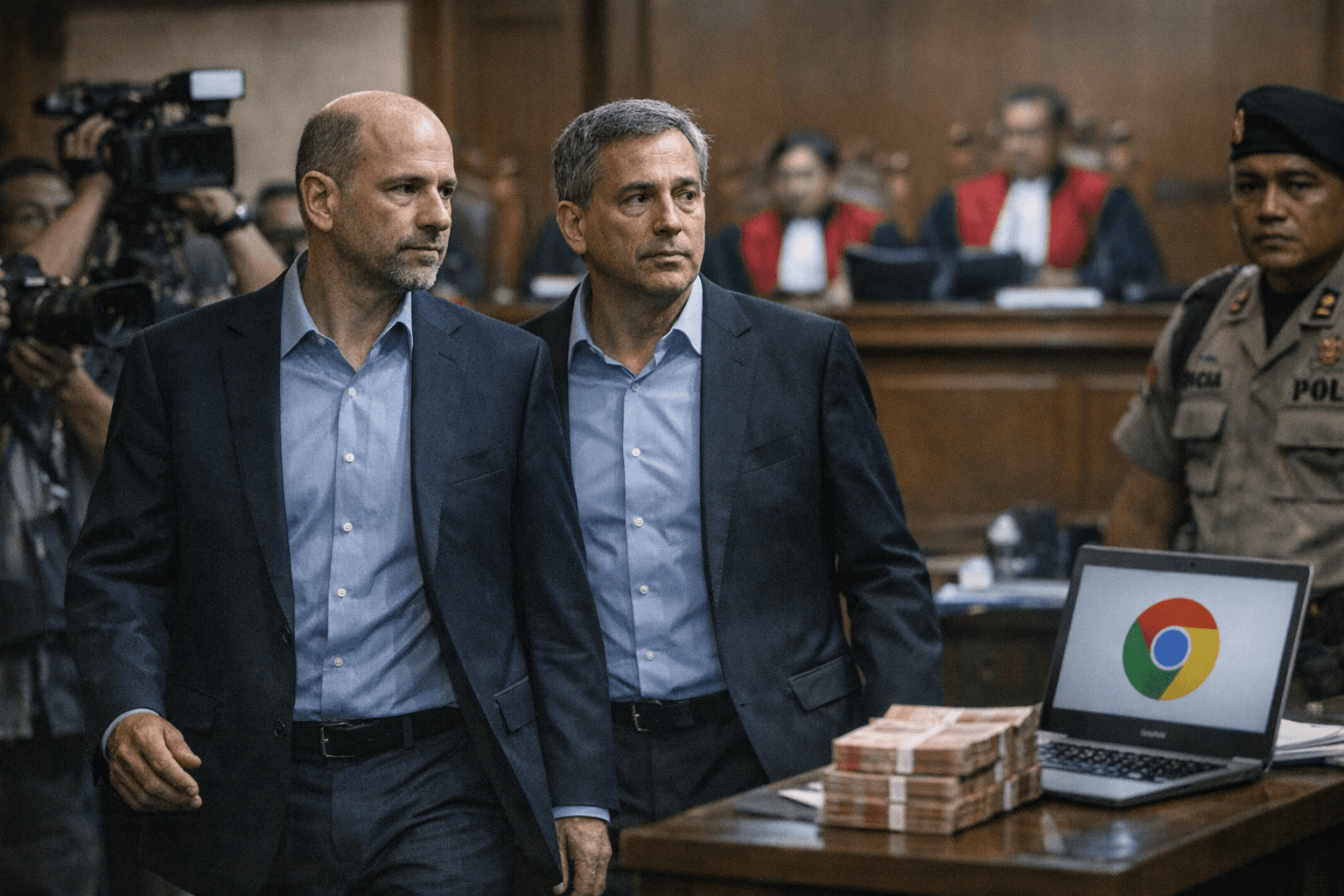
Former Google executives told Jakarta’s Corruption Court that the company’s investment in GoTo had nothing to do with Indonesia’s school Chromebook закупки, a denial that cuts straight at the prosecution’s central theory in the case against former education minister Nadiem Anwar Makarim.
Scott Beaumont, former president of Google Asia Pacific, said by Zoom that there was “no connection at all” between Google’s investment in GoTo and any talks with the Education Ministry. Caesar Sengupta, a former Google general manager and vice president, and William Florence, another former executive, also testified in the same hearing on April 20, 2026. Their testimony challenged prosecutors’ claim that the Chromebook plan was influenced by Google’s commercial push in Indonesia, where the devices were meant to help schools during the pandemic.
Prosecutors say the purchase of more than 1.2 million Chromebooks caused about $125 million in state losses and was part of a broader effort to strengthen Google’s position in Indonesia’s education market. They have also linked the procurement to roughly $787 million in Google investment in PT Aplikasi Karya Anak Bangsa, the company that later became part of GoTo. In their telling, Makarim, who co-founded Gojek before becoming education minister, steered the ministry toward Chromebooks even though a ministry research team had already declined to recommend them for areas without reliable internet access.
The defense is trying to separate ordinary business ties from public procurement. GoTo has said Google had been a customer since 2015 for cloud, mapping and advertising services, long before the merger of Gojek and Tokopedia on May 17, 2021. That merger created GoTo, Indonesia’s largest technology group, and Google was among its major backers. Prosecutors argue those overlapping relationships mattered. The testimony from Beaumont, Sengupta and Florence is meant to show they did not.
The stakes extend beyond one former minister. The Chromebook program was rolled out amid the chaos of remote learning, when Indonesian schools were shut down and governments scrambled for devices. UNICEF Indonesia said in a February 2021 analysis that 35% of students learning from home cited poor internet access as a major challenge, and 62% said they needed better internet quota support if remote learning continued. That digital divide was especially severe in Indonesia’s outermost, underdeveloped and remote regions, where the ministry said the laptops were intended to go.
The case has widened since Indonesia’s Attorney General’s Office named Makarim a suspect in September 2025 and detained him while investigating the procurement. Prosecutors have said he received about 809 billion rupiah, or $48.2 million, in connection with the program, while court proceedings continue to examine whether the laptop deal reflected corruption or a failed policy response to an urgent public need.
This article was produced by Prism’s automated news system from verified source data, official records, and press releases, then run through automated quality and moderation checks before publishing. The system is built and supervised by the people who set the standards it runs under. Read our full AI policy.
Did this article answer your question?


