Former South Korea first lady sentenced 20 months in corruption case
Kim Keon Hee is sentenced to 20 months in prison for bribery tied to gifts from Unification Church figures, deepening political fallout and economic uncertainty.
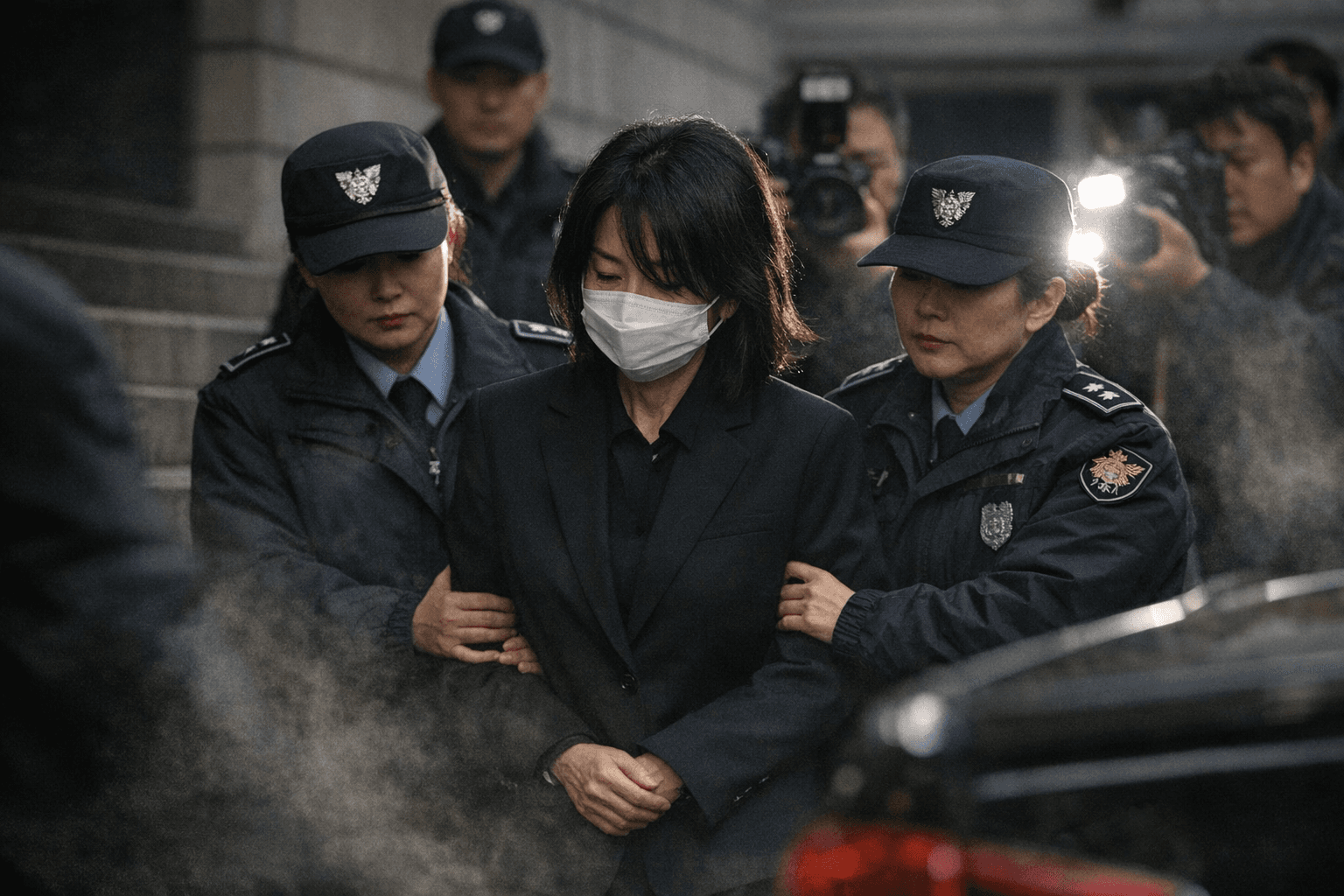
The Seoul Central District Court sentences Kim Keon Hee to 20 months in prison after convicting her on bribery and corruption charges tied to gifts from Unification Church figures in return for business favors. The ruling, handed down on January 28, 2026, is a sharp escalation in legal exposure for the inner circle of the ousted former President Yoon Suk Yeol and marks a high-profile instance of judicial scrutiny of political and religious influence in South Korea.
Prosecutors argued that the transactions amounted to illicit exchanges of value for preferential treatment of businesses connected to the church; the court found sufficient evidence to uphold criminal liability. Kim is the first former first lady in modern South Korean history to receive a custodial sentence of this nature, underscoring a broader shift toward aggressive enforcement of anti-corruption laws affecting elites.
The conviction carries immediate political ramifications. Kim's role as a public symbol of the Yoon administration’s social ties had already been a focal point in debates about governance and accountability. Her sentencing intensifies pressure on political allies of the former president and complicates efforts by his supporters to rehabilitate the administration’s legacy. For a country of about 51 million people and a nominal GDP near $1.8 trillion, political instability feeds into public anxiety about institutional integrity and the health of democratic checks and balances.
Markets are sensitive to perceptions of political risk in South Korea, an export-dependent economy where investor confidence matters for the currency, equity valuations, and capital inflows. While the court ruling itself is a domestic judicial matter, it increases uncertainty about the policy environment and cadence of reforms, which can translate into short-term volatility in the won and in risk-sensitive assets. International investors tend to price in such legal and political shocks through higher risk premia; sustained political friction can affect corporate governance reforms and the pace of regulatory change, which are important for foreign direct investment and supply-chain decisions.
Policy consequences are likely to follow. The case revives scrutiny of the Unification Church’s ties to business and political actors and could prompt lawmakers to tighten transparency requirements for political donations, lobbying and corporate gifts. It also adds urgency to existing debates on corporate governance for conglomerates and on the limits of religious organizations’ political activity. Past episodes of elite corruption in South Korea have triggered legislative and regulatory responses; this conviction increases the probability of further institutional reforms aimed at reducing opportunities for cronyism.
In the longer term, the ruling fits within a regional trend toward heightened accountability for political and business elites, with courts playing a central role in delineating acceptable lines of influence. For South Korea, success in stemming corruption without undermining rule-of-law norms will depend on consistent enforcement, clearer disclosure rules and prudent economic policy that shields markets from political disruptions. The sentence of Kim Keon Hee is both a legal milestone and a test of whether those institutional responses can restore public trust and stabilize the economic outlook.
This article was produced by Prism’s automated news system from verified source data, official records, and press releases, then run through automated quality and moderation checks before publishing. The system is built and supervised by the people who set the standards it runs under. Read our full AI policy.
Did this article answer your question?


