Former US Marine Says Recovery Teams Must First Search for Survivors
A former US Marine told the BBC that recovery teams searching inside Iran for a missing F-15E crew member must first treat every mission as a potential rescue.
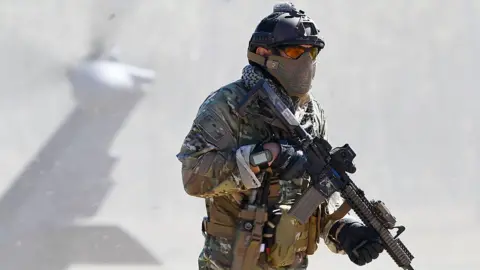
With one crew member still unaccounted for inside Iranian territory after a U.S. F-15E Strike Eagle was shot down over Khuzestan Province on Friday, a former U.S. Marine told the BBC that any team moving into the area must first operate on a foundational assumption: the missing person could still be alive.
The Marine, speaking to the BBC, said the priority of any recovery team would be to look for signs of life. That framing carries direct operational weight. Rescue teams do not treat a downed crew member as lost until they can confirm otherwise, a protocol that shapes everything from team composition to the risk threshold commanders are willing to accept in contested airspace.
The F-15E Strike Eagle, a two-seat aircraft capable of reaching Mach 2.5, was crewed by a pilot and a weapons systems officer. The pilot was located and rescued by U.S. special forces on Iranian territory. The weapons systems officer's fate remained unknown as of Saturday morning. In the hours immediately following the shootdown, a multi-aircraft rescue effort took shape over southwest Iran, with social media videos appearing to show a U.S. Air Force HC-130 refueling a pair of HH-60G Pave Hawk helicopters flying low over the region. One of those helicopters was struck by small arms fire during the pilot's extraction; crew members aboard were wounded, though the aircraft landed safely.
The rescue effort was complicated almost immediately by competing ground searches. Iranian state television called on civilians in Khuzestan Province to join the hunt for the crew, offering a reward. An on-screen crawl on one state channel urged people to "shoot them if you see them." That instruction put the missing crew member in a race against time: hostile terrain and motivated civilian searchers actively narrow the window for a successful outcome.
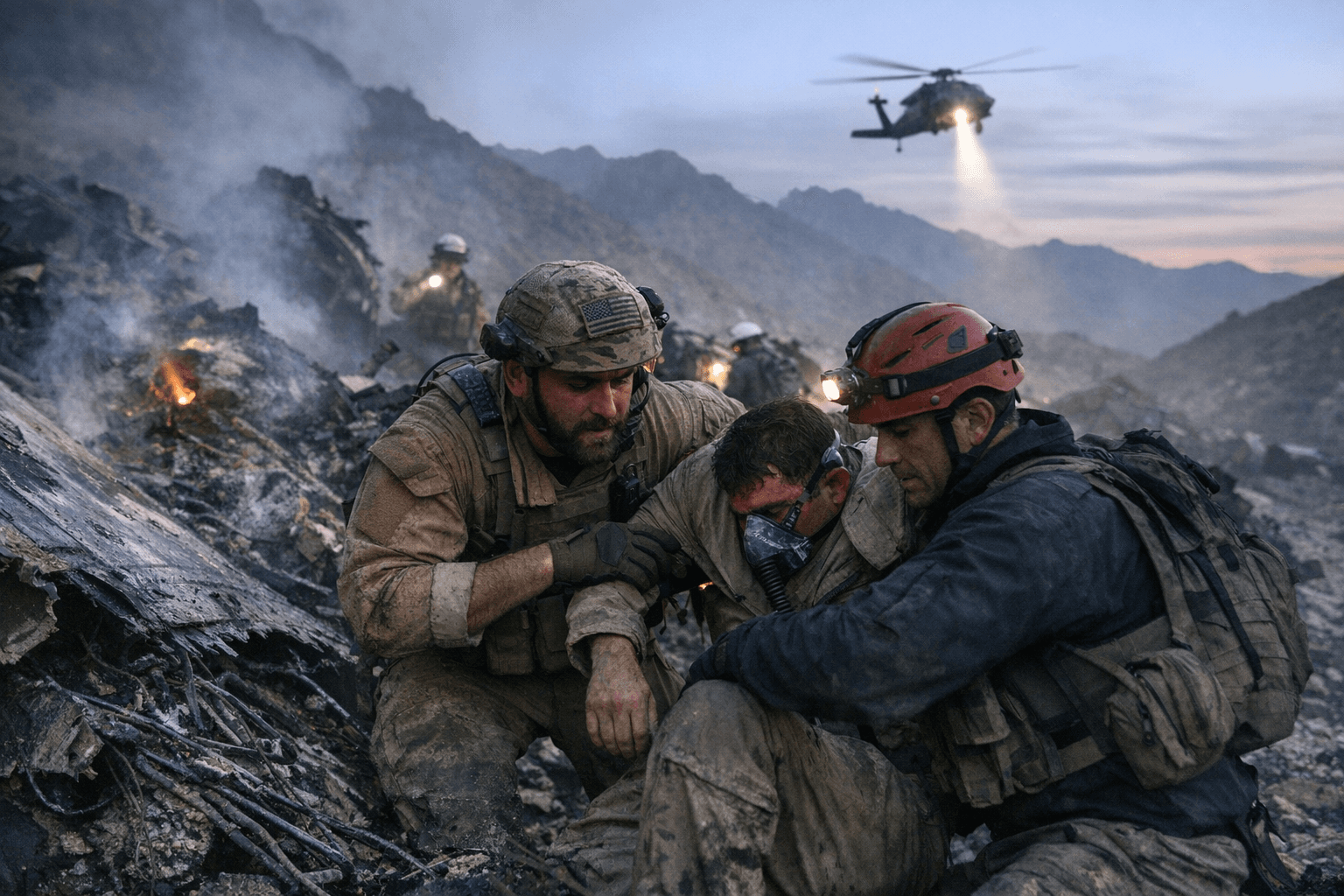
Diplomatically, the operation forced a sudden recalibration among U.S. allies. Israel, which had planned its own strikes inside Iran on Friday, canceled those operations to avoid compromising the American rescue effort, according to an Israeli official. The coordination underscored how a single downed aircraft can reorder military and diplomatic priorities across an entire theater within hours.
The conflict, now in its sixth week under Operation Epic Fury, has killed 13 U.S. service members and wounded 365 others. Friday was the first time American aircraft were confirmed downed during the campaign. In addition to the F-15E, an A-10 Thunderbolt II was struck in a separate engagement the same day; its pilot navigated out of Iranian airspace before ejecting over the Persian Gulf, where he was subsequently recovered.
For veterans who have served in combat search-and-rescue roles, the former Marine's point to the BBC was not procedural boilerplate. In active hostile territory, presuming life until evidence says otherwise is the only posture that keeps all options, and all people, within reach.
This article was produced by Prism’s automated news system from verified source data, official records, and press releases, then run through automated quality and moderation checks before publishing. The system is built and supervised by the people who set the standards it runs under. Read our full AI policy.
Did this article answer your question?