Four Chagossians land on Peros Banhos and defy British removal order
Four Chagossians set up camp on Île du Coin and were served removal orders carrying up to three years' jail or a £3,000 fine; the move risks complicating a 2025 sovereignty transfer.

Four Chagossians who landed on Île du Coin in the Peros Banhos atoll have been told they are unlawfully present and face removal, criminal penalties and fines after attempting to establish a permanent return to their homeland. A British Indian Ocean Territory immigration official served the four with removal orders that warn breaching them would be a criminal offence punishable by up to three years' imprisonment or a £3,000 fine, roughly $4,060.
The landing party, led by Misley Mandarin, set up tents on the lagoon beach and planted flags, declaring an intent to remain and to open the way for relatives to return. "I am not in exile any more. This is my homeland," Misley Mandarin said. He told supporters he hoped to make it possible for the 322 people he said were born on Île du Coin and still alive "to come home before they die," and expected more arrivals in the coming days and months. His father, Michel Mandarin, 74, was among those removed from the islands decades ago; he was taken from the atoll as a teenager.
One of the returnees warned the authorities bluntly, saying the British would have to "drag me from my beach" if they wanted him to leave. A vessel carrying officials delivered the removal notices, an act that one member of the party described as infuriating and that underlines the immediate legal jeopardy the settlers face.
The British Foreign Office said the landing was an "illegal, unsafe stunt" and warned it would not help the government's joint work with Mauritius to resume a programme of heritage visits to the archipelago. Mauritius' attorney general described the action as a "publicity stunt," suggesting it risked complicating the delicate implementation of a 2025 agreement under which Britain will transfer sovereignty of the Chagos Islands to Mauritius while retaining use of the Diego Garcia military base under a 99-year lease.
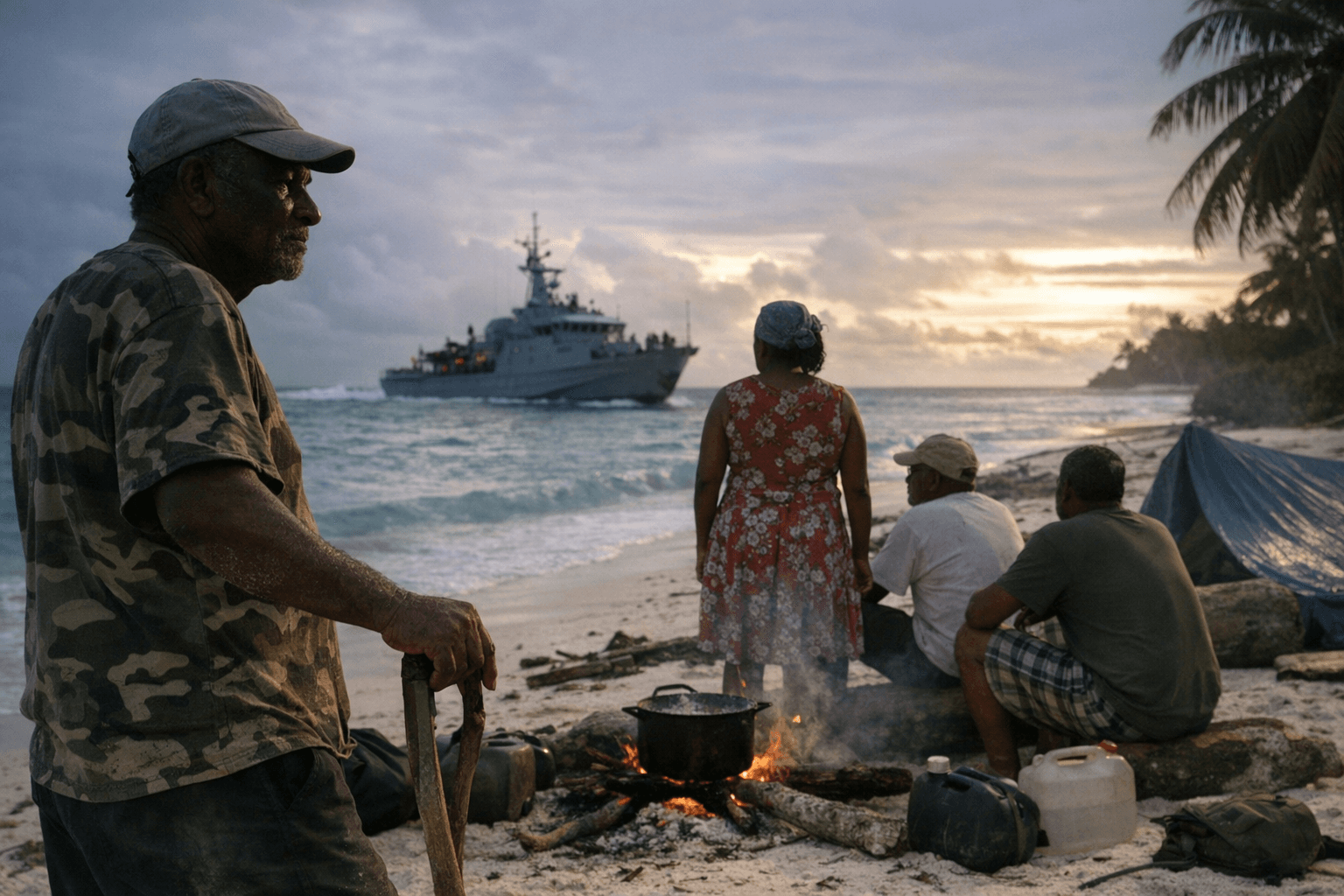
The returners framed their action as an assertion of birthright and decades of dispossession. Up to 2,000 Chagossians were forcibly removed from the archipelago in the 1960s and 1970s and resettled mainly in Mauritius and the United Kingdom. Rights groups have long documented the social and economic costs of the expulsions; campaigners say resettlement and compensation remain unfinished business even after the 2025 sovereignty deal created a registry to determine priority for return and compensation on two islands, Peros Banhos and Salomon, while Diego Garcia remains off-limits.
The episode has already attracted political attention in Britain. Nigel Farage, Reform UK leader and a member of parliament, called for the eviction notice to be rescinded and said the four were British passport holders seeking to "reclaim their birthright," adding he was exploring legal avenues to support them. Critics of the 2025 agreement have warned that the transfer and retention of Diego Garcia under a long lease leave real questions about who can lawfully live on which islands.
For now, the four remain under formal notice and faces the prospect of removal and criminal prosecution if they do not comply. Their action crystallises a wider dilemma for London and Port Louis: how to implement a negotiated handover that acknowledges historical injustice, preserves defence arrangements, and manages a resettlement process that survivors and descendants say has been delayed for generations.
This article was produced by Prism’s automated news system from verified source data, official records, and press releases, then run through automated quality and moderation checks before publishing. The system is built and supervised by the people who set the standards it runs under. Read our full AI policy.
Did this article answer your question?