France counts 5,700 excess deaths in historic heat wave
France's heat wave left at least 5,700 excess deaths, with about half occurring in just three days as temperatures hit record highs.

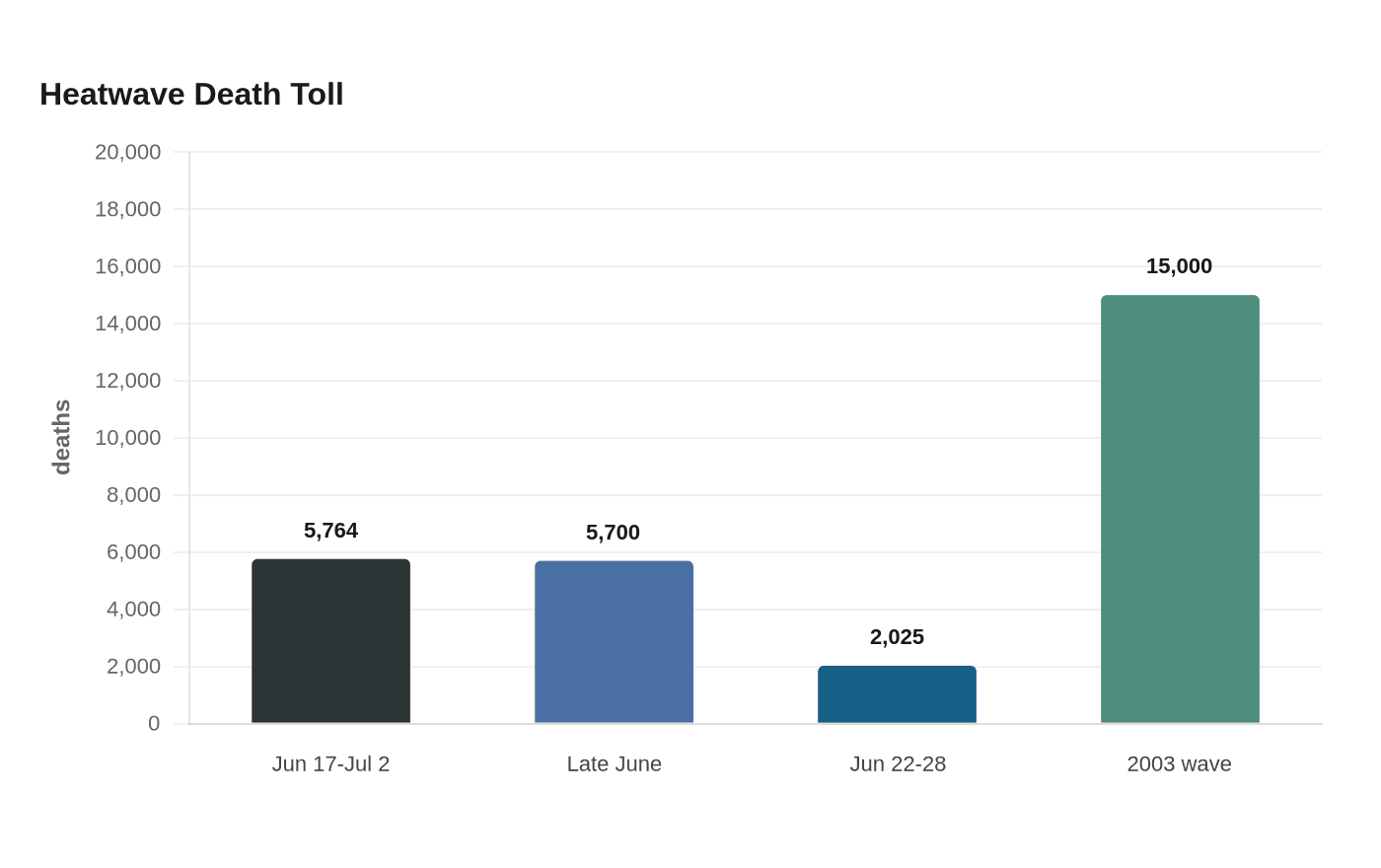
France's public health agency said the historic late-June heat wave drove at least 5,700 excess deaths across the 92 departments affected, turning extreme heat into a mortality event that was largely invisible on the street. A separate count put the toll at 5,764 excess all-cause deaths from June 17 to July 2, with the affected area showing an excess mortality rate of 36 percent.
The death toll was concentrated in a short burst. About half of the excess deaths occurred during a three-day peak period, and an earlier estimate had already put the total at 2,025 excess deaths during the June 22-28 heat wave. Deaths in France rose 29 percent in the last week of June compared with the week before, and Health Minister Stéphanie Rist said there had been a "clear increase" in deaths among people over 45.
The heat itself set records that made the scale of the mortality rise harder to dismiss. France recorded its hottest day ever on average country-wide on June 24, and the country's hottest-ever days were June 24 and June 25. Europe as a whole recorded 10,000 excess deaths during the late-June heat wave, according to Reuters, underscoring that France carried the heaviest burden in the regional total.
The comparison most likely to shape future planning is still the 2003 heat wave, which killed an estimated 15,000 people in France. This year’s figures show how quickly the gap can widen between visible disruption and the hidden death count, especially when the victims are older adults and deaths rise after the peak temperature days have passed.
For U.S. public health agencies, hospitals, and elder-care systems, the French numbers point to a hard requirement before the next major heat wave: track excess mortality in real time, not just heatstroke cases, and move early on outreach to older adults, long-term care residents, and patients with chronic disease. Heat records may dominate headlines, but the public health cost is measured in deaths that appear only after the temperatures have already started to fall.
This article was produced by Prism’s automated news system from verified source data, official records, and press releases, then run through automated quality and moderation checks before publishing. The system is built and supervised by the people who set the standards it runs under. Read our full AI policy.
Did this article answer your question?