From Lumbini, Buddhism spread across Asia and reshaped the continent
From Lumbini’s sacred garden, Buddhism moved through empire, trade, and pilgrimage to shape Asia’s politics, culture, and identity.

Lumbini’s origin point
Lumbini in southern Nepal, in Rupandehi District, is where the story begins. UNESCO says Siddhartha Gautama, the Lord Buddha, was born there in 623 B.C., and the site quickly became a place of pilgrimage. The best-known markers are still standing in the landscape: the Ashoka Pillar, the sacred pond linked to Mayadevi’s ritual cleansing, and the Mayadevi Temple, which Nepal’s Tourism Board identifies as the most sacred site in the Lumbini Garden.
That religious importance is matched by historical weight. Archaeologists have identified the exact spot associated with the Buddha’s birth, and UNESCO describes Lumbini as one of the holiest places of one of the world’s great religions because its remains preserve early evidence of Buddhist pilgrimage. The site was inscribed on the World Heritage List in 1997 under criteria (iii) and (vi), placing it in a protected global category where heritage, belief, and public stewardship intersect.
How Buddhism moved outward
Buddhism did not spread by accident. It moved across Asia through missionary work, trade routes, and royal patronage, with Emperor Ashoka playing a decisive role in the 3rd century B.C. His visit to Lumbini and the pillar he erected there helped fix the site in historical memory, but his wider influence helped carry Buddhism far beyond its birthplace.
From India, the religion expanded into Sri Lanka, Southeast Asia, Central Asia, China, Korea, Japan, and Tibet. That spread was not uniform. In some places Buddhism arrived through court sponsorship, in others through merchants and monastic networks, and in many places it adapted to local languages, power structures, and social customs. The result was not a single Asian Buddhism but a family of traditions that shared a common origin and diverged as they crossed borders.
What changed, and what endured
The most important change was institutional. As Buddhism traveled, it absorbed local political realities and became tied to rulers, dynasties, and statecraft. Royal patronage gave monasteries land, legitimacy, and reach, while monks often became educators, scribes, advisers, and custodians of literacy. That made Buddhism more than a private faith: it became part of governance, identity, and social organization across much of Asia.
What endured was the authority of the Lumbini origin story. Even as Buddhism diversified, the memory of the Buddha’s birthplace remained central to pilgrimage and legitimacy. Lumbini offered a physical anchor for a religion that spread across enormous distances. The site also serves as a reminder that sacred geography can outlast political change, surviving the rise and fall of empires and modern borders alike.
Theravada and Mahayana, two major trajectories
Two major traditions illustrate how Buddhism adapted as it expanded. Theravada Buddhism was established in Sri Lanka during Ashoka’s reign, showing how closely early spread was tied to imperial support. Sri Lanka became one of the most important centers of Theravada learning and practice, giving the tradition enduring influence across parts of mainland Southeast Asia.
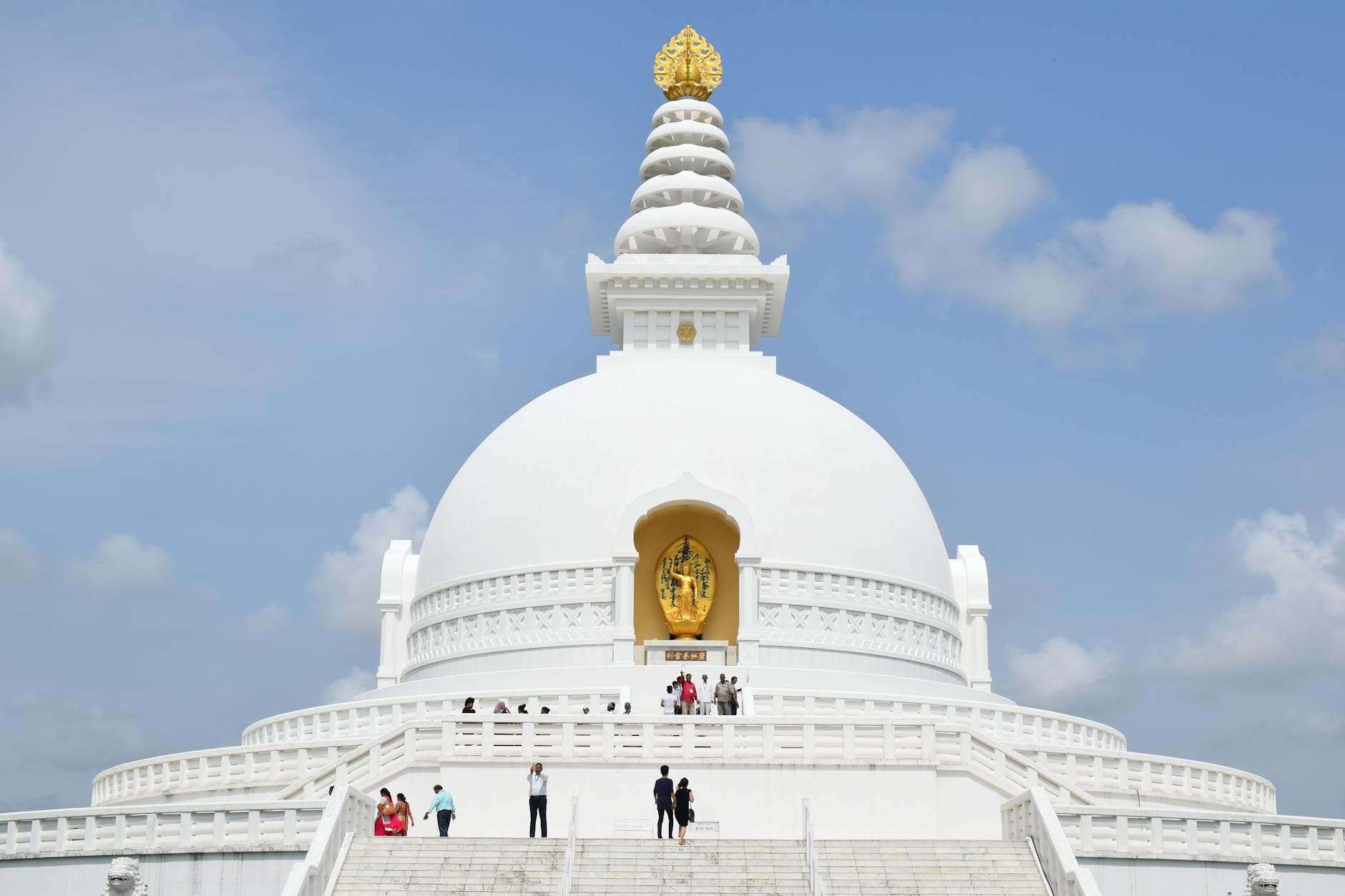
Mahayana Buddhism arose in India in the 1st century C.E. and spread widely across Asia, reaching Central Asia, China, Japan, mainland Southeast Asia, Java, Sumatra, and even Sri Lanka. Its breadth shows how Buddhist ideas could travel through different civilizational corridors and still remain recognizable. In each place, doctrine developed alongside local state systems, artistic forms, and devotional practice, leaving visible traces in temples, manuscripts, sculpture, and ritual life.
Why Lumbini matters to modern Nepal
In modern Nepal, Lumbini is more than a shrine. It is a tourism asset, a conservation responsibility, and a symbol of national custodianship over one of Asia’s most important religious landscapes. Nepal’s government has pushed to make it a world-class Buddhist tourism destination, reflecting the practical reality that heritage policy is also economic policy.
The scale is significant. The World Bank says the Greater Lumbini Buddhist Circuit spans 157 kilometers and connects Lumbini, Ramgram, Tilaurakot, Devdaha, and other pilgrimage sites. That circuit-based approach matters because it turns a single sacred location into a regional heritage system, spreading visitor traffic and encouraging coordinated planning across multiple municipalities and institutions.
A 2024 World Bank procurement document said Lumbini received about 1.2 million visitors in 2024, with Indian visitors accounting for 25 percent of the total. It also noted increasing arrivals from Sri Lanka, Thailand, and China. Those numbers show that Lumbini is not just a spiritual destination; it is a cross-border hub whose visitor mix reflects the living geography of Buddhism across Asia.
Conservation, governance, and the next phase
The politics of Lumbini are also the politics of preservation. UNESCO has been working with Nepal’s Department of Archaeology and the Lumbini Development Trust on conservation and management since 2010, and a new phase began in 2022. That phase focuses on the Marker Stone, the Nativity Sculpture, and the Ashoka Pillar, three elements that help define both the site’s authenticity and its public interpretation.
This is where heritage governance becomes essential. The challenge is not simply to protect ruins, but to manage a place that carries religious meaning, archaeological evidence, international attention, and economic pressure at the same time. Lumbini’s future will depend on whether Nepal can balance pilgrimage, tourism, conservation, and access without weakening the integrity that made the site globally significant in the first place.
Buddhism’s journey from Lumbini reshaped Asia because it moved through power as well as faith. Its spread built institutions, influenced states, and created shared cultural references that still cut across national borders. Lumbini remains the starting point, but its real significance lies in the continent it helped make.
This article was produced by Prism’s automated news system from verified source data, official records, and press releases, then run through automated quality and moderation checks before publishing. The system is built and supervised by the people who set the standards it runs under. Read our full AI policy.
Did this article answer your question?


