Fujimori leads tight Peru race as runoff looms after fragmented vote
Keiko Fujimori’s 16.6% exit-poll lead underscored a fractured electorate, with Peru headed toward a runoff and no contender near a mandate.
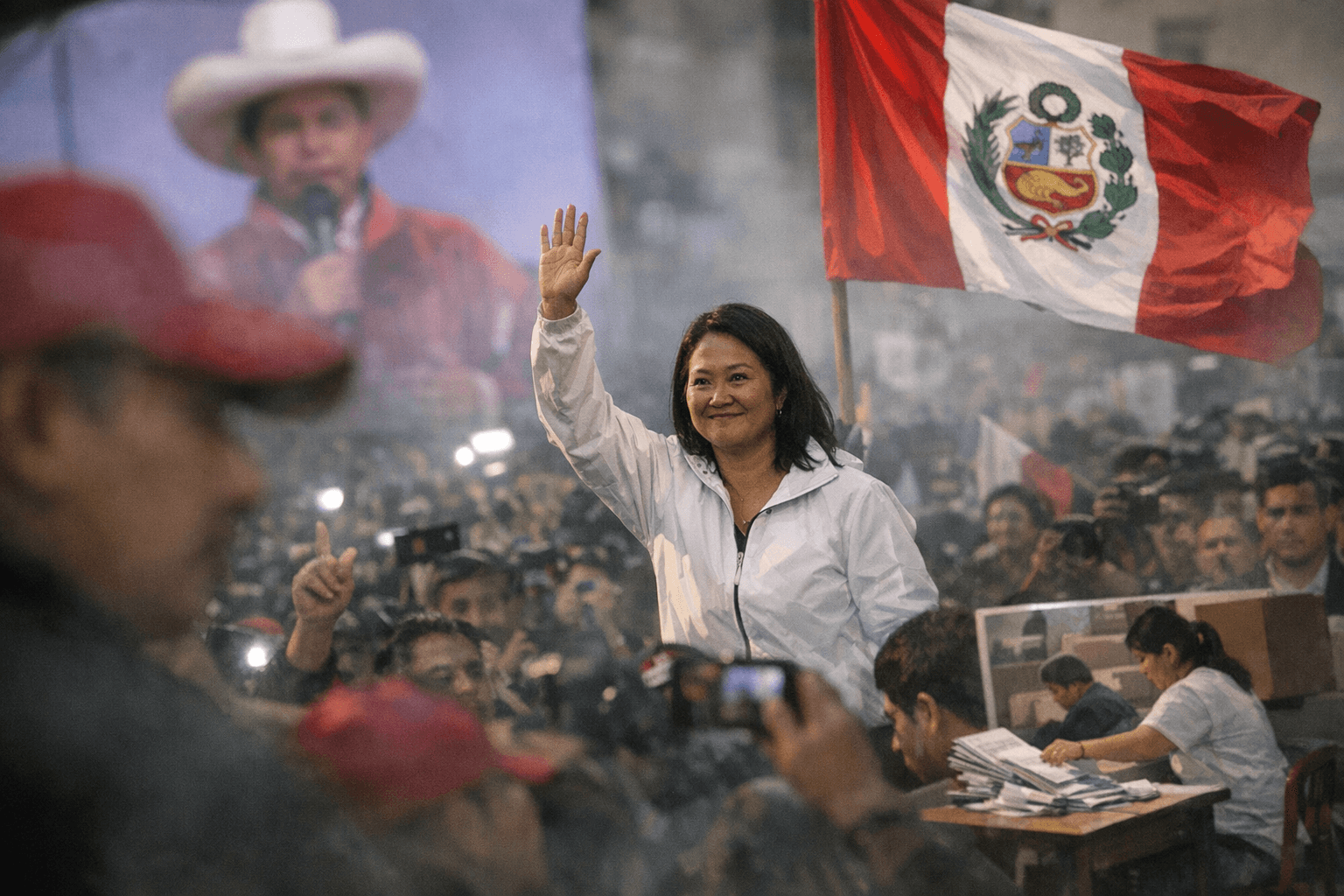
Keiko Fujimori’s early lead in Peru’s presidential race looked less like a breakthrough than a test of how much of the country still wants a familiar hardline brand, and how much still rejects the Fujimori name. An Ipsos Peru exit poll gave the right-leaning candidate 16.6% of the vote, far ahead of Roberto Sanchez at 12.1% and Ricardo Belmont at 11.8%, but still nowhere near the majority needed to win outright.
That narrow spread reflected a race split across 35 presidential candidates, one of the largest and most fragmented fields in Peru’s modern history. More than 27 million Peruvians were registered to vote, with participation mandatory for citizens ages 18 to 70, and about 1.2 million voters were expected to cast ballots from abroad, mostly in the United States and Argentina. With no one close to 50%, the contest was moving toward a June 7 runoff that would likely decide whether the country chooses continuity, punishment, or another reset.
Early official returns later showed just how unsettled the count remained. Peru’s electoral authority, ONPE, put conservative Rafael Lopez Aliaga in first place with 21.1% after 16% of votes were counted, with Fujimori second at 16.9%. That shift made clear that the exit poll was only an early snapshot, not a final verdict, and that the runoff pairing was still unresolved as ballots continued to be tallied.
The counting was complicated by voting delays in some places, including Lima and two U.S. cities, where officials extended voting until Monday because of ballot-delivery problems. In a country that has cycled through eight presidents since 2018, the delays only added to the sense of political instability surrounding a vote that was already defined by uncertainty.
Fujimori’s staying power remains rooted in her identity as the daughter of former president Alberto Fujimori, who was imprisoned for human rights abuses and corruption before his death in 2024. At 50, she was seeking the presidency for the fourth time and had reached the runoff in all three of her previous campaigns. Her support has long mixed investor confidence in her pro-market stance with deep public distrust over the dynastic baggage she carries, making her one of the most polarizing figures in Peruvian politics.
Crime gave the race its urgency. Homicides have doubled and extortion cases have increased fivefold this decade, pushing security to the center of the campaign and feeding skepticism that any candidate could quickly restore order. In that context, Fujimori’s first-place finish, even at 16.6%, signaled a country searching for stability but still divided over who should provide it.
This article was produced by Prism’s automated news system from verified source data, official records, and press releases, then run through automated quality and moderation checks before publishing. The system is built and supervised by the people who set the standards it runs under. Read our full AI policy.
Did this article answer your question?


