Lima voting delays force Peru to extend election for thousands
Long lines and missing voting tables left thousands in Lima unable to cast ballots, forcing Peru to extend voting and adding to doubts about the election’s legitimacy.
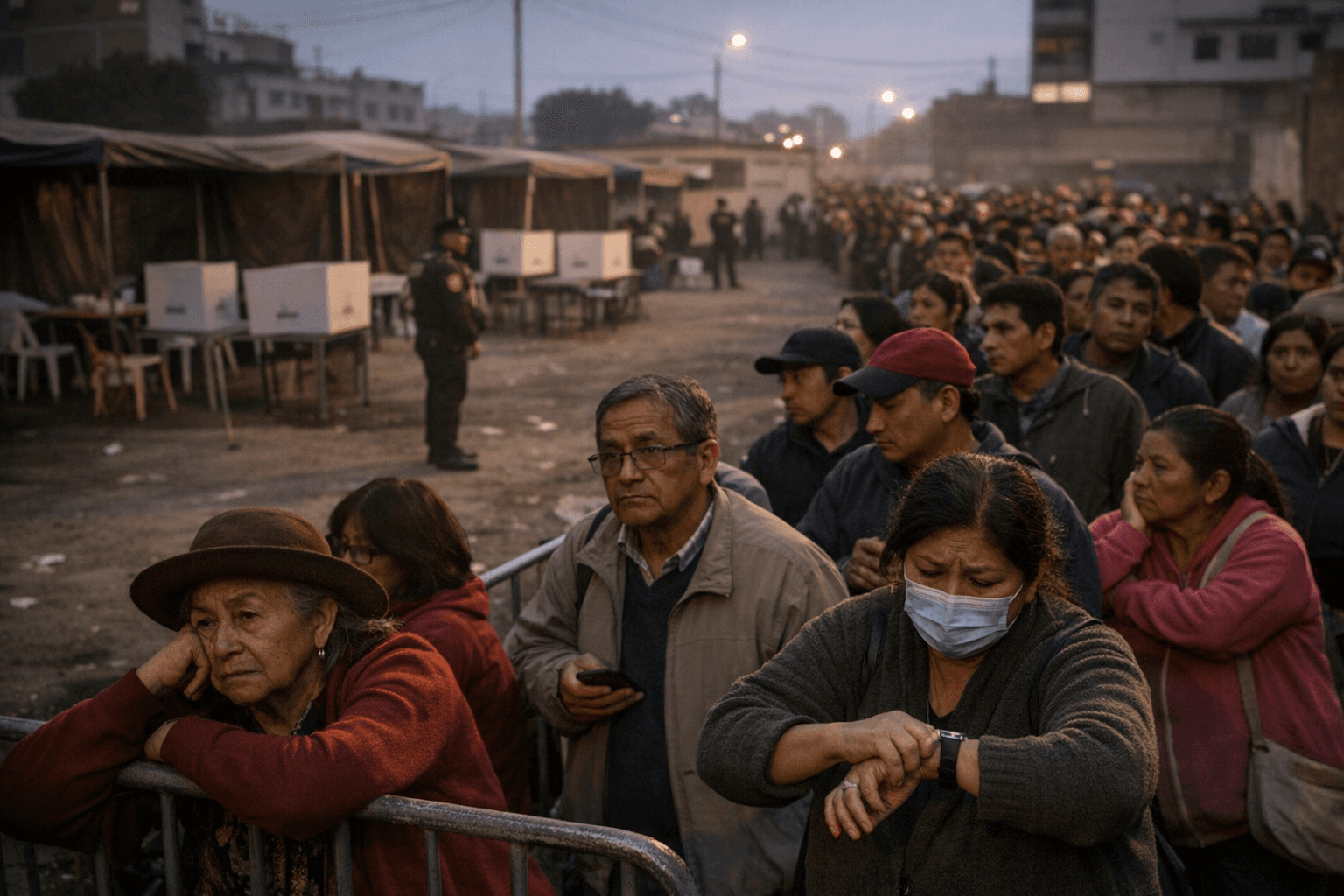
Voting delays in Lima pushed Peru’s electoral authorities to extend the election for more than 52,000 residents of the capital, after long lines and logistical failures left some voters unable to cast ballots at all. The same extension applied to Peruvians registered in Orlando, Florida, and Paterson, New Jersey, a sign of how widely the disruption rippled through a vote already under strain.
Officials initially said 63,300 people could vote on Monday before later revising the figure downward. In parts of Lima, polling places opened as much as five hours late, and 211 voting tables were never installed because election materials did not arrive on time, according to reporting cited by local media. For voters in districts such as San Juan de Miraflores and other parts of the Lima Metropolitan Area, the result was hours of waiting and, in some cases, no ballot at all.
The breakdown landed in a country where the mechanics of voting matter as much as the outcome. More than 27 million people were registered for Peru’s April 12 general election, and voting is mandatory for Peruvians ages 18 to 70, with fines of up to $32 for those who do not participate. That makes any disruption more than an inconvenience: it can depress turnout, sharpen frustration and deepen suspicions that the system is being bent or mismanaged.
The stakes were high even before the delays. Peru held a record 35 presidential candidates and was choosing members of a bicameral Congress for the first time in more than 30 years. The vote came after a decade of instability in which the country had nine occupants of the presidency, with José María Balcázar serving as interim president in the run-up to the election. Against that backdrop, election-day chaos did not just slow the count. It fed a broader crisis of confidence in a political system already battered by churn, corruption scandals and violence.
Early results suggested Keiko Fujimori was headed toward the runoff, likely set for June 7 if no candidate won a majority. But in a fragmented race, the larger question was whether Peruvians would accept the result as legitimate. When voters spend hours in line only to find closed or incomplete polling stations, the damage extends beyond one district in Lima. It raises doubts about the state’s ability to deliver the basic promise of democratic participation.
This article was produced by Prism’s automated news system from verified source data, official records, and press releases, then run through automated quality and moderation checks before publishing. The system is built and supervised by the people who set the standards it runs under. Read our full AI policy.
Did this article answer your question?