Fuller Lodge Bridges Local History and Community Arts Programs in Los Alamos
Fuller Lodge remains a historic community center and home to Fuller Lodge Art Center, linking 1928 architecture with arts programs that support local culture and community access.
Fuller Lodge stands at the intersection of Los Alamos history and contemporary community arts, continuing a decades-long role as a gathering place for residents. The three-story upright-log building, designed by John Gaw Meem and completed in 1928 using more than 700 Ponderosa pines harvested from the nearby forest, began as the dining hall and staff quarters for the Los Alamos Ranch School and later housed visiting scientists and social events during the Manhattan Project, the National Park Service notes.
Fuller Lodge’s architectural prominence and civic role are part of local memory. Heather McClenahan of the Los Alamos Historical Society writes, “Few buildings induce the wonder and awe that Fuller Lodge evokes in first-time visitors.” The lodge’s name reflects early Ranch School ties: Edward P. Fuller, who supervised younger boys from 1919 until his death in 1923, was honored when his father Philo Fuller, a Michigan lumberman and furniture manufacturer, provided funding for the building. After World War II the structure was turned into a hotel and received Tudor-style wings; in the 1960s the Atomic Energy Commission sold Fuller Lodge to the County of Los Alamos for $1 with the stipulation that it always remain a community center, a transfer that preserved public access.
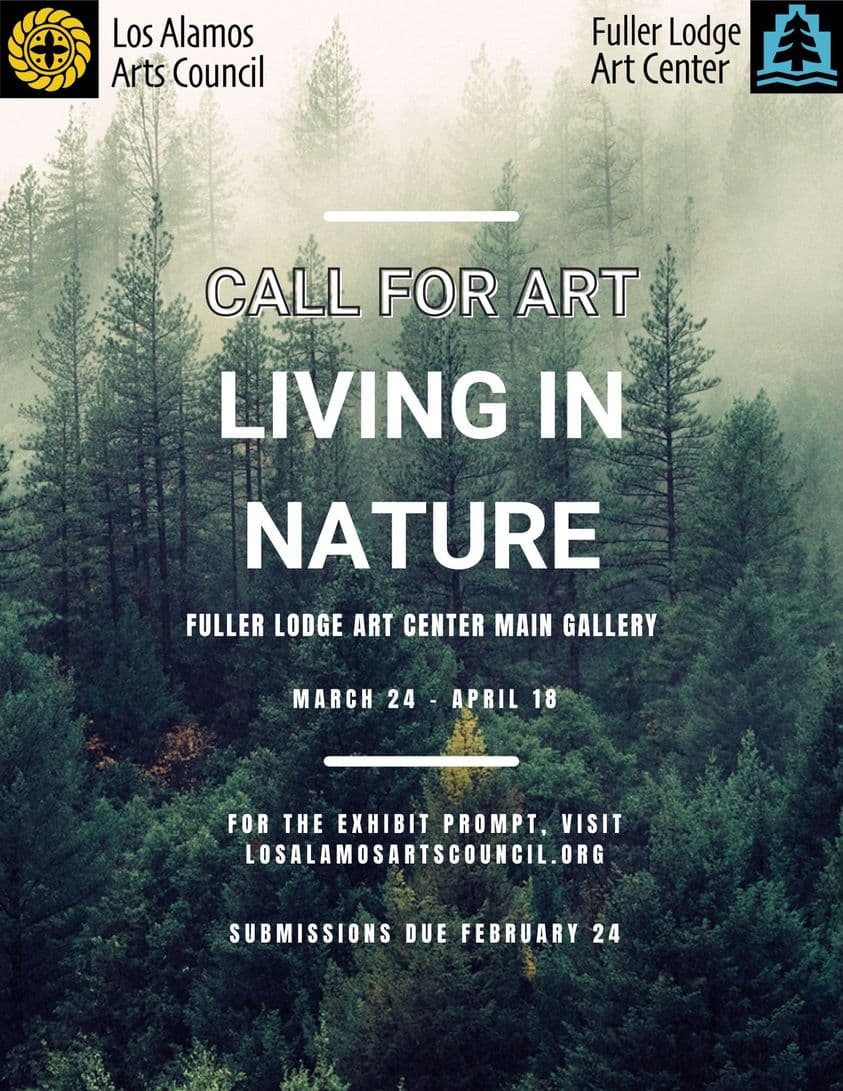
Today Fuller Lodge hosts a broad mix of cultural and civic activity. The Fuller Lodge Art Center (FLAC), operated through the Los Alamos Arts Council, “has been a staple in the community, providing arts programming, as well as a gallery and gallery shop,” the council states. FLAC lists pan-disciplinary arts and cultural programs, diverse class offerings, and a “vibrant Clay Club” among its offerings, and its gallery spaces are intended to encourage new artists while promoting local makers in a gallery shop. The Arts Council highlights its long service to civic life: “Since 1967, the Arts Council has been a catalyst for civic engagement through the arts, and we support lifelong creativity,” and it emphasizes outreach to underserved populations and patrons “up the hill.”
Practical visitor information underscores access and usability for community events. The National Park Service lists Fuller Lodge amenities including parking, picnic tables, restrooms, potable drinking water, and historical exhibits. Gallery hours published by the Los Alamos Arts Council appear in two site entries; an undated listing shows “Mon: By appointment; Tue-Sat: 10 AM - 5 PM,” while a Winter 2025 schedule lists Monday closed, Tuesday through Saturday 10AM - 5PM, and Sunday 12-4PM. FLAC also offers appointments seven days a week by email at Gallery@LAAC-FLAC.org, and the Winter 2025 listing notes a short appointment-only period for Monday, 11/24 through Thursday, 11/27.
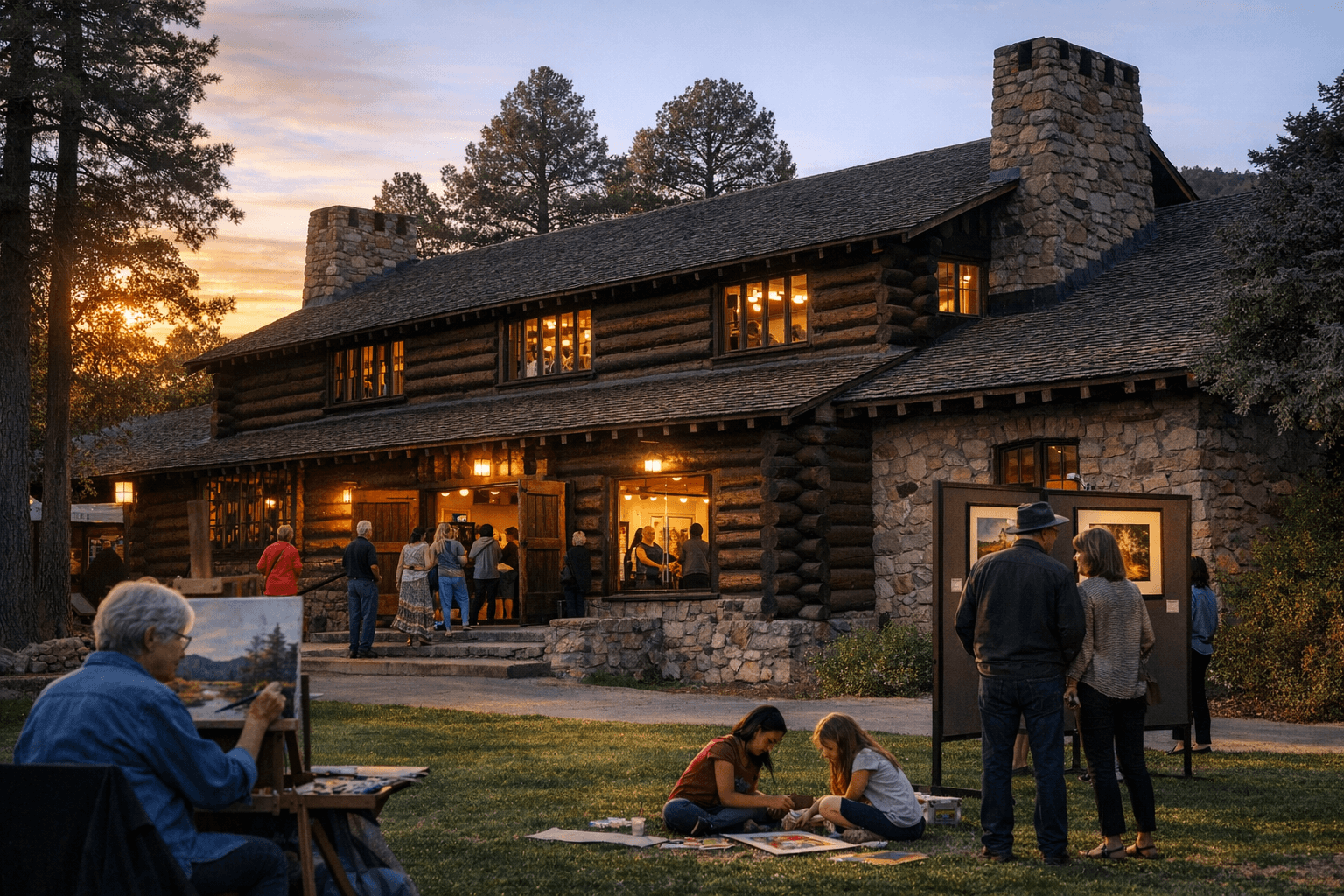
For residents, Fuller Lodge functions as more than a venue; it is a civic asset that supports social connection, cultural participation, and equitable access to community programming. The building’s layered history, from Ranch School symbol to Manhattan Project community center to county-owned public space, frames present-day arts work and local memory. As the Los Alamos Historical Society recalls, “Many people living in Los Alamos today can tell stories of coming to interview for a job at the laboratory, spending the night in the Lodge, and getting a great steak dinner for $1 at the restaurant,” underscoring the lodge’s role in everyday life.
Readers looking to attend exhibitions, classes, or to volunteer can contact the Fuller Lodge Art Center through the gallery email and explore nearby museum resources on the Los Alamos Historical Society campus, including the Los Alamos History Museum, Romero Cabin, the Ancestral Pueblo Site, Hans Bethe House, and Ashley Pond. Fuller Lodge’s blend of architecture, art, and public use points to an enduring local resource that supports cultural vitality and community resilience.
Know something we missed? Have a correction or additional information?
Submit a Tip