Gabbard sends criminal referrals over whistleblower tied to Trump impeachment
Tulsi Gabbard asked DOJ to investigate a whistleblower and Michael Atkinson, reviving the 2019 Ukraine impeachment fight with no public disclosure of the alleged crimes.
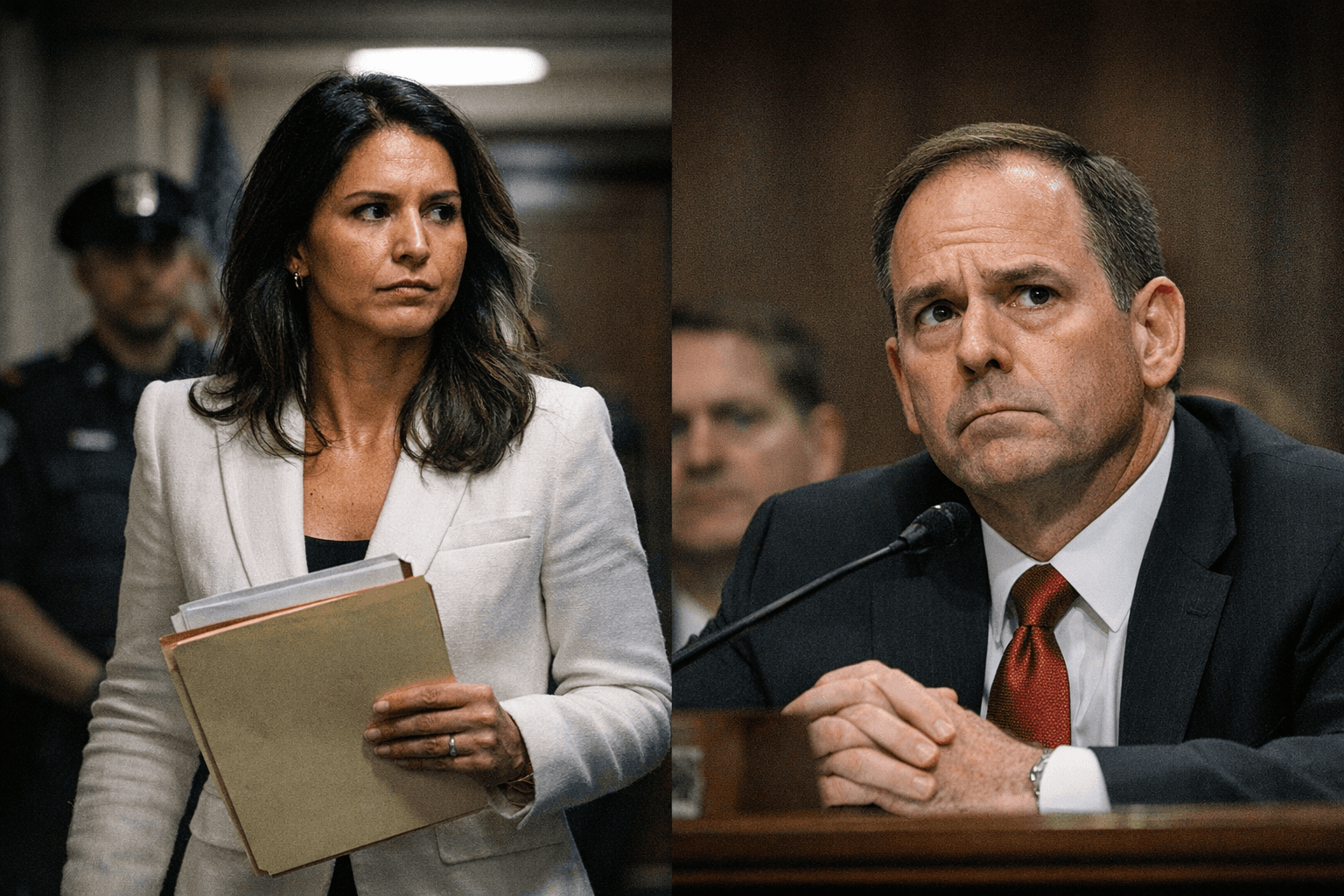
Tulsi Gabbard has sent criminal referrals to the Justice Department over a whistleblower complaint that helped drive Donald Trump’s first impeachment, but her office has not said what crimes it believes occurred. The move puts the intelligence community back into one of the most combustible episodes of the Trump presidency, while leaving the legal theory behind the referrals largely unstated.
The referrals center on two figures tied to the 2019 episode: a whistleblower whose complaint triggered the House inquiry and Michael Atkinson, the former Intelligence Community inspector general. Atkinson marked the complaint as an “urgent concern” and notified Congress, a step that set off a chain of events that reshaped the 2020 political landscape. The House opened its impeachment inquiry on September 24, 2019, after allegations that Trump pressured Ukraine to investigate his political rival, Volodymyr Zelenskyy. The House impeached Trump on December 18, 2019, on articles of abuse of power and obstruction of Congress, and the Senate acquitted him on February 5, 2020.
Gabbard’s office has not publicly detailed the specific conduct under review, nor has it identified the statutes that might be implicated. That silence matters, because criminal referrals from the Office of the Director of National Intelligence can range from serious allegations with evidentiary support to political signaling designed to force a public fight over classified information, whistleblower protections and oversight powers.
The timing adds to that sense of escalation. ODNI declassified and released documents and transcripts about Atkinson’s handling of the complaint, and the House Intelligence Committee released related transcripts from 2019 hearings on April 13, 2026. Those materials reopened questions about how the complaint was handled inside the intelligence community and what Congress was told at the time.
One newly declassified detail has drawn particular attention: transcripts reportedly show the whistleblower had prior contact with congressional Democrats before filing the complaint, a fact not disclosed on the official complaint form. For Gabbard, that detail appears to support a broader claim that the impeachment process was shaped by partisan coordination. For defenders of the whistleblower system, it raises the sharper question of whether a procedural irregularity was turned into a criminal case without a clear public showing of wrongdoing.
The Justice Department now faces a familiar but consequential test. If the referrals are supported by concrete evidence of false statements, mishandling of classified material or other federal offenses, they could become a serious case. If not, they risk landing as another chapter in the long fight over Trump’s first impeachment, with national-security authority being used to revisit a political battle that never fully ended.
This article was produced by Prism’s automated news system from verified source data, official records, and press releases, then run through automated quality and moderation checks before publishing. The system is built and supervised by the people who set the standards it runs under. Read our full AI policy.
Did this article answer your question?

