GameStop posts strong quarterly profit, approves $2 billion buyback plan
GameStop’s first-quarter revenue rose to $835.3 million and profit hit a record $389.6 million, while the board launched a fresh $2 billion buyback.

GameStop delivered a record quarterly profit and a fresh $2 billion buyback, giving investors another reminder that the company is being judged as much for its cash pile as for its stores. The videogame retailer’s latest results sent shares higher in after-hours trading and sharpened the question hanging over the stock: is this a durable retail turnaround, or another turn in its financial-engineering era?
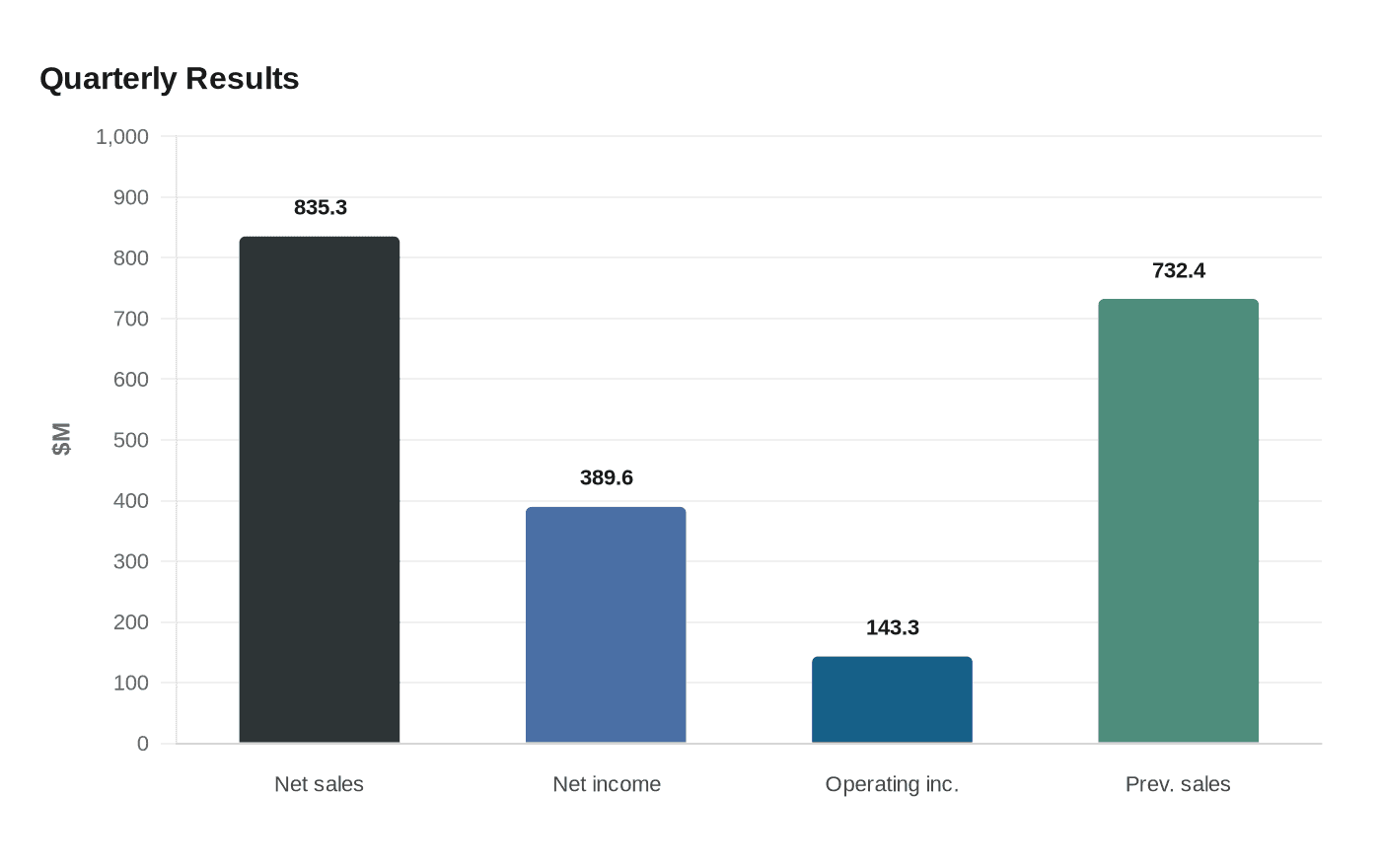
For the quarter ended May 2, 2026, GameStop said net sales rose 14% to $835.3 million from $732.4 million a year earlier. Net income climbed to $389.6 million, or 66 cents a share, the highest quarterly profit in company history. Operating income reached $143.3 million, also a first-quarter record. GameStop said collectibles drove the revenue growth, underscoring how much the business has leaned on higher-margin categories as traditional video-game sales continue to migrate online.

The balance sheet remains the company’s biggest strategic asset. GameStop said it ended the quarter with $9.7 billion in cash, cash equivalents, marketable securities, digital assets and related receivables, and collateral pledged for a derivative asset. That total included $8.4 billion in cash, cash equivalents and marketable securities, about $0.4 billion in digital assets and related receivables, and $1.0 billion in collateral tied to a derivative asset. On June 2, the board unanimously approved a new discretionary $2 billion share repurchase authorization that runs through June 2, 2029, replacing an older authorization from March 2019.
The buyback comes as GameStop continues to push beyond the role of a conventional mall-based retailer. In January, the company granted chief executive Ryan Cohen a performance-based stock award tied to a $100 billion market-cap target and $10 billion in cumulative performance EBITDA, a structure that signals just how ambitious management’s long-term goals have become. At the same time, the company has pursued a controversial approach around eBay, including an unsolicited acquisition proposal that eBay rejected on May 12. eBay’s board said the offer was “neither credible nor attractive,” citing financing uncertainty, leverage, operational risks, valuation effects, governance and executive incentives.
GameStop still operated 3,203 stores worldwide as of Feb. 1, 2025, including 2,325 in the United States, 193 in Canada, 374 in Australia and 311 in Europe. That footprint shows how much the business has already contracted from its peak retail era. Collectibles have helped soften the decline, but the latest quarter also made clear that investors are still pricing GameStop less like a normal retailer and more like a company defined by its cash, its capital allocation and its next strategic wager.
This article was produced by Prism’s automated news system from verified source data, official records, and press releases, then run through automated quality and moderation checks before publishing. The system is built and supervised by the people who set the standards it runs under. Read our full AI policy.
Know something we missed? Have a correction or additional information?
Submit a Tip