Garfield County Begins Road Improvements Inside Grand Staircase-Escalante; SUWA Sues
Garfield County crews began chip-seal work and realignment on a roughly 10-mile stretch of Hole-in-the-Rock Road inside Grand Staircase-Escalante; SUWA filed a federal suit seeking to stop the work.
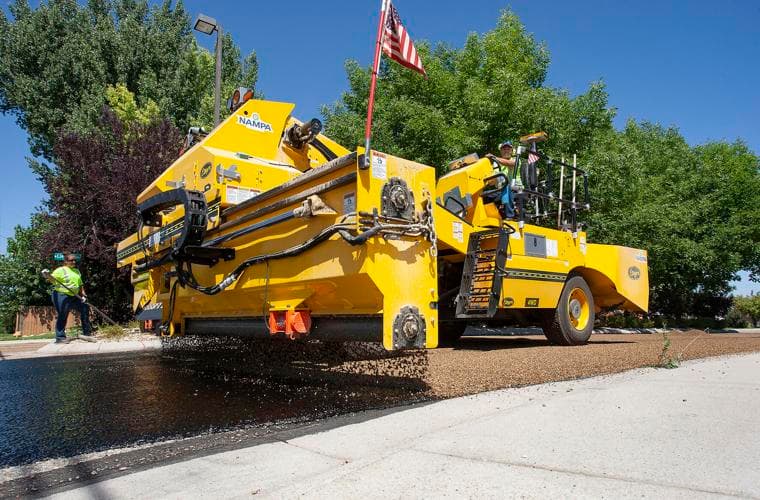
Garfield County crews have started a double chip-seal treatment and associated realignment and widening on roughly a 10-mile stretch of Hole-in-the-Rock Road that runs inside Grand Staircase-Escalante National Monument, prompting the Southern Utah Wilderness Alliance (SUWA) to file a federal lawsuit and seek emergency injunctive relief.
SUWA says the county’s work - changing a dirt surface to chip seal and reshaping the corridor - is unauthorized and unlawful on monument lands. SUWA moved for a temporary restraining order in U.S. District Court to halt the work while the case proceeds. The Department of Justice provided SUWA a copy of a Garfield County letter to the Monument manager dated January 27; SUWA says DOJ delivered that copy on February 3.
The disputed route is a long, remote corridor that sources variably describe as a 62-mile road, with 57 miles inside the Monument and 16 miles in Garfield County, while other reports describe the route as a 56-mile run to the cliffs above Lake Powell. SUWA frames the unpaved road as core to the Monument’s remote visitor experience and warns that paving will change that character. Hanna Larsen, SUWA staff attorney, said: “The scenic, rugged, and remote Hole‑in‑the‑Rock Road is how many visitors first experience the majesty of Grand Staircase‑Escalante National Monument. The County’s illegal actions seek to destroy that experience, turning the Road into one you might find in any city in the nation instead of a one‑of‑a‑kind National Monument. Paving will lead to more, faster, and louder traffic forever changing the remote, serene backcountry experience the Monument was created to protect and that draws visitors from around the world.”
Bloomberg Law and other reporting note that the legal fight follows a long ownership debate; Kane County filed an RS 2477 claim in 2010 and, after years of litigation, Judge Clark Waddoups granted Garfield and Kane counties quiet title to the road last July. SUWA’s complaint alleges Garfield County violated federal law by making improvements without consulting the Bureau of Land Management and that the BLM violated the Federal Lands Policy and Management Act by failing to prevent undue degradation.
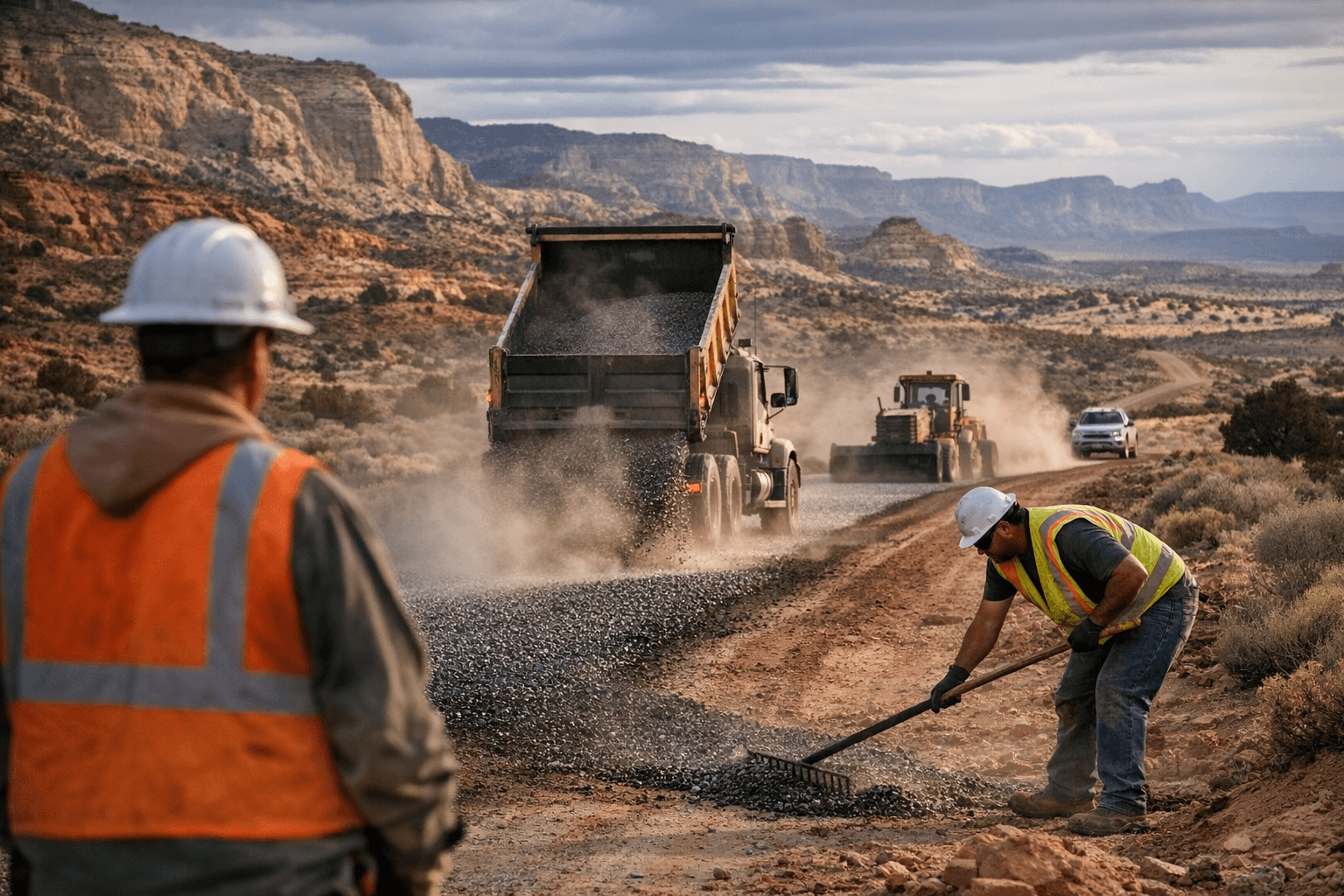
Garfield County has separately applied to the Federal Highway Administration for $15 million to do drainage work and to put gravel on the first 16 miles from Escalante to the Kane County line; that grant application remains pending. Garfield County Commissioner Leland Pollock said: “We’re doing the best we can. Obviously, we could do a lot more if we had some of the restrictions lifted on the road, we could do a lot more. But given the conditions we’re under, the restraints, regulations, we’re doing the best we can with that road.” Local reporting describes the route as washboard rough but wide and graded, with only light weekend traffic on the remote run to the cliffs overlooking Lake Powell.
For travelers, guides, outfitters, and residents who use Hole-in-the-Rock, the dispute affects access, road conditions, and the long-term character of trips into the Monument. The court will decide whether work stops; meanwhile SUWA hosted an emergency webinar and activists are mobilizing. Expect filings in U.S. District Court to determine whether chip-seal crews pause and whether federal agency review or congressional action will reshape management of the corridor.
Know something we missed? Have a correction or additional information?
Submit a Tip