Gas prices jump 52% since Iran war, hitting highest since 2022
Gasoline hit $4.54 a gallon as the Iran war tightened oil flows, pushing U.S. prices 52% above prewar levels and squeezing summer budgets.

Drivers are paying for the Iran war at the pump. The national average for regular gasoline climbed to $4.54 a gallon on Wednesday, up 31 cents in a week and 52% above the level before the conflict began, a jump that quickly filters into commuting costs, delivery fees and summer travel plans.
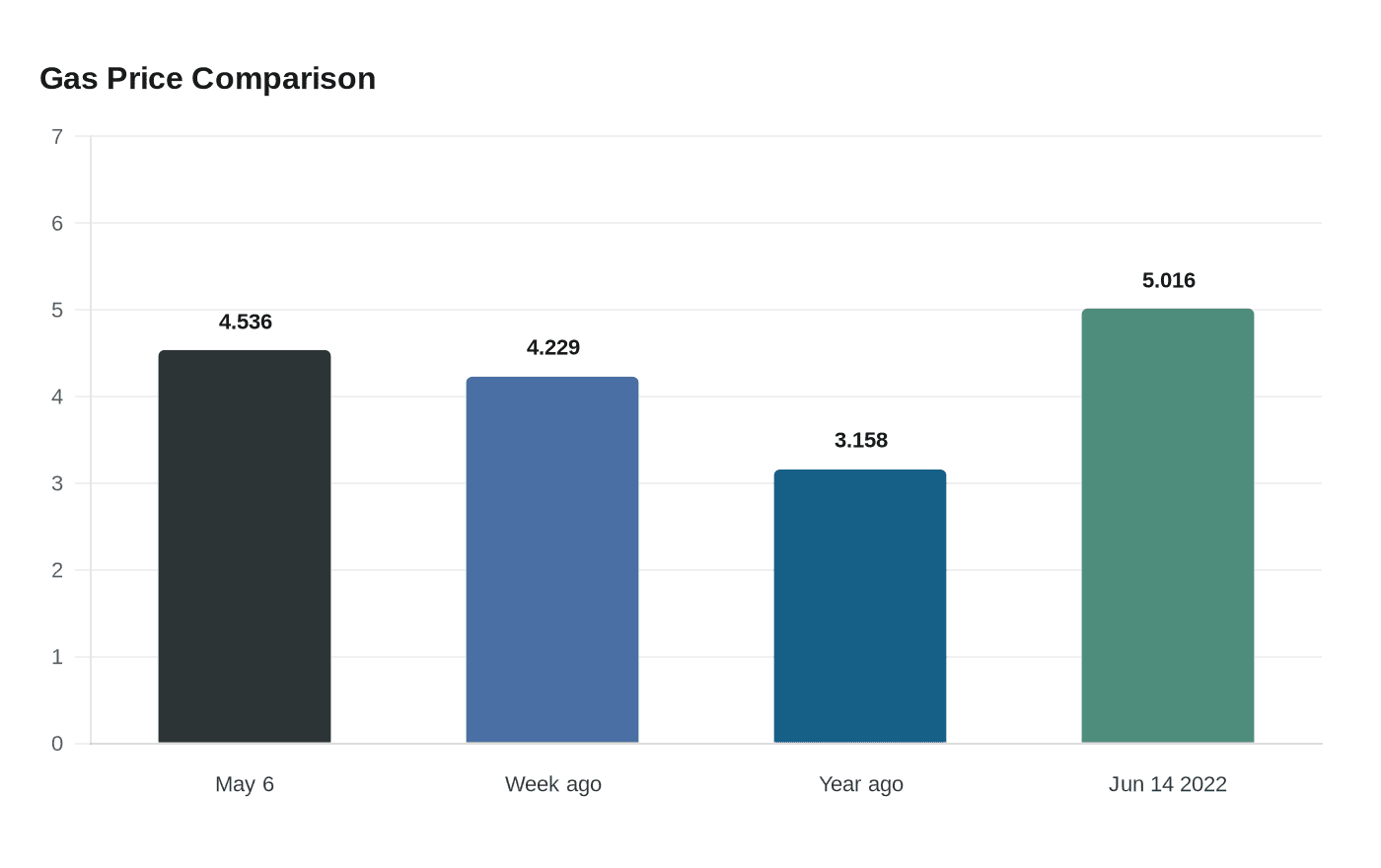
AAA put the U.S. average at $4.536 on May 6, up from $4.229 a week earlier and $3.158 a year ago. That left gasoline at its highest national level since June 14, 2022, when AAA’s historical data showed prices peaking at $5.016 a gallon. Reuters reported the national average crossed $4.50 on Tuesday for the first time since July 2022.
The surge reflects a geopolitical shock with direct market consequences. The war has disrupted oil flows through the Strait of Hormuz, a chokepoint that normally handles about one-fifth of the world’s daily oil shipments. As traffic through the strait has been constrained, crude prices have moved higher, with Reuters citing West Texas Intermediate at $105.33 a barrel and Brent at $112.03 a barrel.
The spike did not rise in a straight line. Prices briefly eased in mid-April as ceasefire optimism grew, then reversed as hostilities deepened and supply stayed tight. GasBuddy said regular gasoline had climbed $1.54 since the war began, while the Associated Press put the increase at 52%, or $1.56 a gallon.
The pressure is landing hardest in high-cost markets. The Energy Information Administration reported U.S. regular gasoline at $4.452 for the week of May 4, with California at $5.959 and Washington at $5.529. San Francisco stood out at $6.092 a gallon and Seattle at $5.674, while Florida averaged $4.288. The West Coast, California and several Midwestern markets were among the priciest areas.
Inventory levels leave little cushion. The EIA said U.S. gasoline stocks were 222.3 million barrels on April 24, about 2 million barrels below typical seasonal levels. Patrick De Haan of GasBuddy warned that low inventories were adding further upward pressure, a sign that the summer driving season could start under strain if crude markets stay tight and shipping through the Strait of Hormuz remains constrained.
This article was produced by Prism’s automated news system from verified source data, official records, and press releases, then run through automated quality and moderation checks before publishing. The system is built and supervised by the people who set the standards it runs under. Read our full AI policy.
Did this article answer your question?
%3Amax_bytes(150000)%3Astrip_icc()%2FCertificate-of-deposit-2301f2164ceb4e91b100cb92aa6f868a.jpg&w=1920&q=75)