Robinhood fund draws 150,000 investors into private tech access
More than 150,000 retail investors piled into Robinhood’s new private-tech fund, even as it began life with no redemption rights and a first-day drop below $25.

Robinhood says more than 150,000 retail investors have signed up for its new venture fund, a striking sign that private-market access is moving from a niche product to a mass-market pitch. The bet behind Robinhood Ventures Fund I is simple and controversial: ordinary investors want a piece of private tech names such as OpenAI, Stripe, Databricks and Oura before those companies ever reach the public market.
The fund, known as RVI, is a newly organized Delaware statutory trust registered under the Investment Company Act of 1940 and set up as an externally managed, non-diversified, closed-end investment company. Robinhood announced the product on Feb. 17, 2026, with an expected IPO price of $25 a share. The offering eventually raised about $658.4 million by selling 12,615,608 shares, and Goldman Sachs served as sole bookrunner. RVI began trading on the New York Stock Exchange on March 6, 2026.

What retail buyers are getting is not a traditional stock portfolio, but a fund built around hard-to-price assets that are still private. Robinhood says closed-end funds do not offer redemption rights and can invest up to 100% of assets in illiquid investments. That structure helps explain the appeal, access to companies that many investors have heard about but could not normally buy, and the danger, because pricing is opaque and investors cannot simply cash out on demand.
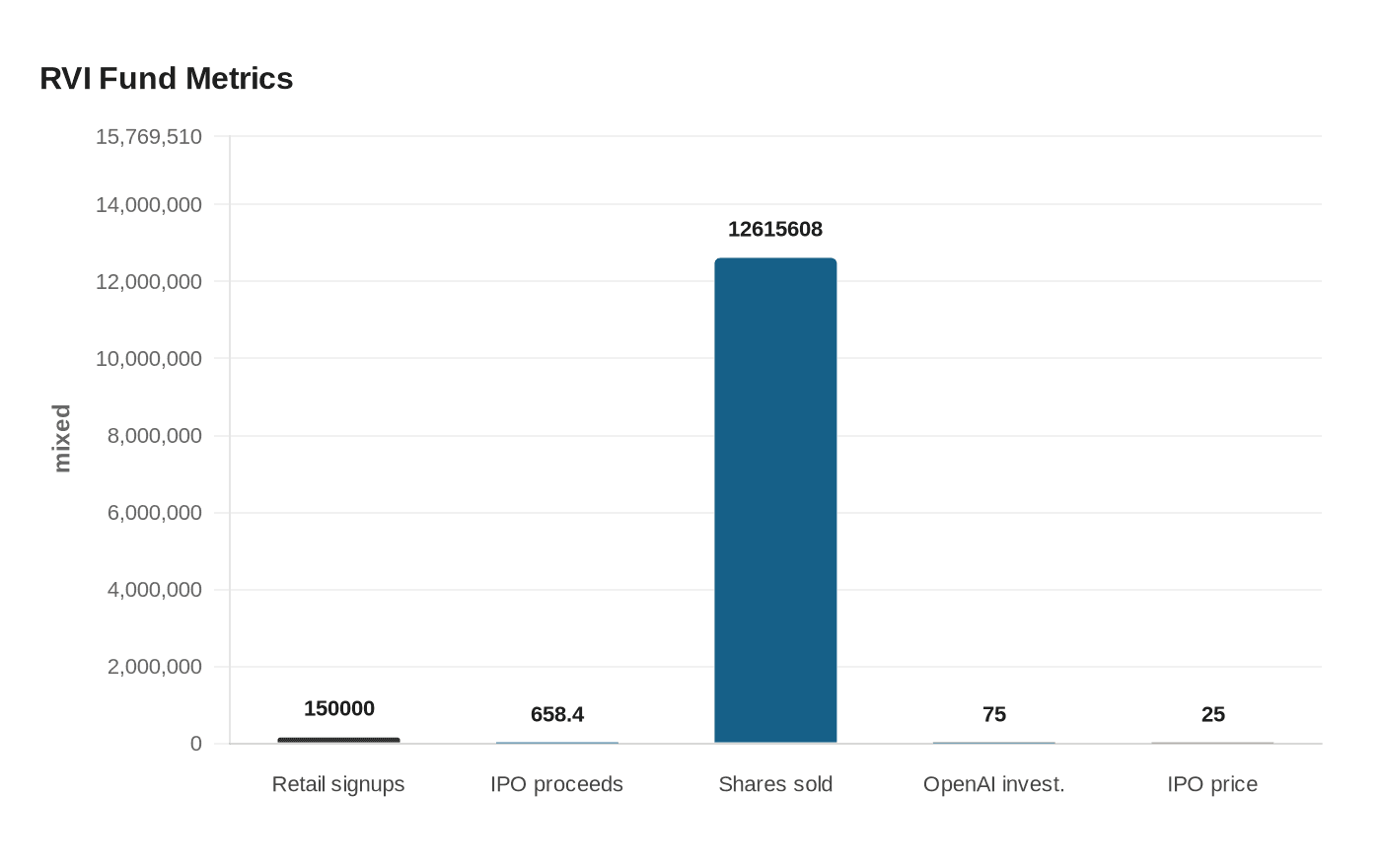
Robinhood later said RVI’s portfolio includes Airwallex, Boom, Databricks, ElevenLabs, Mercor, OpenAI, Oura, Ramp, Revolut and Stripe. The company also disclosed a $75 million investment in OpenAI, saying the purchase closed on April 17, 2026. In Robinhood’s telling, the fund is part of a broader push to democratize access to private markets, extending a strategy it has already tested with tokenized private stocks in the European Union.
That democratization pitch is exactly what has drawn scrutiny. Morningstar analyst Bryan Armour warned in prior coverage that the approach could be a “disaster” or “reckless” for ordinary investors, arguing that private-market access is usually available through more established vehicles. The concern is not just access, but what investors are actually buying: exposure to companies whose valuations are set behind closed doors, with limited transparency and no public-market liquidity to anchor prices.
Early trading suggested that skepticism has not vanished. Reuters and CNBC reported that RVI traded below its IPO price on its NYSE debut, falling about 11% to 15.8% on the first day. For a product sold as an easier route into elite private tech, that opening-day weakness underscored the central tension in Robinhood’s newest experiment: retail demand is real, but the underlying assets remain difficult to value, difficult to trade and easy to overhype.
This article was produced by Prism’s automated news system from verified source data, official records, and press releases, then run through automated quality and moderation checks before publishing. The system is built and supervised by the people who set the standards it runs under. Read our full AI policy.
Did this article answer your question?
%3Amax_bytes(150000)%3Astrip_icc()%2FCertificate-of-deposit-2301f2164ceb4e91b100cb92aa6f868a.jpg&w=1920&q=75)