Gaza Teacher Turns Tent into Yoga Haven for Traumatized Children
A 28-year-old teacher turned a displacement tent into a yoga space, teaching breathing and gentle stretches she learned online so displaced children can "forget" the war for a short time.
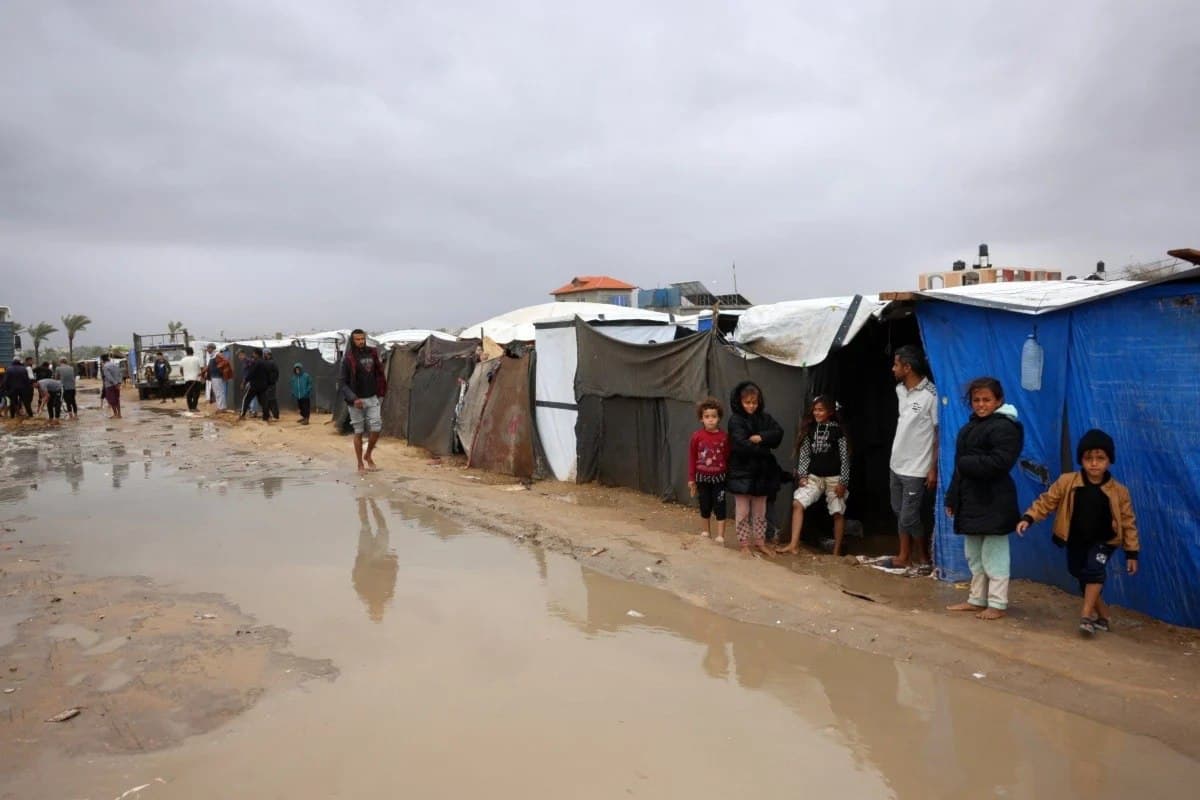
Hadeel al-Gharbawi has converted a small displacement tent into a classroom where children sit cross-legged on a thick mat and practice simple movements and breathing to find brief moments of calm. Al Jazeera footage shows youngsters closing their eyes, some concentrating and others fighting back shy smiles as they follow trauma-sensitive yoga and art sessions inside the makeshift shelter.
Sources differ on the tent’s exact location: Al Jazeera describes the classroom as in Gaza City in northern Gaza, while The New Arab places the work at Al Jawad Camp in central Gaza. Both accounts agree the activity takes place in a displacement tent; the location discrepancy remains unresolved in available reports.
New Arab reports that Hadeel is 28, an English literature graduate, and a mother of one with another child on the way, and that she single-handedly set up the camp in July 2024 without government support or external funding. She taught herself to use yoga as an intervention, telling Al Jazeera, "I wanted to expand the activities I do with children beyond drawing and colouring. I searched online and discovered that yoga can help children recover from trauma."
Training came via the internet. The New Arab says a trainer named Leila taught Hadeel remotely despite frequent Wi‑Fi dropouts, and that Hadeel used her smartphone as her only learning aid while studying trauma theory, attachment theory, neuroscience and yoga. New Arab adds that "since April" Hadeel has been leading yoga sessions independently, though the report does not specify the year attached to that April timeline.
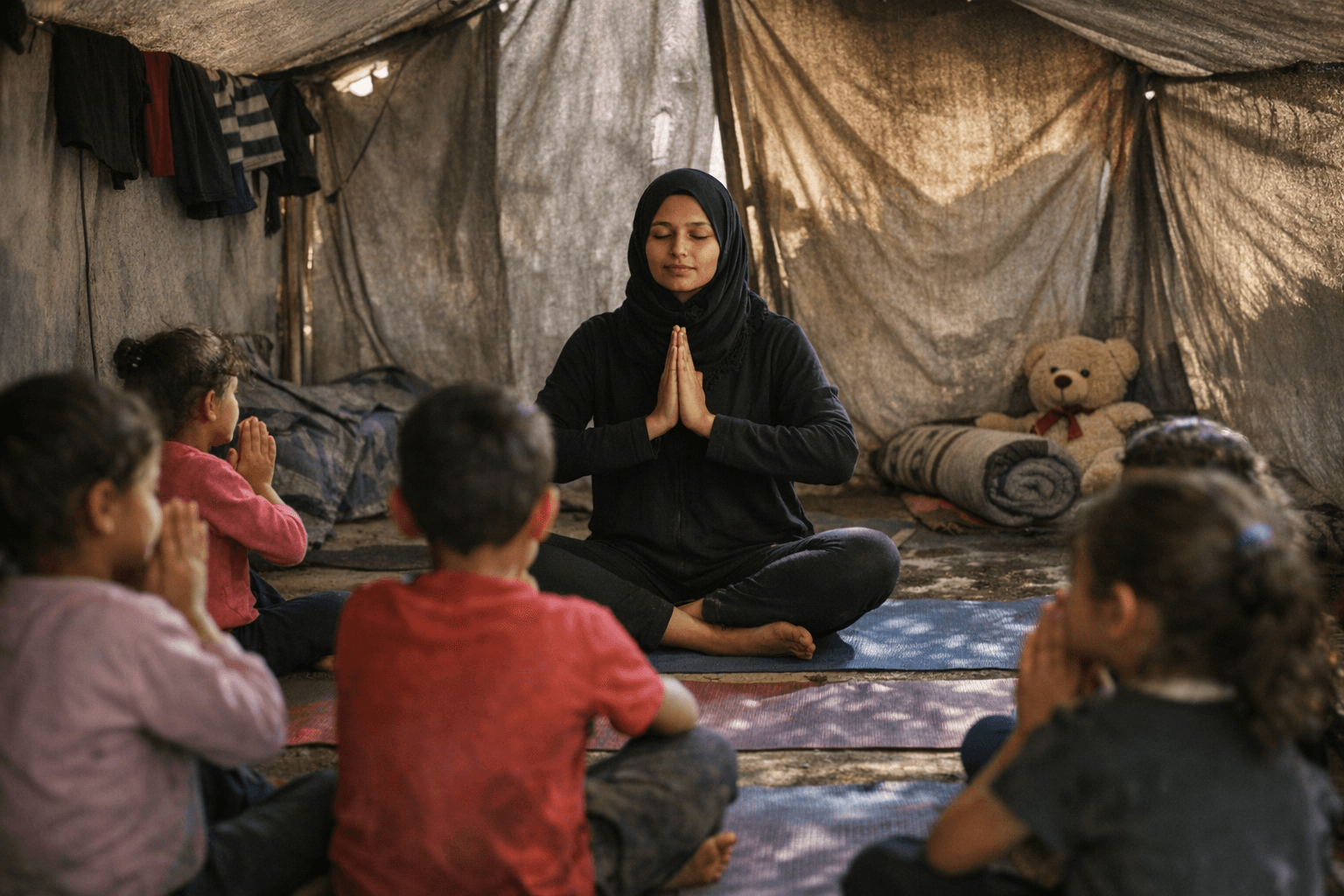
Class content combines movement and education. Al Jazeera and the YouTube video description list gentle stretching, breathing exercises and creative activities alongside maths and language lessons, with the goal of supporting emotional recovery. Hadeel told Al Jazeera that "combining learning with playful and therapeutic activities helps the children deal with trauma and regain a sense of normalcy." She also said, "Since yoga isn’t widely available here in Gaza, I decided to learn online and practice it with the children. Through yoga, they can release stress and cope with the difficult life around them."
Participants describe tangible, short-lived relief. A displaced student named Suwar told Al Jazeera, "We come here to do yoga, to learn and to do art. These activities allow us to forget, even for a short time, the war, the harsh weather and the queues for water. Yoga, in particular, gives us a moment of calm and helps us feel safe and happy." New Arab reports Hadeel saying, "The children have completely embraced it. They have felt a real improvement in their mental health. They enjoy it so much that they even practice it with their families inside their tents!"
Operational challenges are clear: New Arab documents unreliable internet during training and states the camp was opened without external funding. Al Jazeera’s video package — posted on 22 Feb 2026 by reporter Ibrahim al-Khalili on Al Jazeera English’s channel, which the supplied metadata lists at 17,100,000 subscribers — had 867 views and 68 likes in the excerpted metrics. The visual reportage underscores a recurring line of narration: in Gaza, "this small yoga class has given the children a rare space to breathe, a moment to ease the trauma of months of war, and to feel even a little bit like kids again.
Know something we missed? Have a correction or additional information?
Submit a Tip