Georgia university reforms ignite protests over country’s westward drift
Georgia’s university overhaul has pushed students into the streets, with critics warning it could tighten state control and pull the country further from Europe.
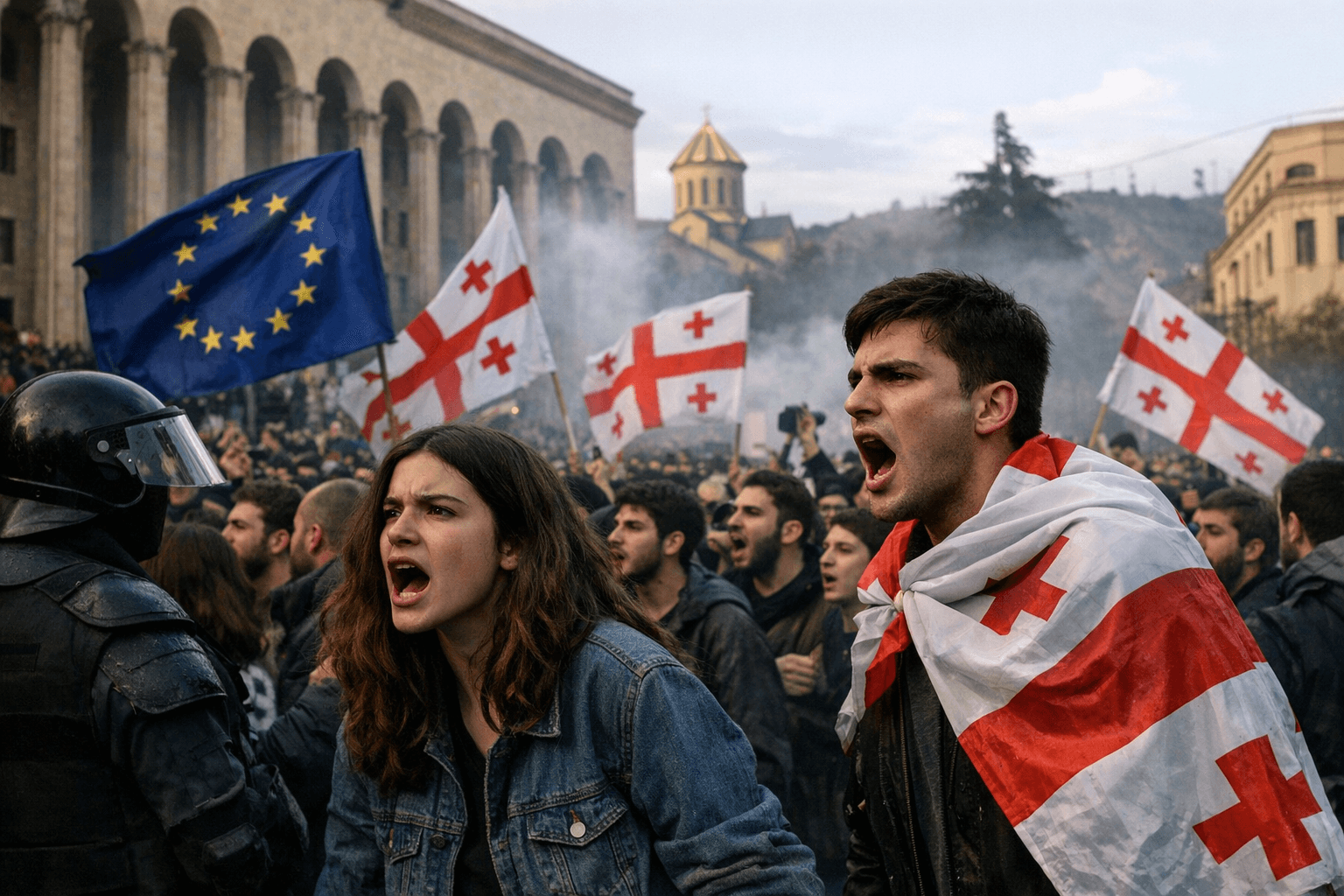
Georgia’s plan to overhaul higher education has turned universities into the newest front line in a battle over the country’s future, with students, professors and opposition activists warning that the reforms could pull the nation further from the West and closer to Moscow.
The changes, adopted in February, have sparked protests in Tbilisi and raised fears that some institutions could face closure or major restructuring. For critics, the issue reaches far beyond campus administration. They see it as part of a broader shift under the governing Georgian Dream party, one that has become more visible since Russia’s invasion of Ukraine in 2022 and has fueled concerns that Georgia is reversing its long-standing drive toward European integration.
Luka Mishveladze, a student helping organize rallies against the overhaul, said he once slept on the floor of his university building during the anti-government protests that began in 2024 so he could stay close to the demonstrations. Now he says the reforms threaten the university he calls home, turning academic policy into a fight over the country’s democratic direction and geopolitical alignment.
Government officials say the overhaul is meant to improve labor-market alignment and reduce the concentration of universities in Tbilisi. Under the principle of one faculty, one city, certain degree programs would be offered only at a single university in each city, and the state would decide which disciplines each public university can teach. Supporters argue that the policy would make institutions more efficient and spread educational opportunities more evenly across the country.
Opponents counter that the plan would shrink academic freedom, limit student choice and give the state too much authority over intellectual life. They warn that centralizing control over universities could shape where young people study, where faculty work and how future elites are trained, with consequences that extend far beyond the classroom.
In a country of 3.7 million people, the dispute has become a symbol of a larger struggle over sovereignty and identity. For many in Georgia’s universities, the question is no longer just how higher education should be organized. It is whether the country will keep moving toward Europe or settle into a more authoritarian model that leaves its academic and political future increasingly in the hands of the state.
This article was produced by Prism’s automated news system from verified source data, official records, and press releases, then run through automated quality and moderation checks before publishing. The system is built and supervised by the people who set the standards it runs under. Read our full AI policy.
Did this article answer your question?