Georgia voters decide Trump-backed nominees in key GOP runoffs
Georgia’s GOP runoffs turned into a fight over who can sell affordability, with Burt Jones pushing to erase the state income tax and Rick Jackson attacking his fundraising edge.
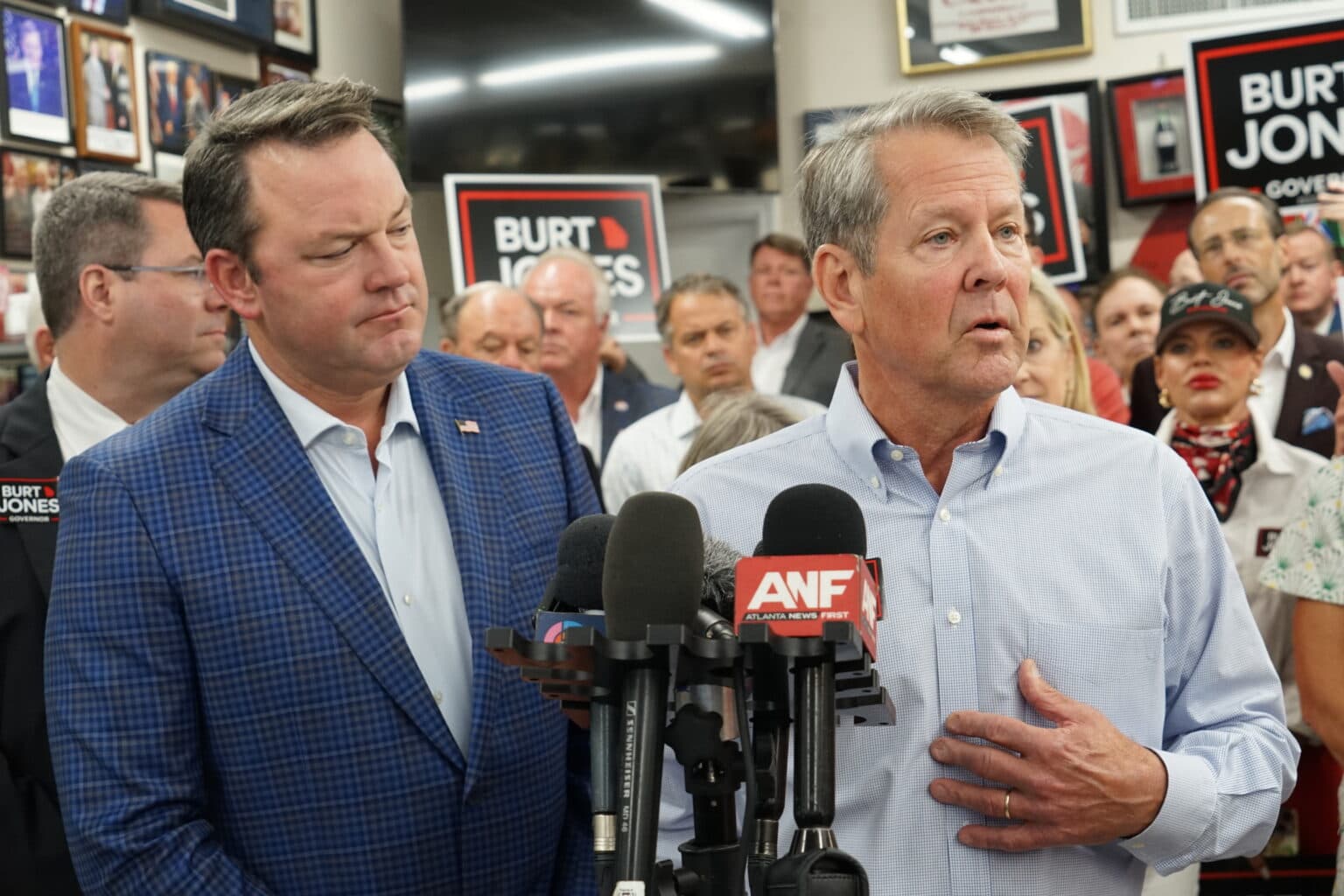
Georgia voters returned to the polls Tuesday in two Republican runoffs that put Donald Trump-backed candidates at the center of the state’s fight over affordability, money and power. More than 2 million of Georgia’s 7.3 million active voters took part in the May primary, and the runoff became necessary because Georgia law requires a majority to win outright.
In the governor’s race, Lt. Gov. Burt Jones and billionaire healthcare executive Rick Jackson were vying for the GOP nomination after a bitter intraparty clash over campaign spending, attack ads and strategy. Jones has made eliminating Georgia’s personal income tax by 2032 a centerpiece of his campaign, casting it as a direct answer to household costs. Jackson has pushed back by arguing that Jones is benefiting from Georgia’s 2021 leadership committee law, which he says gives Jones an unconstitutional fundraising advantage.

Jackson filed that lawsuit in February, saying statewide primary candidates are generally limited to $8,400 per donor, while runoff limits are $4,800 per donor. Jones, through his leadership committee, has been able to raise and spend unlimited contributions, a structure Jackson says tilts the race before voters even reach the ballot box. The winner will face Democrat and former Atlanta Mayor Keisha Lance Bottoms, who secured her party’s nomination outright in the May primary.
The affordability argument is especially pointed in a state where the personal income tax is projected to bring in about $16.5 billion this year, roughly 44% of general revenue. Supporters of Jones’s approach describe the plan as a major cost-of-living break for families, while critics warn that wiping out such a large revenue source could force cuts to public services or shifts to other taxes. That tension made the runoff less a pure intraparty contest than a referendum on how Republicans define relief for voters squeezed by everyday expenses.

The Senate runoff carried its own political and ethical strain. Rep. Mike Collins and former college football coach Derek Dooley advanced after neither cleared 50% in the May primary, and the winner will face Sen. Jon Ossoff in November. More than 35 Democratic state lawmakers asked Gov. Brian Kemp on June 4 for an independent investigation into allegations involving state contracts tied to Dooley’s family company, CENTEGIX, which has received tens of millions of dollars in Georgia contracts. With early voting already completed June 8 through June 12, the runoff day vote closed a race that will shape both Georgia’s 2026 agenda and the Republican argument over what affordability really means.
This article was produced by Prism’s automated news system from verified source data, official records, and press releases, then run through automated quality and moderation checks before publishing. The system is built and supervised by the people who set the standards it runs under. Read our full AI policy.
Know something we missed? Have a correction or additional information?
Submit a Tip