Republicans gain redistricting edge in midterms after Trump map push
Trump’s Texas map push helped spark a 10-state redistricting scramble that could hand Republicans a 16-seat edge, far above independent estimates.
Republicans have turned a mid-decade redistricting scramble into one of their clearest structural advantages heading into the November 2026 House fight. After 10 states enacted new congressional maps, some estimates show the GOP positioned to gain as many as 16 seats from the redraws, while Democrats could gain up to six.
The fight began after Donald Trump urged Texas Republicans to redraw their U.S. House map in 2025, setting off a round of map-making that has spread well beyond one state. National redistricting trackers say the changes have affected Texas, Florida, Ohio, Louisiana, Missouri, Virginia, California, Alabama, North Carolina, Tennessee and South Carolina, a bloc that holds roughly 40% of all House seats. That makes the battle less about a few isolated districts than about a national power shift built one line at a time.
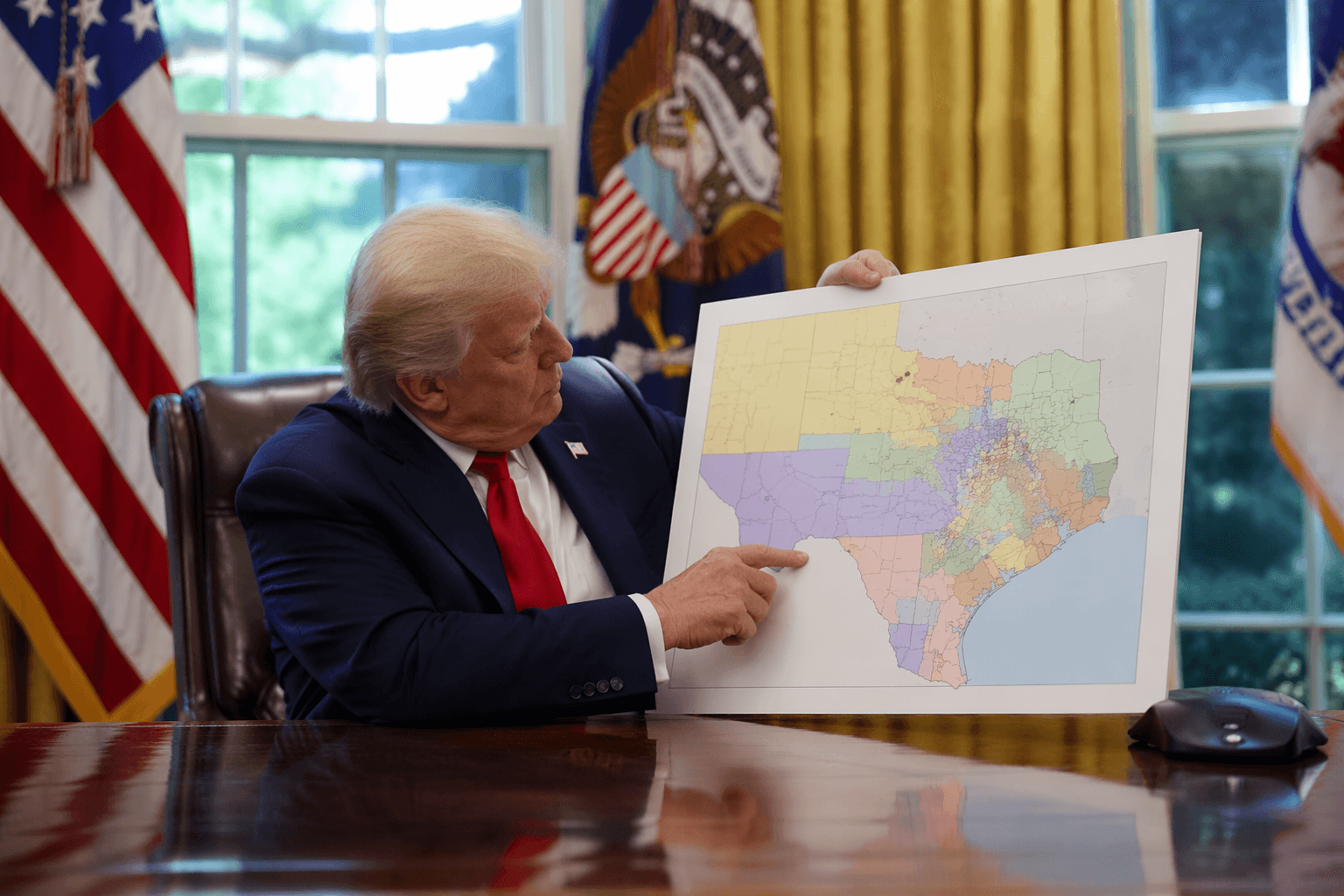
Court rulings have been just as important as partisan map-drawing. The U.S. Supreme Court recently weakened federal Voting Rights Act protections, and the Virginia Supreme Court blocked a Democratic-drawn congressional map, opening the door to Republican gains there. AP reported that those rulings helped Republicans open an advantage in the broader redistricting fight, while Democrats have argued the rush of map changes could create voter confusion and add headaches for election officials.
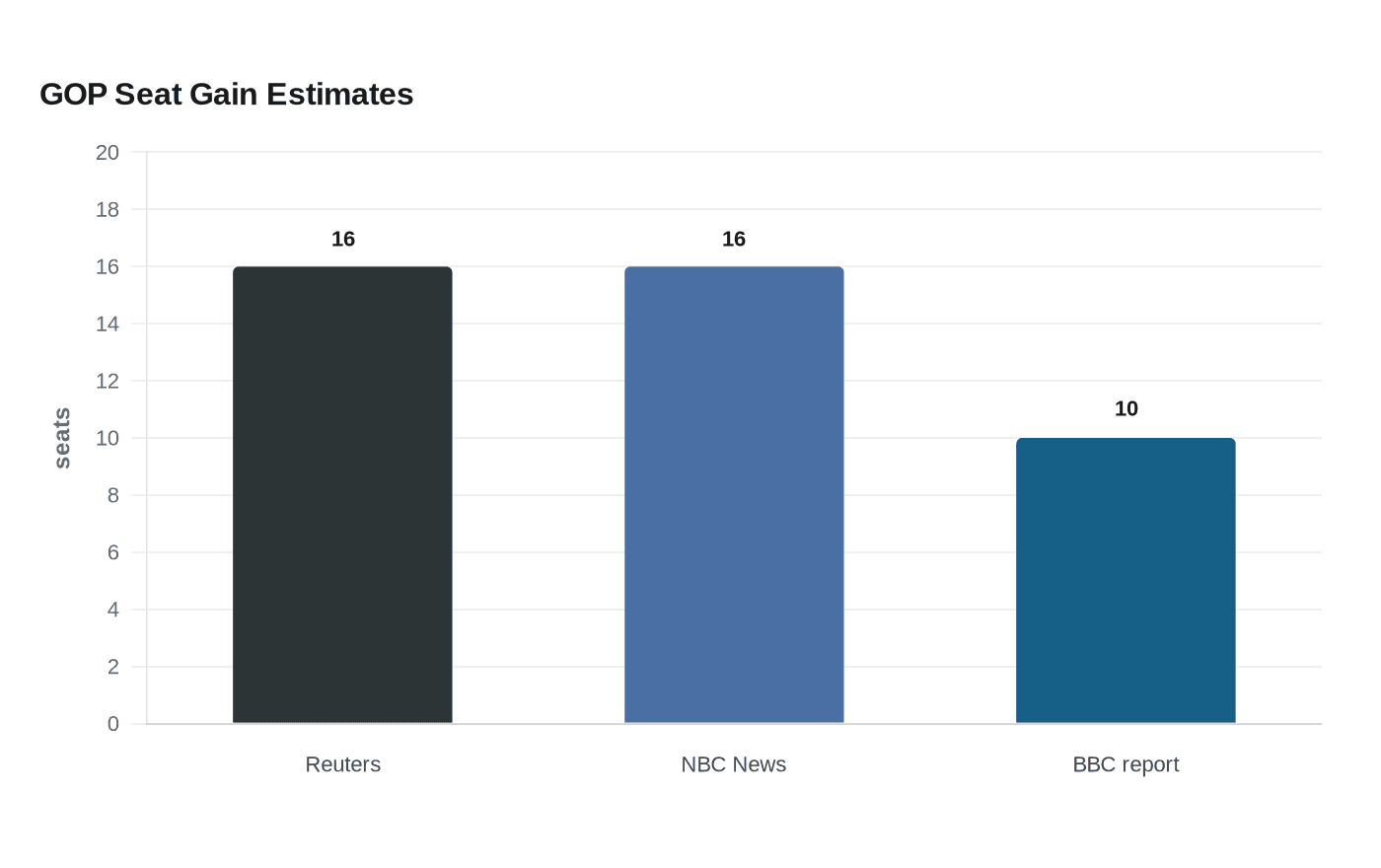
The math still varies by tracker. Reuters reported that Republicans have increased their edge in races for 16 seats, while Democrats have an advantage in six newly redrawn districts. NBC News also said the new maps put Republicans in position to gain up to 16 seats, compared with six for Democrats. A separate internal House Republican assessment reported by the BBC put the GOP’s gain at 10 additional red-leaning seats. The University of Virginia Center for Politics has estimated Republicans are sitting on a high-single-digit advantage, with the final effect still uncertain.
That uncertainty matters because the map is only the starting point. Political strategists Kevin Sheridan and Mo Elleithee have both been weighing how the new districts change the battlefield, but even Republican officials acknowledge that candidate quality, turnout and district-specific dynamics will decide whether the map edge becomes actual seats. The NRCC has been publicly framing the redraws as part of a broader advantage built on fundraising and candidate recruitment, a message aimed at defending a narrow House majority in a cycle where the ground rules have already shifted.
This article was produced by Prism’s automated news system from verified source data, official records, and press releases, then run through automated quality and moderation checks before publishing. The system is built and supervised by the people who set the standards it runs under. Read our full AI policy.
Know something we missed? Have a correction or additional information?
Submit a Tip