German state data points to another jump in April inflation
April price readings from Germany’s biggest states pointed to another national inflation rise, a warning that Europe’s disinflation path is getting stickier again.
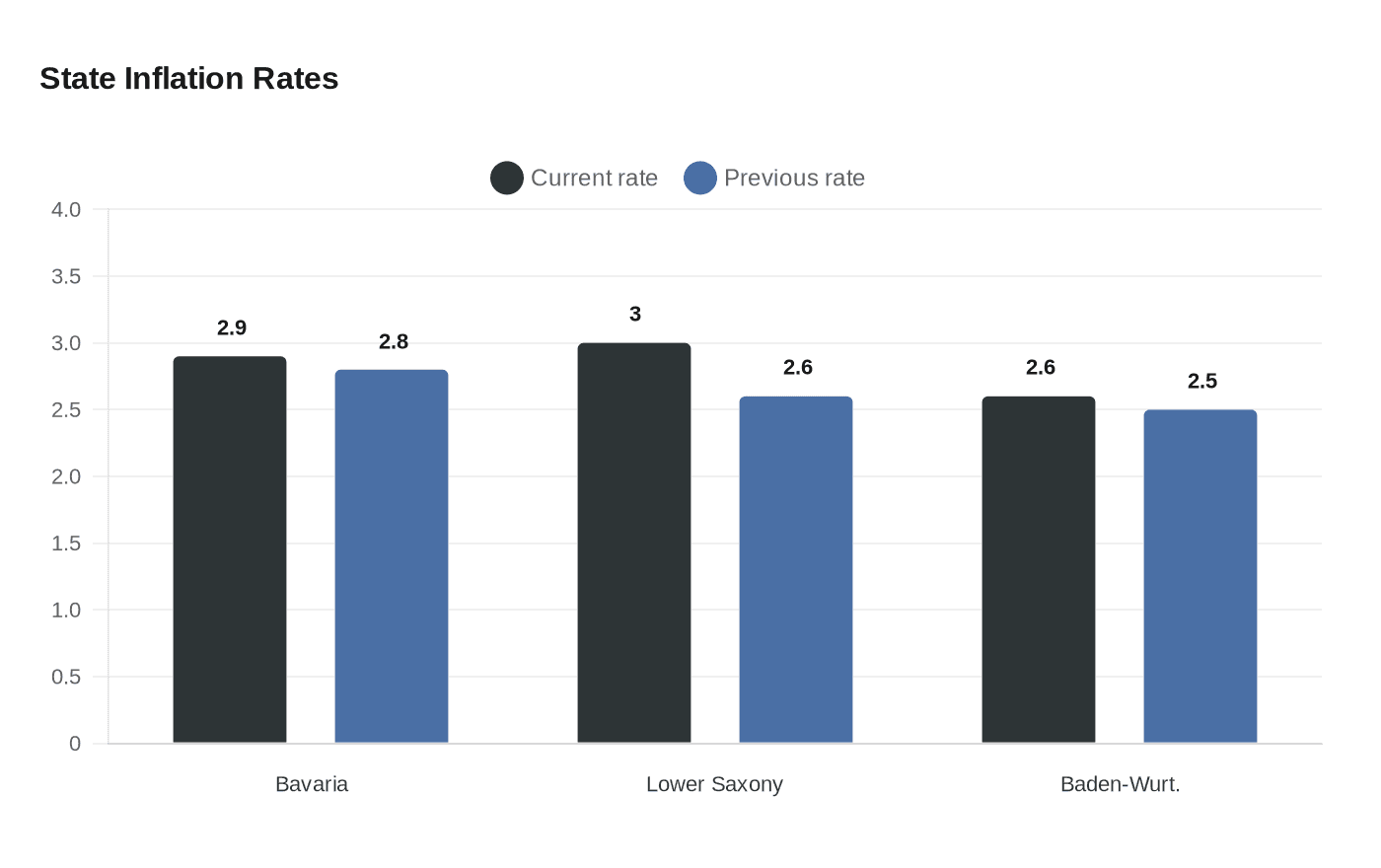
Price pressure in Germany looked set to accelerate again in April, with three of the country’s largest states already flashing firmer inflation and only North Rhine-Westphalia holding steady. Bavaria’s rate climbed to 2.9% from 2.8%, Lower Saxony rose to 3.0% from 2.6%, and Baden-Wuerttemberg increased to 2.6% from 2.5%, a pattern that often foreshadows the national reading due later on Wednesday, April 29, 2026.
That matters far beyond Germany’s borders because the country’s harmonised index of consumer prices is the euro zone benchmark used for international comparisons. If the national April figure confirms a fresh uptick, it would reinforce the view that inflation is proving harder to fully contain in Europe’s largest economy, just as households and policymakers hoped the sharp drop from the energy shock period was settling into a steadier path.
The latest state data follows a March inflation rate of 2.7%, the highest since January 2024, after consumer prices rose 1.1% from February. Destatis said the rise was driven especially by energy products, with motor fuel and heating oil climbing sharply for consumers since the start of the Iran war. That is a reminder that Germany remains highly exposed to imported energy and raw materials, so geopolitical shocks can still pass quickly into prices for businesses and households.
Economists expected the harmonised April inflation rate to come in at 3.1%, up from 2.8% in March. Berlin has also grown more cautious on the outlook. On April 22, 2026, the German economy ministry cut its growth forecast for this year to 0.5% from 1.0% and lifted its inflation outlook, projecting 2.7% inflation in 2026 and 2.8% in 2027. That combination of weaker growth and firmer prices points to a tougher policy mix, with the economy struggling while inflation does not fade as quickly as hoped.
For the European Central Bank, another German inflation gain would complicate the case for moving too quickly on rates. Higher German price readings can feed into broader euro zone borrowing costs, keep bond yields elevated and force investors to rethink how soon policy can ease. The knock-on effect is not limited to Europe: firmer inflation in the bloc’s largest economy can ripple into U.S. markets through global bond yields, the dollar and risk appetite, while also dulling expectations for world growth if energy and input costs stay elevated.
This article was produced by Prism’s automated news system from verified source data, official records, and press releases, then run through automated quality and moderation checks before publishing. The system is built and supervised by the people who set the standards it runs under. Read our full AI policy.
Did this article answer your question?