Mercedes-Benz profit drops 17%, but beats expectations on new launches
Mercedes-Benz’s profit fell 17% to 1.9 billion euros, but the beat on forecasts put new models, not the miss, at the center of investor attention.
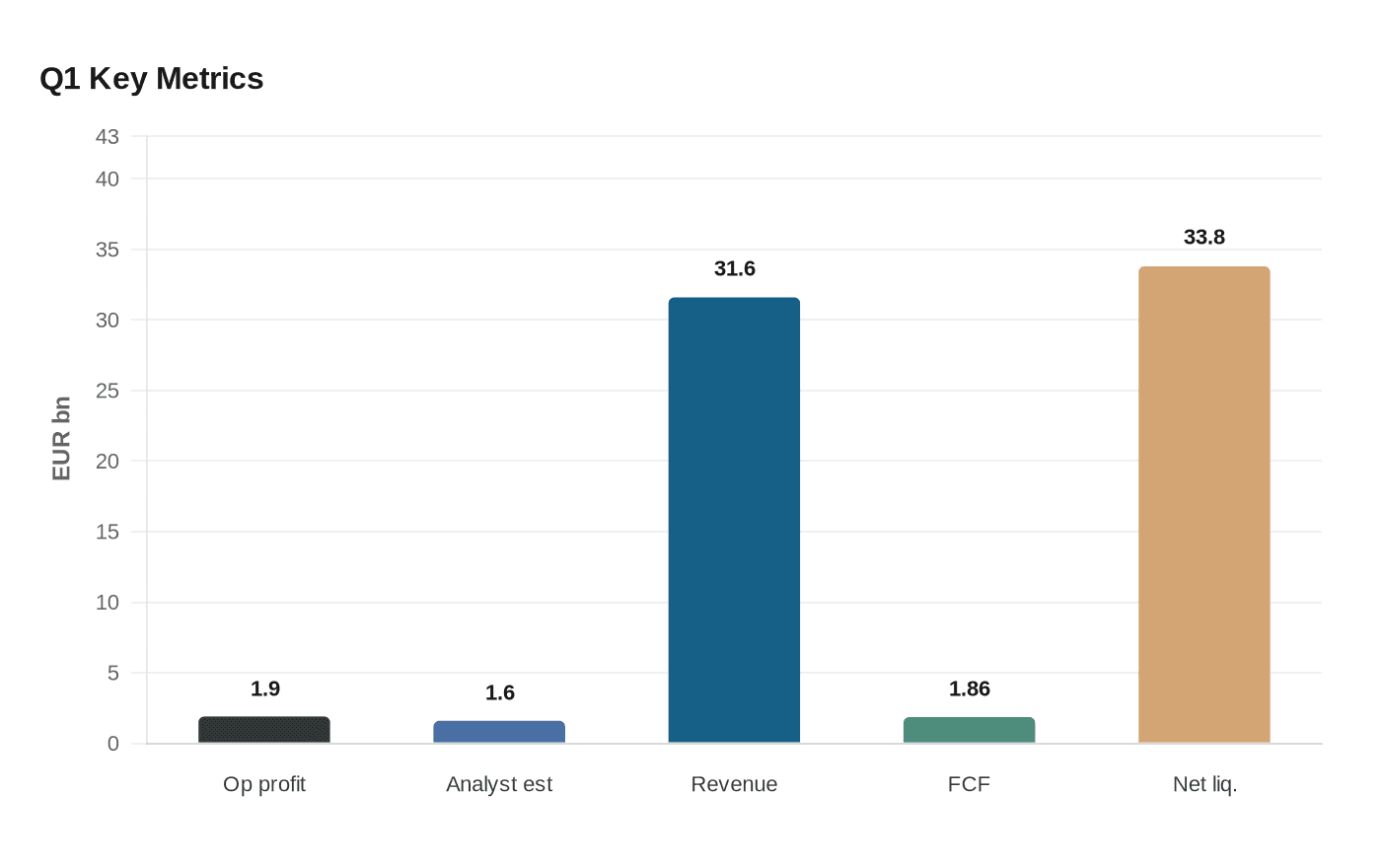
Mercedes-Benz Group AG said first-quarter operating profit fell 17% to 1.9 billion euros, but the result still came in above the 1.6 billion-euro average analyst estimate and gave investors a reason to look past the headline decline. The quarter underscored how sharply tariffs, weaker demand in China and tougher electric-vehicle competition are pressuring even the industry’s most premium brands.
Revenue reached 31.6 billion euros, industrial free cash flow was 1.86 billion euros and net liquidity in the industrial business rose to 33.8 billion euros at the end of March. Mercedes-Benz said the quarter was in line with full-year guidance and confirmed its divisional and group outlooks, while Mercedes-Benz Cars posted an adjusted return on sales of 4.1%, inside its 3% to 5% target range. The car division sold 419,400 vehicles in the quarter, with growth in Europe and the United States partly offsetting declines in China.
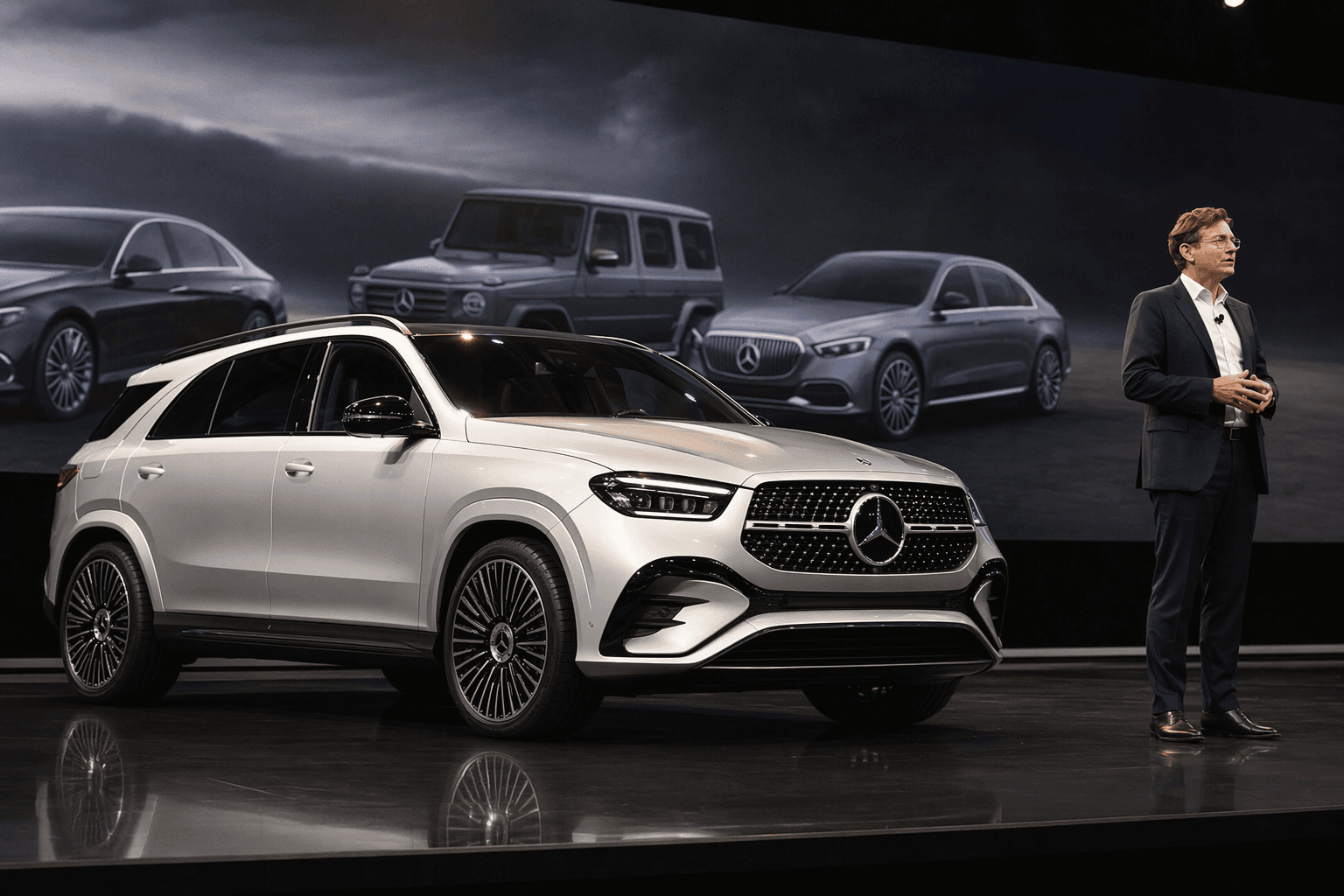
The deeper question for Mercedes-Benz is whether its new-model offensive can restore margin power in an industry where product cycles are expensive and the transition to electric vehicles has slowed returns. The company said its largest-ever launch plan spans more than 40 new models between 2025 and 2027. In 2026, that rollout includes the new S-Class, EQS, GLS, Mercedes-Maybach S-Class, all-electric C-Class, GLE, GLE Coupé, CLA, GLB and VLE. Mercedes-Benz said strong demand for new products and healthy order books should support improved momentum in the second half of the year.
China remains the most obvious pressure point. Sales there fell 27% in the quarter, and Mercedes-Benz is trimming production capacity by 10% while leaning more heavily on local development and partnerships. U.S. tariffs added 1.2 billion dollars in costs last year, and the company said its return on sales figures included tariff effects. That combination leaves less room for the kind of pricing power Mercedes once counted on in its best markets.
Even so, Mercedes-Benz is trying to show that it can defend the balance sheet while it reshapes the business. The company said its industrial-business share buyback program had already topped 1 billion euros in completed repurchases, and it paid out a 3.3 billion-euro dividend in April. For now, investors appear willing to give the company credit for beating expectations. The harder test will come in the next few quarters, when the new models have to translate into stronger volumes and better margins, not just a better story.
Know something we missed? Have a correction or additional information?
Submit a Tip