Germany approves 2027 budget, boosts borrowing and public investment
Berlin approved a 2027 budget with 203.6 billion euros in borrowing, while interest costs are set to nearly double by 2030.
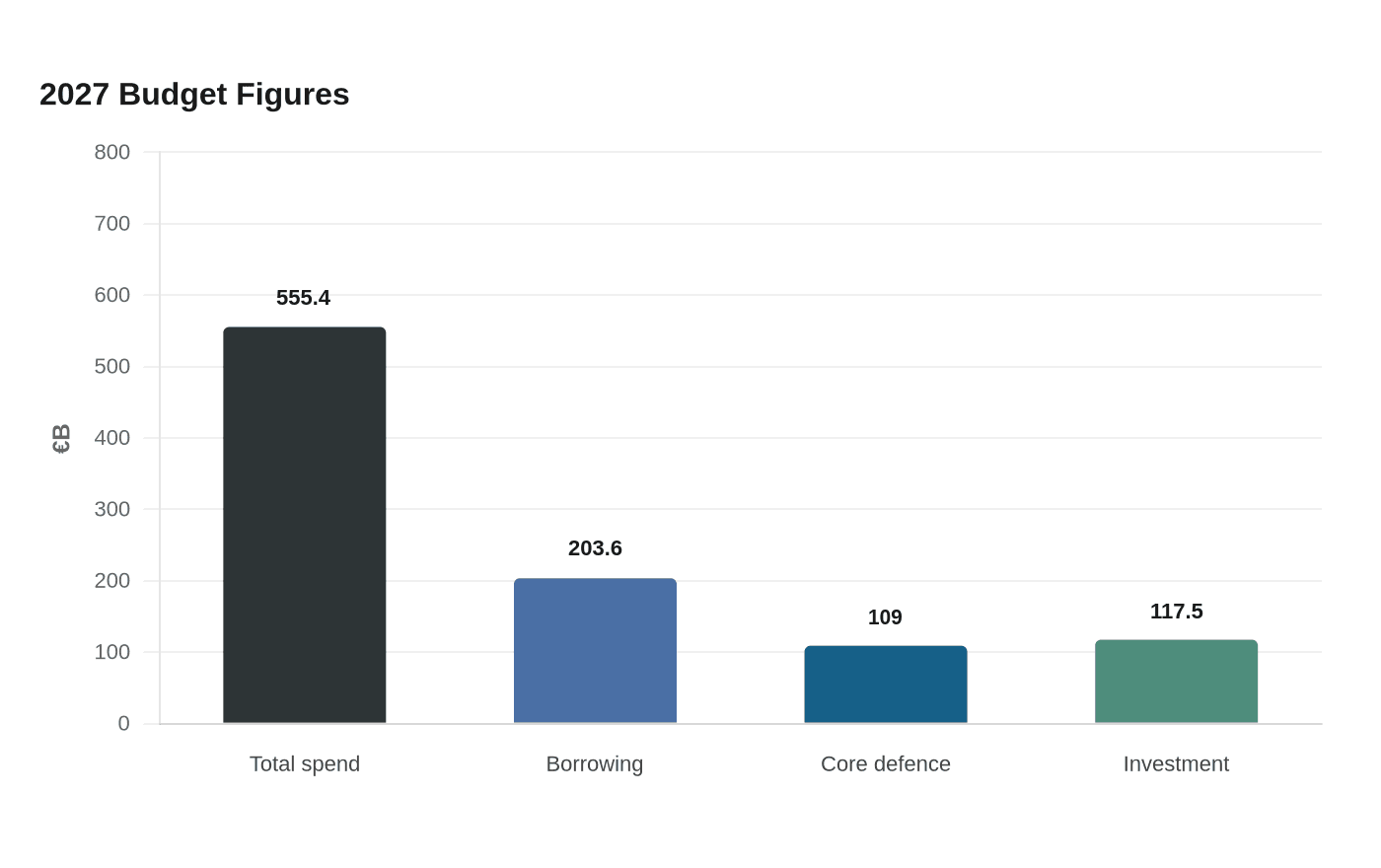
Germany’s cabinet approved the first draft of the 2027 budget on Monday, setting total spending at 555.4 billion euros and total borrowing at 203.6 billion euros. The plan sits inside a medium-term framework running through 2030 and pushes borrowing above the 196.5 billion euros the government set in its spring framework in April.
Core defence spending is set to rise to 109 billion euros in 2027 from 82.2 billion euros in 2026, and total defence and security-related spending reaches 130.1 billion euros once Ukraine aid and other security costs are included. Total investment is planned to climb to 117.5 billion euros from 78.9 billion euros in 2025, supported by the 500 billion-euro infrastructure fund and the 2025 debt-brake reform that freed more defence spending from the borrowing cap.
Germany plans to borrow 838.2 billion euros from 2027 through 2030, while interest payments are projected to increase from 41.9 billion euros in 2027 to 80.7 billion euros by 2030. The BDI industry group warned that by 2030 nearly one in five euros of tax revenue could be absorbed by interest payments. The European Commission forecasts Germany’s deficit at 3.7% of GDP in 2026 and 4.1% in 2027, after weak growth, energy-price shocks and a slow recovery in investment. In May, the 2026-2030 revenue forecast was cut by 87.5 billion euros, while green groups objected to transfers from the climate fund and a six-percent cut in development aid.
The draft still needs parliamentary approval.
This article was produced by Prism’s automated news system from verified source data, official records, and press releases, then run through automated quality and moderation checks before publishing. The system is built and supervised by the people who set the standards it runs under. Read our full AI policy.
Did this article answer your question?