Germany face Paraguay in first World Cup knockout tie in 12 years
Germany’s first World Cup knockout tie in 12 years came against Paraguay in Boston, a round of 32 match that tested whether Julian Nagelsmann’s rebuild was truly real.
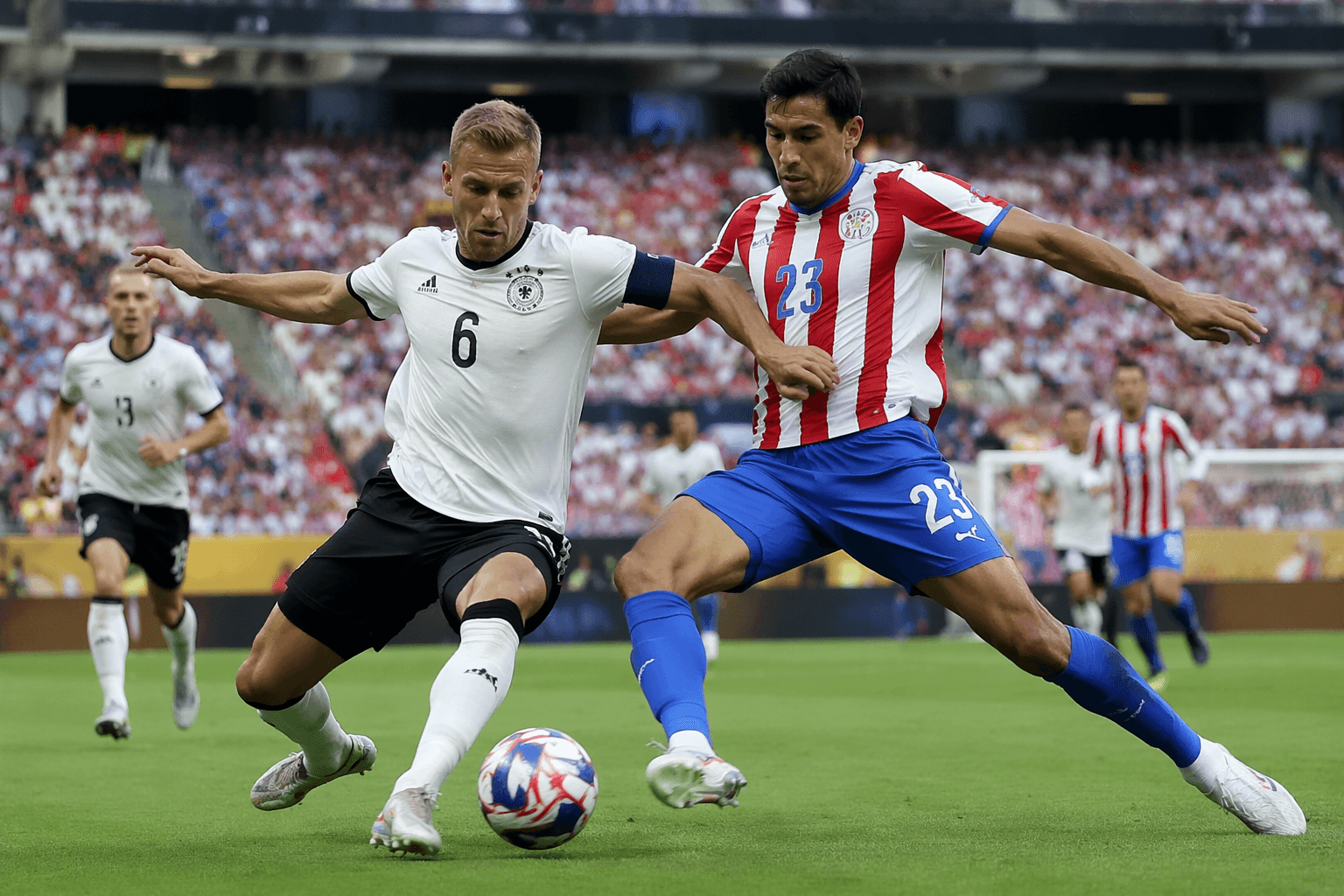
Germany’s first World Cup knockout tie in 12 years arrived in Boston against Paraguay, a round of 32 meeting that doubled as a hard check on Julian Nagelsmann’s attempt to restore the national side to elite status. The match was set for Monday, June 29, 2026, at Boston Stadium, with kickoff at 20:30 UTC, 22:30 in Germany and 4:30 p.m. local time in Boston.
Germany came into the tie after getting through the group stage under Nagelsmann, with Kai Havertz, Jamal Musiala and Florian Wirtz giving the side a more attacking, technically gifted core than in recent tournaments. That shift in personnel and profile was central to the sense that this German team was supposed to be different, but Paraguay’s arrival from the other side of the bracket meant the first real knockout examination came immediately. FIFA and the Deutscher Fußball-Bund both framed the game as a round of 32 contest, and the DFB confirmed that viewers in Germany could watch it on ZDF and MagentaTV.
The matchup carried very little World Cup history. Germany and Paraguay had met only once before on the tournament stage, in the 2002 World Cup in Korea and Japan, when Germany won 1-0 in the round of 16. Oliver Neuville settled that game with an 88th-minute goal at Jeju World Cup Stadium in Seogwipo, South Korea, a result that remains the only World Cup meeting between the sides.
Paraguay reached Boston as one of the eight best third-placed teams from the group stage, a route that gave the South Americans momentum but also underscored how unforgiving the bracket had become. For Germany, the stakes were sharper: the national team had not played a World Cup knockout tie for 12 years, and this was the first chance to prove that the changes around Nagelsmann, from the younger core to the more assertive attacking structure, were more than a short-term surge. A loss would not just end the tournament early; it would reopen the question of whether Germany’s recovery from years of underperformance was genuine at all.
This article was produced by Prism’s automated news system from verified source data, official records, and press releases, then run through automated quality and moderation checks before publishing. The system is built and supervised by the people who set the standards it runs under. Read our full AI policy.
Did this article answer your question?