Germany rearms fast as Russia war triggers defense overhaul
Germany is tearing up decades of military restraint, with Russia’s war, NATO pressure and faster procurement driving a defense shift once seen as unthinkable.
Why Germany is rearming now
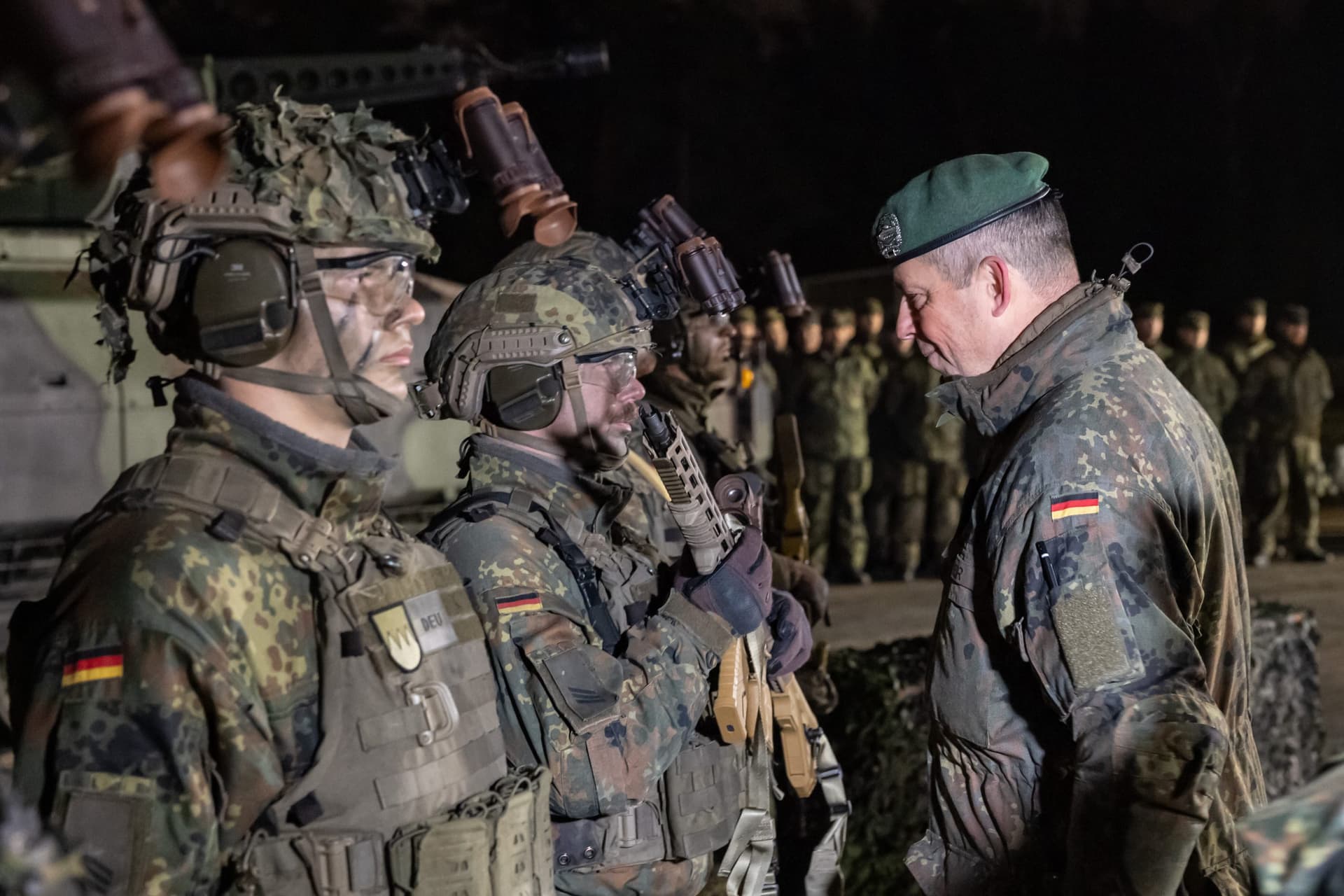
Germany is spending more than 108 billion euros on defense this year, a level that would once have seemed politically impossible in a country shaped by military restraint after World War II. Berlin now says the overhaul is part of a broader *Zeitenwende*, a turning point in security policy, driven above all by Russia’s full-scale invasion of Ukraine in 2022.
That war changed the calculus in German politics. The argument in Berlin is no longer simply about whether to spend more, but about whether Germany can remain a credible European power, meet NATO expectations and deter aggression without repeating the mistakes that scarred the continent in the last century. The government’s answer has been to pair rearmament with legal and budgetary reforms that make higher defense spending more durable.
The scale of the shift is striking. The Defense Ministry says spending on external security is set to rise to about 152 billion euros by 2029. In January 2026, the Bundestag approved a law to speed up planning and procurement for the Bundeswehr, a move meant to cut the delays that have long slowed military buying and left Germany under-equipped in key areas. For a system known for caution and procedural drag, that is not a small adjustment. It is a structural break.
How Berlin is trying to turn spending into capability
Germany’s defense buildup is not just about writing larger checks. It is also about making the machinery of procurement work faster, so the Bundeswehr can actually absorb money and convert it into readiness, equipment and stockpiles. The new law is designed to accelerate planning and procurement, which has been one of the biggest bottlenecks in modern German defense policy.
That matters because the country is trying to do several things at once: rebuild conventional military strength, reassure allies, and prove that higher spending can be sustained beyond a single political cycle. The government’s expected rise from more than 108 billion euros in 2026 to about 152 billion euros by 2029 suggests this is not a temporary surge but a multi-year shift in state priorities.
The broader European context helps explain why Berlin is moving so quickly. SIPRI says global military expenditure reached a record $2.887 trillion in 2025, up 2.9 percent in real terms from the previous year. Military spending in Europe rose 14 percent, and Germany was among the world’s five biggest military spenders. That makes Germany’s rearmament part of a continental pattern, but also one of its most consequential national tests. If Europe is rearming, Germany cannot stay on the sidelines and still claim strategic leadership.
Why this is historically so sensitive
The political weight of the change comes from history. Postwar Germany was restrained for decades by political caution and by the constitutional debt brake, which limited the state’s ability to borrow and helped keep defense spending politically contained. Those constraints now have been loosened enough to make sustained investment possible, but the debate remains loaded with memory.
That is why the issue is not simply whether Germany should spend more. It is how a democracy with a deep anti-militarist reflex can rebuild military power without losing the lessons that came from the last century. Supporters of the buildup say the lesson of the past is not permanent weakness, but the need to defend a democratic Europe against coercion. Critics worry that the country could drift toward normalizing force too quickly, especially if public debate reduces security to budget lines and procurement charts.
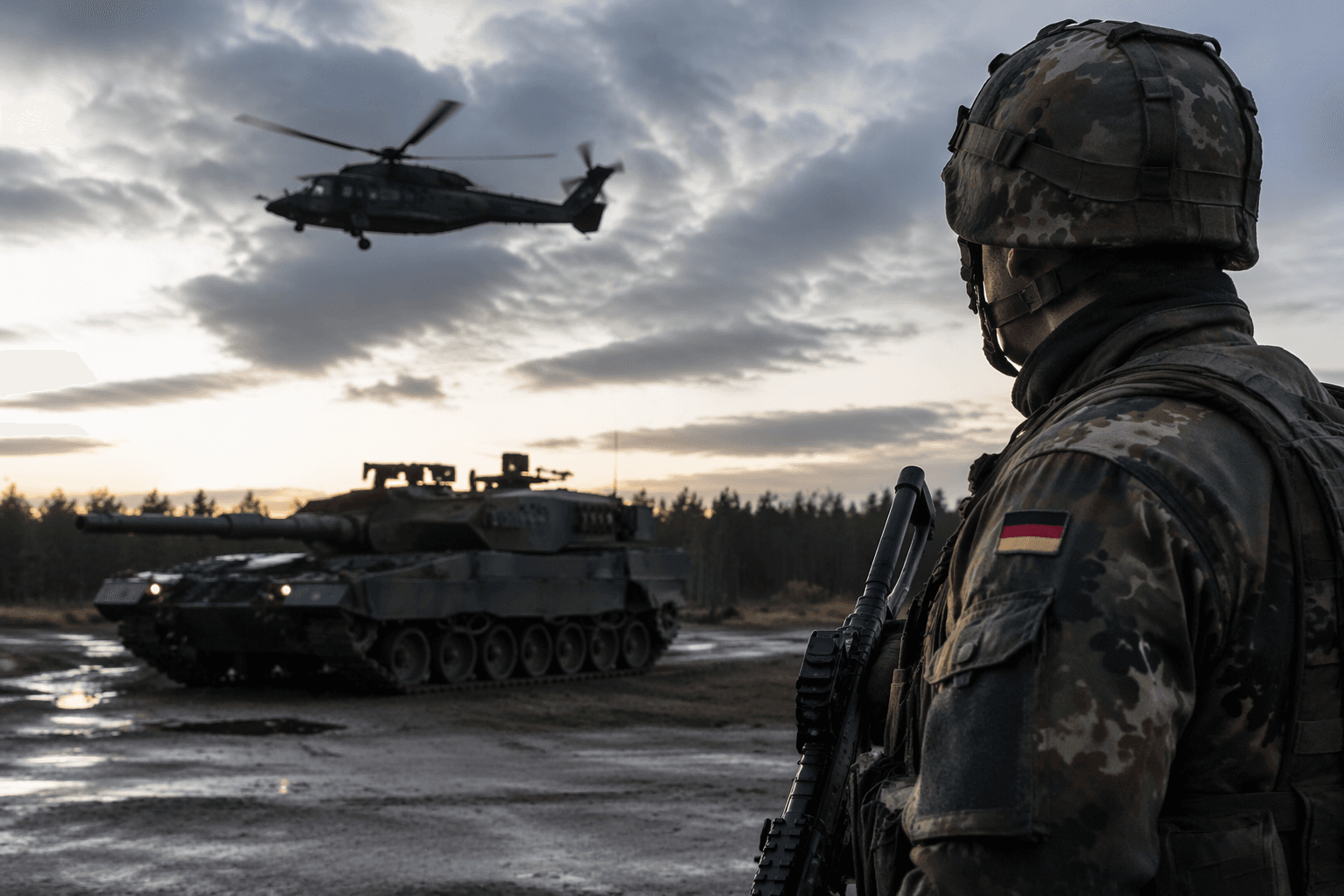
The role of NATO adds another layer. Germany has long faced pressure to shoulder more of the alliance burden, especially after years in which others questioned whether Europe’s largest economy was doing enough for collective defense. The current buildup is Berlin’s answer to that criticism, but also a way to show that Germany understands security as a shared obligation, not an optional expense.
What the numbers say about the new security era
The pace of spending matters because it signals permanence. A 2026 budget above 108 billion euros is already a major expansion, and the planned climb to 152 billion euros by 2029 suggests Germany is preparing for a prolonged period of higher military outlays rather than a short-term response to one war.
That long horizon is important in public health terms as well as strategic ones, because defense policy shapes housing, labor, industrial capacity and social spending priorities. Every euro redirected toward security has political consequences, especially in a country where the debt brake has long framed what the state can and cannot do. The present debate is therefore not only about guns and tanks, but about the kind of state Germany wants to be under pressure.
Planning for uncertainty also defines reproductive care
A different kind of long-term planning is driving another major debate in the United States: egg freezing. Demand for planned oocyte cryopreservation has surged as more women delay childbearing, and clinics and industry data show tens of thousands of cycles a year. The procedure can preserve reproductive options, but it does not guarantee a future baby, and the choice is shaped by medical uncertainty as much as by personal autonomy.
The American Society for Reproductive Medicine says planned oocyte cryopreservation is a legitimate route to reproductive autonomy, but patients should be informed about its efficacy, safety, costs, benefits and unknown long-term effects. The American College of Obstetricians and Gynecologists says ovarian reserve and egg quality decline over the reproductive lifespan, making age central to the tradeoffs. Younger age is associated with better outcomes, while later freezing tends to lower the odds of success.
Cost remains the biggest barrier for many patients. Egg freezing often requires more than one cycle, out-of-pocket expenses can be substantial, and insurance coverage is inconsistent. That means access depends heavily on income, employer benefits and geography, turning a medical option into a social equity issue. The result is a familiar American pattern: a technology marketed as choice, available unevenly, and easiest to use for people with the most financial flexibility.
Germany’s defense overhaul and the growth of egg freezing are very different stories, but they converge on the same reality: institutions are being forced to adapt to a more uncertain world. In both security policy and reproductive medicine, the hardest part is not announcing a new priority, but building systems that make that priority real, equitable and durable.
This article was produced by Prism’s automated news system from verified source data, official records, and press releases, then run through automated quality and moderation checks before publishing. The system is built and supervised by the people who set the standards it runs under. Read our full AI policy.
Know something we missed? Have a correction or additional information?
Submit a Tip