Germany unveils sweeping military overhaul to counter Russia and rebuild forces
Germany unveiled a 20-year military overhaul to reach 460,000 troops and build Europe’s strongest force, with Russia named as the main threat.
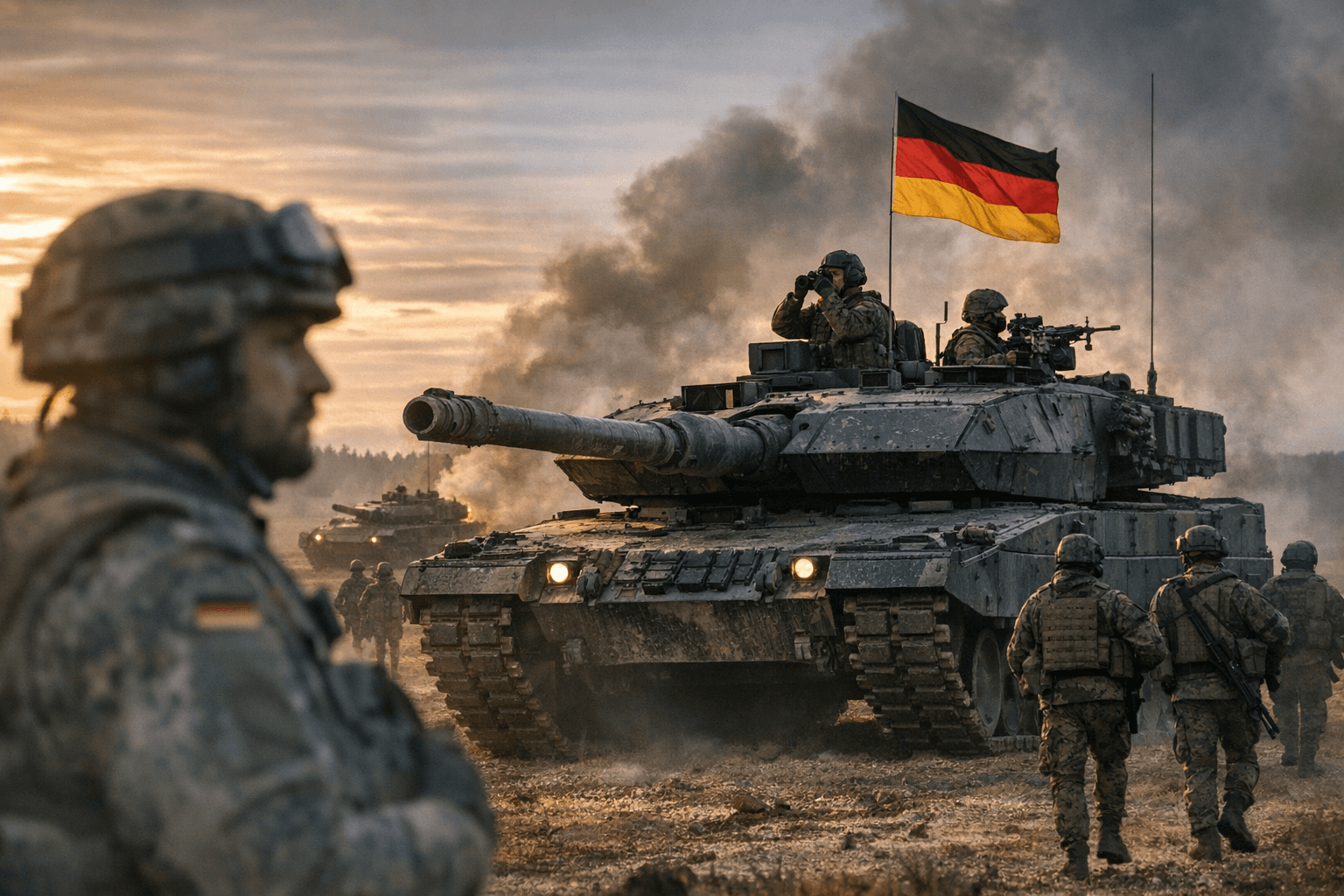
Germany laid out a sweeping rearmament plan in Berlin on Wednesday, setting out a 20-year military overhaul that aims to make the Bundeswehr Europe’s strongest force by 2039. Defense Minister Boris Pistorius presented the strategy as a response to renewed Russian aggression and a security environment in which NATO territory, the Middle East and the Indo-Pacific are treated as linked theaters, not separate crises.
The public document, titled Responsibility for Europe, is the first Bundeswehr Military Strategy and the companion Plan for the Armed Forces approved by the chief of defense in April 2026. It marks a sharp break from Germany’s postwar posture by moving away from fixed hardware quotas and toward an effects-based model that asks what the military must be able to do, not just how many tanks, aircraft or ships it owns.
Pistorius said Germany was effectively starting from scratch on long-range strike and needed stronger air defenses against hypersonic missiles and far more drone capability. He cast Russia as the primary threat and said the force had to become more flexible and survivable rather than simply larger on paper. The strategy’s message was blunt: Germany intends to rebuild the Bundeswehr as a modern deterrent force, not a symbolic one.
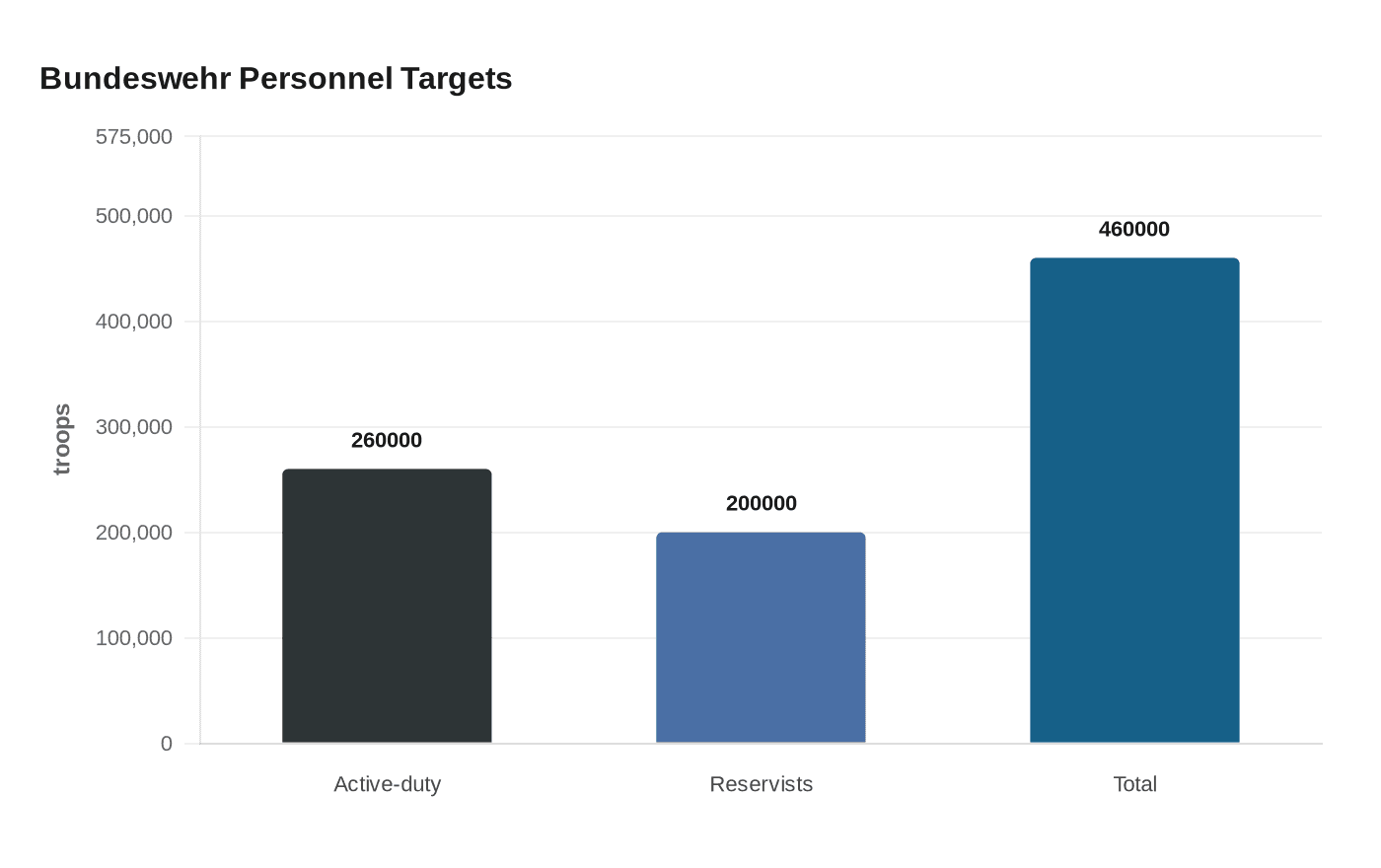
The personnel targets are equally ambitious. Germany wants to grow active-duty strength from about 185,420 soldiers to 260,000 by the mid-2030s, while expanding the reserve from roughly 60,000 assigned reservists to at least 200,000. That would lift the planned total to 460,000 combat-ready troops. The roadmap is split into phases, with a rapid buildup through 2029, a capability-focused expansion through 2035 and a technology-driven phase through 2039 and beyond.
The new plan arrives with a harder edge on manpower. Germany suspended general conscription in 2011, but the new framework keeps conscription as a fallback if recruitment targets are missed. That shift reflects the reality that recruitment and retention remain among the Bundeswehr’s biggest problems, even after defense funding rose. Germany reached NATO’s benchmark of spending at least 2% of gross domestic product on defense for the first time using money from its special defense fund.
Political backing for the reset was already visible in the coalition agreement reached in 2025, which included plans for a voluntary military service model and military registration structures. The government has now turned that political intent into a long-range force design built around greater European responsibility, deeper industrial capacity and a more durable deterrent posture.
Pressure is already building inside the system. The German Reservists’ Association has argued for raising the reservist age limit from 65 to 70 to help meet the new targets. Senior military officials had also pushed for a more dramatic increase in troop numbers than the 260,000 active-duty target retained in the strategy.
For Washington, the implications are direct. Germany is signaling that Europe must do more of its own defense work, reducing reliance on the United States while strengthening NATO’s eastern deterrent. If Berlin can turn higher spending and new doctrine into trained personnel, air defenses, strike assets and reserves, the result would be one of the most consequential shifts in European security since the Cold War ended.
This article was produced by Prism’s automated news system from verified source data, official records, and press releases, then run through automated quality and moderation checks before publishing. The system is built and supervised by the people who set the standards it runs under. Read our full AI policy.
Did this article answer your question?