Ghana accepted US-deported West Africans then repatriated several amid controversy
Ghana received 14 West Africans deported from the United States and then repatriated some, prompting legal challenges and human-rights concerns over third-country removals.

Ghana confirmed receipt of a group of West African nationals deported from the United States, only to see several returned to their countries of origin within days, raising legal and human-rights questions in Accra and Washington. The episode has intensified scrutiny of U.S. third-country removal policies and Ghana’s role in carrying them out.
President John Mahama said a first batch of 14 West African nationals arrived in Accra under an arrangement with Washington that activates regional free-movement protocols. Officials say the group included nationals of Nigeria, The Gambia, Togo, Liberia and Mali, with reports indicating ten men and four women among the 14.
Court filings, testimony and eyewitness accounts assembled by investigators and lawyers describe a fraught removal process in the United States. Deportees were taken from detention in Louisiana on the night of Sept. 5, 2025, shackled and flown on a U.S. military cargo plane to Ghana, where they landed on Sept. 6. Several sources say some individuals were placed in straitjackets after refusing to board and before consulting with counsel.
After arrival, the group was detained. Between Sept. 6 and Sept. 10, several members were repatriated to their countries of origin, according to statements filed in Accra courts and testimony in local proceedings. One Gambian testified that he was placed on a flight back to Gambia on Sept. 10 accompanied by two Ghanaian immigration officials. Another man who had landed in Ghana was later taken by Ghanaian officers to a neighboring country and says he and five others were “dumped” in Togo and are now staying in a hotel there.
The removals have provoked competing narratives. U.S. Department of Homeland Security Assistant Secretary Tricia McLaughlin defended the operation, calling those deported “illegal aliens” who “received due process and had a final order of removal from an immigration judge,” and asserting that many were “heinous criminals with rap sheets that included injury to a child, robbery, aggravated assault, and fraud.” At the same time, lawyers for some deportees say their clients had sought protection from return and in at least one case had secured protections under the U.N. Convention Against Torture, claims that raise potential legal barriers to forced repatriation.
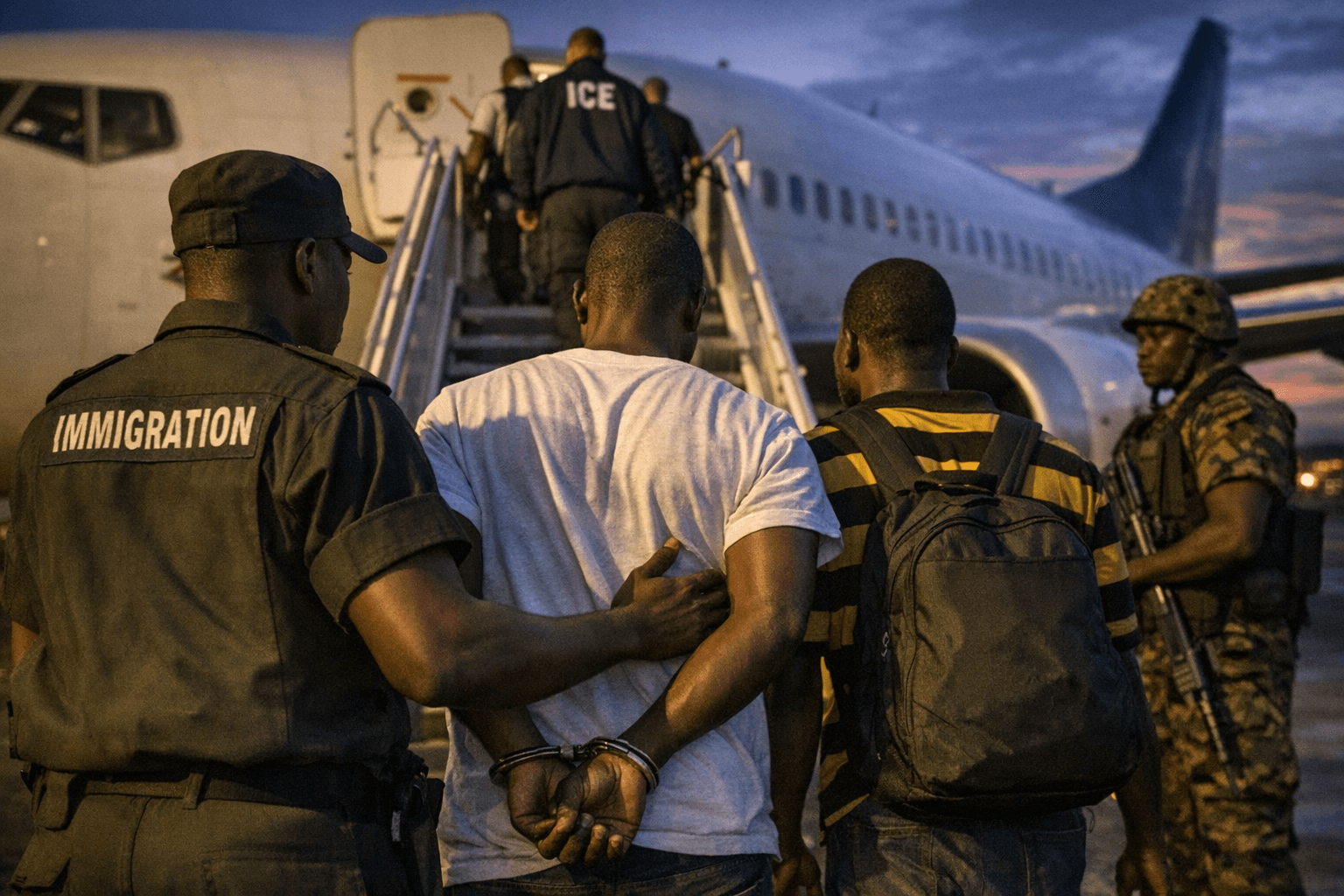
Ghana’s foreign affairs minister told local media that the government was facilitating returns on the migrants’ choice and denied receiving financial rewards for accepting deportees, saying the migrants could stay in Ghana for up to 90 days and that “so far all of them have indicated that they want to go back.” Opposition members of parliament have demanded suspension of the deportation arrangement until it is ratified by parliament.
Legal teams in both Ghana and the United States have opened challenges, seeking court orders and documents about the removals and subsequent movements. Human-rights advocates, citing reports of nighttime removals, shackling, straitjackets, secret transfers and repatriations of people who say they face persecution at home, argue the episode reveals protection gaps in third-country removal practices.
The case underscores tensions between immigration enforcement, regional mobility agreements and international protection obligations. With Ghana reportedly prepared to accept another group of roughly 40 people, courts in Accra and litigation in the United States are likely to be decisive in shaping whether third-country reception will continue under current procedures or face new legal constraints.
This article was produced by Prism’s automated news system from verified source data, official records, and press releases, then run through automated quality and moderation checks before publishing. The system is built and supervised by the people who set the standards it runs under. Read our full AI policy.
Did this article answer your question?