Gold prices fall from record highs, but remain elevated in 2026
Gold slipped from January’s $5,608 peak but still traded above $4,080, keeping inflation nerves, central-bank buying and safe-haven demand firmly in view.

Gold’s retreat from record territory has not brought the metal back to earth. Spot prices were holding around $4,080 to $4,086 an ounce on June 11, with Trading Economics at $4,080.50, GoldPrice.org at $4,085.31 at 08:06 New York time, CNBC at $4,081.34 at 9:00 a.m. ET and USA Today at $4,085.79. That is sharply lower than levels above $4,480 earlier in June, but still far above the long-run norm.
The pullback looks less like a collapse than a reset after an extraordinary run. Trading Economics said gold had fallen 13.46% over the past month, yet it was still 20.51% higher than a year earlier. The metal hit an all-time high of 5,608.35 in January 2026, a level that reflected how aggressively investors and institutions had chased protection against inflation, policy uncertainty and market stress.
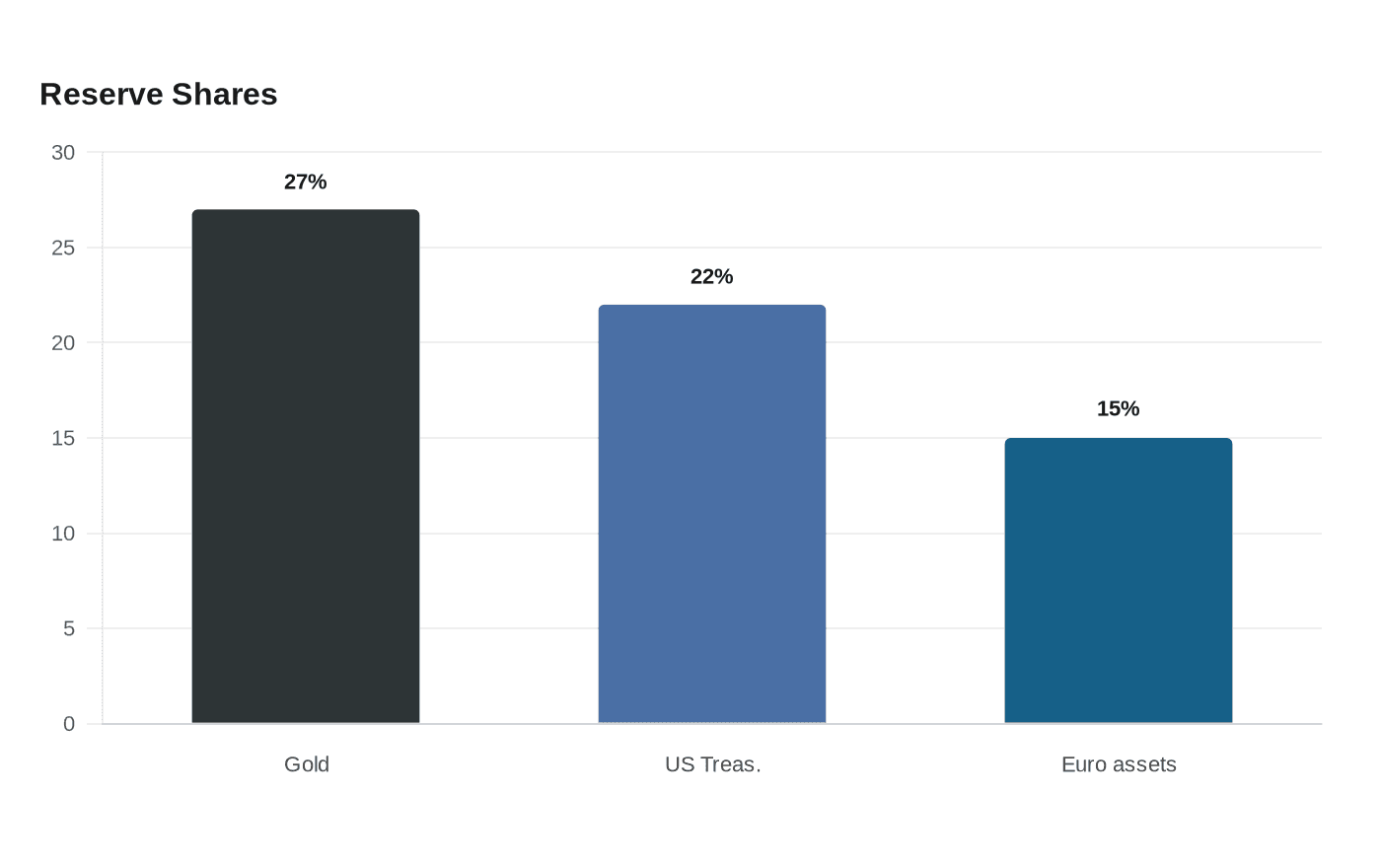
Central banks remain one of the clearest reasons gold has stayed elevated. One June 2026 analysis said official-sector buyers added a net 244 tonnes in the first quarter of 2026 and another 17 tonnes in April. Another market note said gold accounted for 27% of global foreign reserves at the end of 2025, ahead of U.S. Treasuries at 22% and euro-denominated holdings at 15%. That mix shows how deeply central banks have shifted toward bullion as a reserve asset, even as short-term investor sentiment has cooled.
The Federal Reserve is another immediate driver. Markets were pricing a 97% chance of a hold at the June 16 to 17 Federal Open Market Committee meeting, the first under Fed Chair Kevin Warsh. That matters because gold tends to benefit when traders expect rates to stay steady or fall, and when the dollar softens. A slower policy path can also keep inflation fears alive, which is exactly the kind of backdrop that sends households and institutions back toward hard assets.
The move is not only about traders and central bankers. Retirement savers who own gold funds or bullion-backed products have seen sharp gains even after the slide. Jewelry buyers are confronting a higher input cost that can show up quickly in retail prices. For households deciding whether gold is protection or hype, the message is mixed: the metal is no longer at its peak, but at more than $4,080 an ounce it is still priced as a hedge against uncertainty. J.P. Morgan’s decision to trim its 2026 average forecast to $5,243 while keeping a year-end target near $6,000 suggests Wall Street still sees room for gold to stay expensive.
This article was produced by Prism’s automated news system from verified source data, official records, and press releases, then run through automated quality and moderation checks before publishing. The system is built and supervised by the people who set the standards it runs under. Read our full AI policy.
Know something we missed? Have a correction or additional information?
Submit a Tip