Golders Green stabbings probe, antisemitism fears grow after terror attack
Golders Green stabbings were declared a terror attack as ministers weighed whether antisemitism has crossed from hate crime into national security.
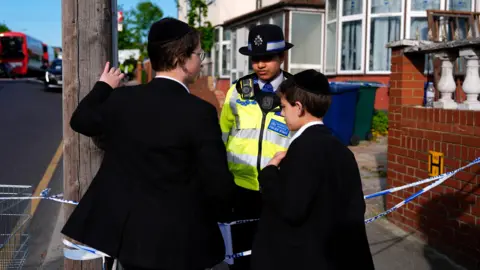
Counter Terrorism Policing declared the Golders Green stabbings a terrorist incident after two men, aged 76 and 34, were attacked on Highfield Avenue in Barnet at 11.16am on 29 April. A 45-year-old man was tasered at the scene and arrested on suspicion of attempted murder, while the two victims were taken to hospital with stab wounds.
The attack quickly became a test of language as much as policing. Home Secretary Shabana Mahmood said the issue was being treated as an “absolute priority” but did not agree that it amounted to a national emergency. Jonathan Hall KC, the government’s independent reviewer of terrorism legislation, took the harder line, saying antisemitism is the UK’s most significant “national security emergency” since the 2017 Manchester Arena bombing and London Bridge attack. Hall also said many British Jews feel they cannot live a normal life, raising the pressure on ministers to show what changes, if any, would follow from that label.
That is the policy threshold now under scrutiny: if antisemitic violence is more than hate-crime policing, what new powers, resources or intelligence coordination would actually be triggered? Counter Terrorism Policing said one line of inquiry is whether the attack deliberately targeted the Jewish community, and said officers and security services were working together to establish exactly what happened. Hall said the response should go beyond condolences and police investigations alone, echoing a broader debate over whether prevention, protection and intelligence-sharing should be elevated when a community is repeatedly targeted.
Community leaders said the attack deepened a sense of vulnerability that has become routine. The Board of Deputies of British Jews and the Jewish Leadership Council said they were “sickened” by yet another attack on “two visibly Jewish men” and said the situation feels “relentless.” Chief Rabbi Sir Ephraim Mirvis said visibly Jewish people are not safe and called for “meaningful action” and more public condemnation.
The government responded with an extra £25 million for security for Jewish communities, including around synagogues, schools and community centres. The scale of the threat is already visible in the numbers. The Community Security Trust recorded 3,528 antisemitic incidents across the UK in 2024, its second-highest annual total ever, and said 1,844 of those incidents involved discourse relating to Israel, Gaza, Hamas or the war in the Middle East. Home Office figures for the year ending March 2024 showed 140,561 hate crimes recorded by police in England and Wales, with religious hate crimes up 25%, driven in part by rises in offences against Jewish people. Against that backdrop, the question is no longer whether the threat is real. It is whether Britain treats it as a policing problem or as a security emergency requiring a different state response.
This article was produced by Prism’s automated news system from verified source data, official records, and press releases, then run through automated quality and moderation checks before publishing. The system is built and supervised by the people who set the standards it runs under. Read our full AI policy.
Did this article answer your question?


