Former Harvard scientist leads China brain-computer interface lab in Shenzhen
Charles Lieber is now running a state-funded brain-computer interface lab in Shenzhen, a sharp test of whether U.S. prosecutions deter sensitive collaboration or merely push it overseas.
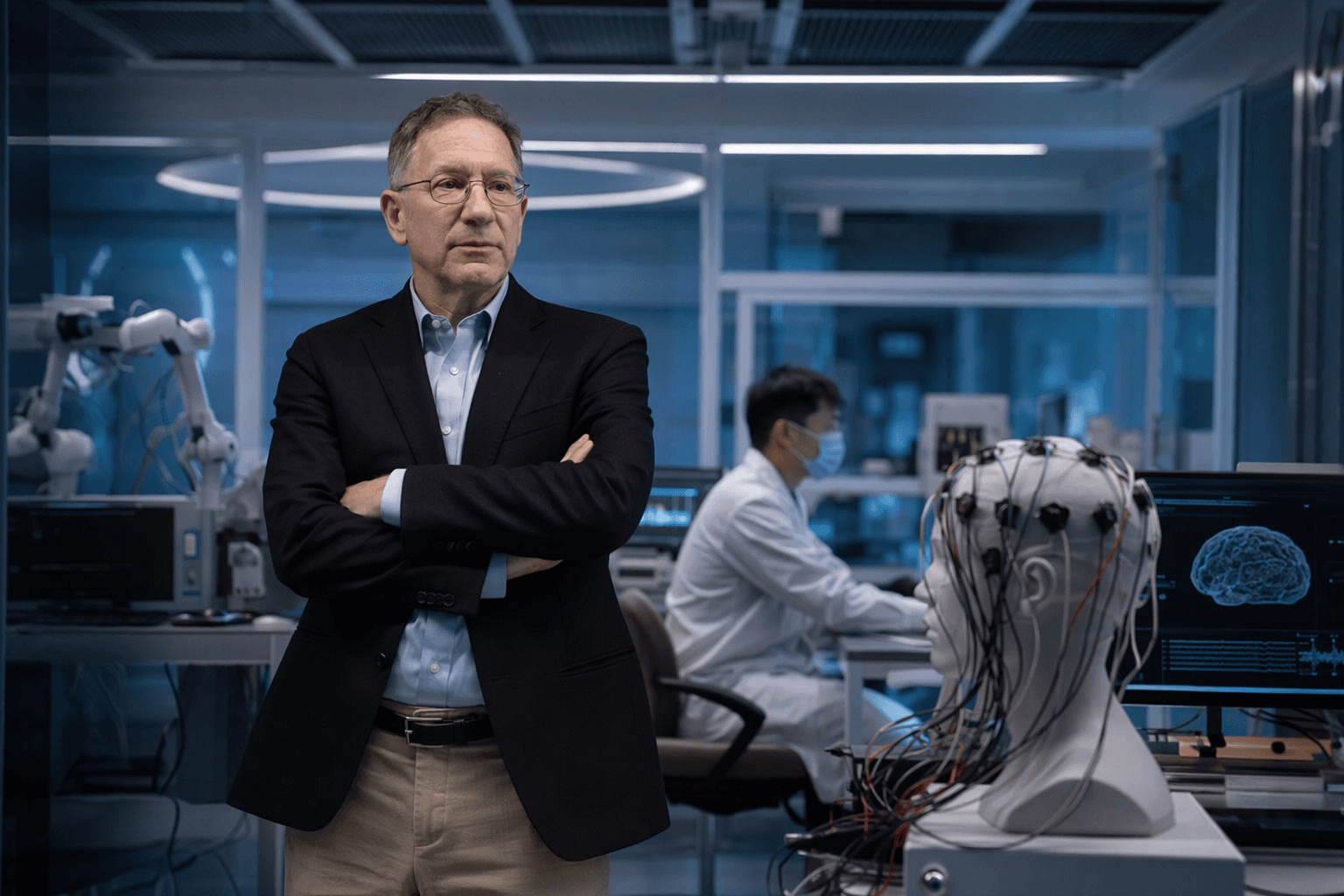
Charles Lieber, once a leading Harvard chemist, has re-emerged in China at the center of a state-funded brain-computer interface lab in Shenzhen, a move that sharpens a broader question in the U.S.-China technology race: do American prosecutions deter sensitive collaboration, or do they simply send prized expertise to a geopolitical rival?
Lieber is overseeing i-BRAIN, the Institute for Brain Research, Advanced Interfaces and Neurotechnologies, inside the Shenzhen Medical Academy of Research and Translation, known as SMART, in Shenzhen, Guangdong province. The lab’s own materials say Lieber was appointed founding director. It gives him access to dedicated nanofabrication equipment and primate research infrastructure that were not available to him at Harvard, a sign of the scale of China’s investment in high-end scientific recruitment.
The research field he has returned to sits at the intersection of medicine and national security. Brain-computer interfaces are being developed to help people with disorders such as ALS communicate and to restore movement for patients with paralysis. The National Institutes of Health reported in 2024 that a brain-computer interface helped a man with ALS communicate. But the same technology has drawn close scrutiny from U.S. defense planners and policy analysts, who warn that China’s military could adapt it for battlefield uses, including monitoring cognitive workload, improving situational awareness, controlling drone swarms or linking with prosthetics.
Lieber’s path to Shenzhen followed a high-profile criminal case in the United States. The Justice Department said he was convicted in December 2021 after a six-day jury trial on false statement, false tax return and foreign bank account reporting offenses tied to payments from a Chinese university and a Chinese state recruitment program. He was sentenced in April 2023 to time served, two years of supervised release, six months of home confinement, a $50,000 fine and $33,600 in restitution.
His appointment also exposes the continuing appeal of China’s talent pipeline. U.S. State Department materials say PRC talent-recruitment programs can divert intellectual capital from the United States and support Chinese national and military goals. Lieber told a Shenzhen government conference in December that he had arrived with little more than a couple of bags of clothes and a dream to make Shenzhen a world leader. The city, long marketed as a laboratory for Chinese innovation, has now given a convicted American scientist both a platform and the tools to keep working at the frontier of a strategically sensitive field.
This article was produced by Prism’s automated news system from verified source data, official records, and press releases, then run through automated quality and moderation checks before publishing. The system is built and supervised by the people who set the standards it runs under. Read our full AI policy.
Did this article answer your question?