Goldman Sachs Research Revises Hyperscaler Power Outlook, Implications for Operations, Client Teams
Goldman Sachs Research raised its data-center power demand forecast to 220% growth by 2030 vs 2023, revising up from a prior +175% and flagging six operational constraints for client and operations teams.
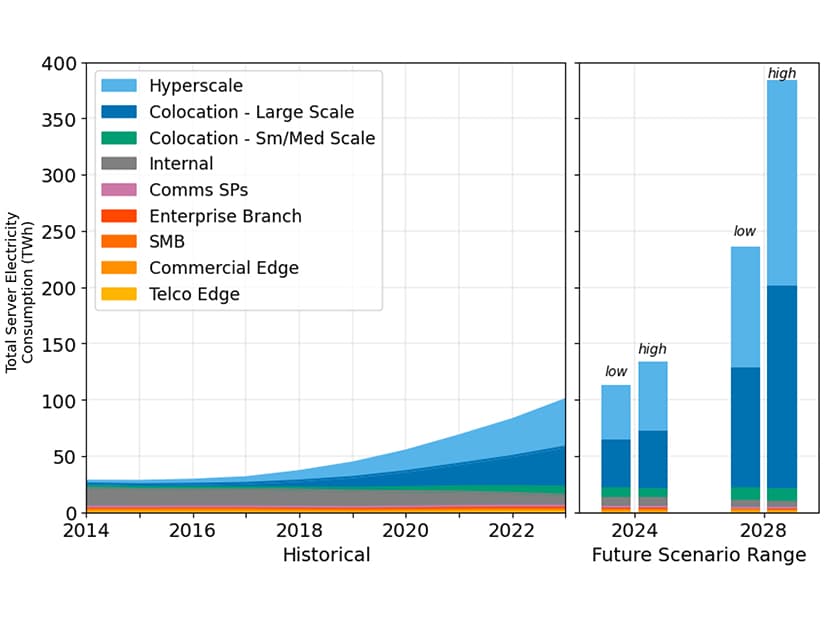
Goldman Sachs Research released GS SUSTAIN: AI/DATA CENTER POWER DEMAND on March 4, 2026 and "Goldman Sachs Research raises their data center power demand outlook and now expects 220% growth by 2030 vs. 2023 levels (vs +175% previously)." The report was produced by the firm’s sustainability and markets research teams and targets client coverage teams, sustainability and ESG specialists, operations groups, real-estate and real-asset managers, and client advisory teams.
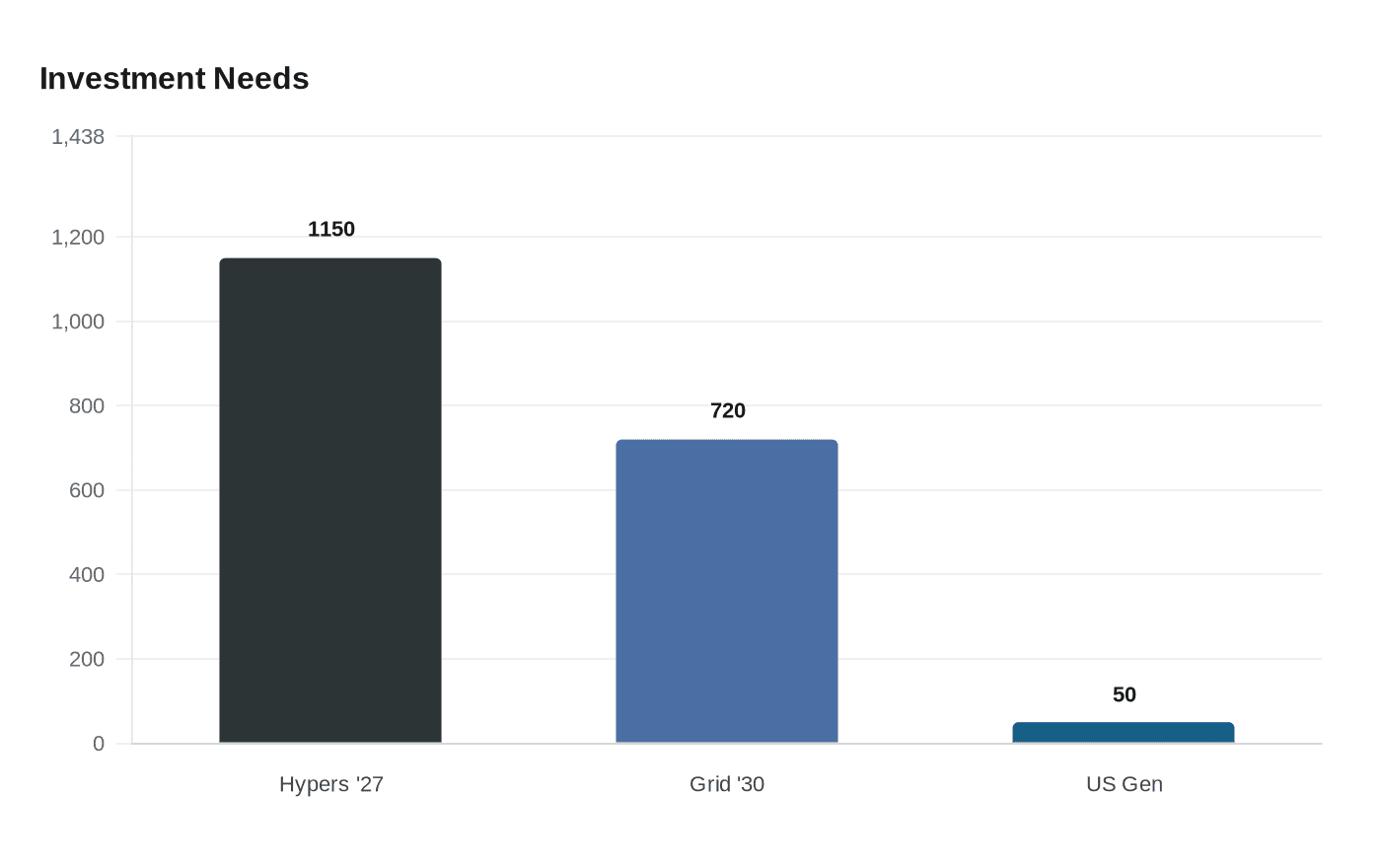
The research frames the upsized forecast around "How Rising Hyperscaler Reinvestment Impacts the 6 Ps Driving Power Growth/Constraints" and explicitly lists the six Ps as Pervasiveness of AI, Productivity of servers and compute, Prices of electricity needed to expand supply, Policy initiatives, Parts availability, and People availability. Goldman Sachs also estimates "hyperscalers will spend $1.15 trillion on data centres by 2027" and expects that by 2030 "these hyperscalers and wholesale operators will control 70% of global capacity, up from 60% today."
Goldman Sachs’ LinkedIn copy positions the buildout as historic, writing that this is the "Most unprecedented scale and speed of infrastructure buildout in modern history" and urging readers to consider private-market moves with the line "Consider what Blackstone has assembled in four years:" followed by AirTrunk ($16.1B), Invenergy (~$3B for renewables), Shermco Industries (electrical services lifecycle), QTS Realty Trust Inc ($10B take-private), DDN ($300M for AI data storage), and Potomac Energy Center (774 MW gas plant).

Meeting the revised outlook will require major grid and generation investment. TechnologyMagazine coverage of the report cites global grid upgrades of US$720bn by 2030 and states that in the US alone "utilities must invest US$50bn in new generation capacity dedicated to data centres." Frank Long, a Vice President at the Goldman Sachs Global Institute, is named in that coverage in the context of these investment needs. Brian Singer from Goldman Sachs Research says how "technology companies’ sustainability commitments align with their reliability needs, creating momentum for both refurbishing decommissioned plants and building new reactors."
The report quantifies operational energy drivers: "cooling systems consume 35-40% of hyperscalers’ energy use regardless of the AI technology involved." Analysts temper the emissions story with conditional language, noting that "Longer term, we see potential for a significant reduction of data centre emissions intensity and potentially in absolute emissions, as more nuclear power comes online and AI computing shifts to using AI models as opposed to training them," the analysts say.
The research flags technology and market uncertainties that could alter the power trajectory. TechnologyMagazine highlights DeepSeek, describing it as "reportedly on par with leading US systems but requiring fewer computational resources." The coverage adds that "If DeepSeek’s efficiency gains prove scalable, they could temper the expected surge in power consumption" and that "James acknowledges the uncertainty around DeepSeek’s ‘training, infrastructure and ability to scale’ while maintaining Goldman Sachs’s broader forecasts."
For Goldman Sachs’ client teams and operations groups, the report’s +175% to +220% revision, the $1.15 trillion hyperscaler spend by 2027, and the six Ps together signal sharper planning requirements for electricity procurement, parts and people availability, grid contracting, and advisory work on generation and decommissioning options. The firm’s materials close with a "Read the Report" prompt for teams that need the full methodology and scenario detail.
This article was produced by Prism’s automated news system from verified source data, official records, and press releases, then run through automated quality and moderation checks before publishing. The system is built and supervised by the people who set the standards it runs under. Read our full AI policy.
Know something we missed? Have a correction or additional information?
Submit a Tip