Google demos Android XR glasses with Gemini translation and navigation
Google’s new Android XR glasses put Gemini on your face for translation and navigation, betting utility will beat the long-promised AR fantasy.
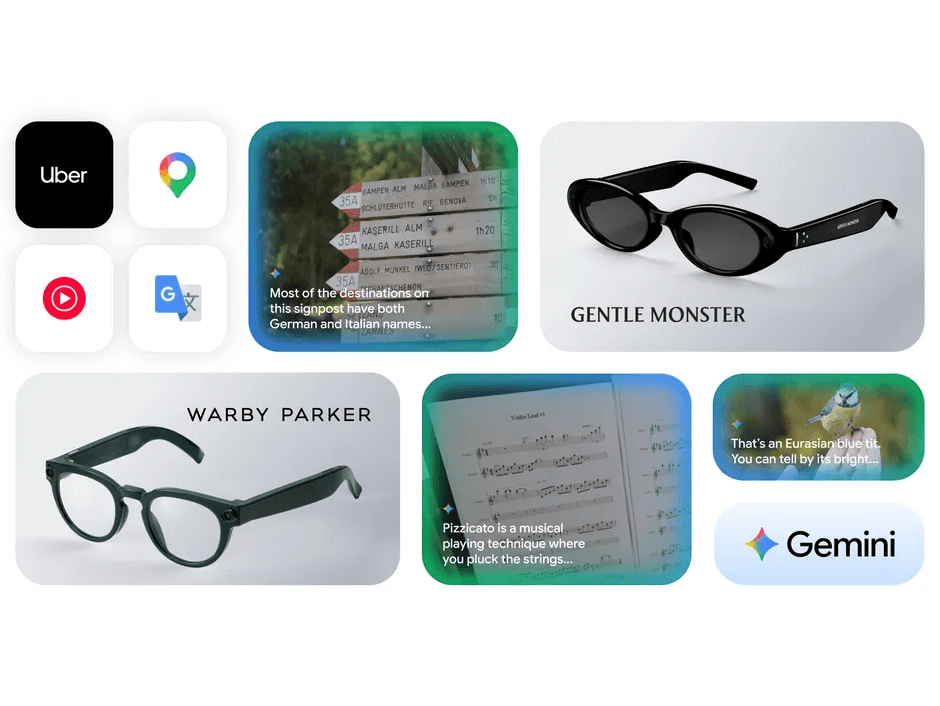
Google is trying to make smart glasses useful before it tries to make them magical. The company said at Google I/O 2026 that two kinds of intelligent eyewear are coming, with audio glasses arriving first later this fall and display glasses following with an in-lens view for directions, translations, and other information.
That split is the clearest sign yet that Google sees the category as a problem of last-mile usefulness, not just spectacle. The company’s pitch centers on hands-free help from Gemini: asking about what is in front of you, getting turn-by-turn navigation, sending messages, taking photos, translating speech and text in real time, and handling multi-step tasks without pulling out a phone. On the display glasses, Google said translations can even match the tone and pitch of the speaker’s voice, a detail aimed at making the experience feel less robotic and more natural in public.

The hardware is being developed with Samsung, Gentle Monster, and Warby Parker, a lineup that shows how much this market depends on style as much as software. Google has already built Android XR with Samsung and Qualcomm, first introducing the platform in December 2024 as a base for headsets and glasses. The first Android XR headset, Samsung’s Galaxy XR, launched in October 2025, and Google has said Android XR supports open standards including OpenXR and Unity, signaling that the company wants developers to treat glasses as part of a broader computing platform, not a one-off gadget.
Google’s earlier Android XR glasses demo at I/O 2025 sketched the same direction with prototype eyewear that included a camera, microphones, speakers, and an optional in-lens display. That demo showed live language translation, messaging, scheduling, directions, photos, and other everyday tasks, and Google said the prototypes were being tested with trusted testers. The company’s latest announcement suggests those use cases, especially translation and navigation in public, may be the ones that matter most when the glasses leave the demo stage.
The timing also reflects a market that is no longer hypothetical. EssilorLuxottica said in February 2026 that it sold more than 7 million Meta smart glasses in 2025, evidence that consumers will wear camera-equipped glasses when the design feels normal enough and the features feel immediate enough. That makes Google’s challenge less about proving demand and more about earning trust, with battery life, social acceptability, and privacy now as decisive as display quality. The real test for Android XR glasses is whether people will wear them for the boring moments that fill a day, not just for the future Google once promised.
Know something we missed? Have a correction or additional information?
Submit a Tip