Google Opens Gemini Personal Intelligence to Free Users Nationwide
Google expanded its Gemini Personal Intelligence feature to all U.S. free-tier users, giving AI access to Gmail, Photos, and browsing history.
%2Fdq%2Fmedia%2Fmedia_files%2F2025%2F09%2F21%2Fgoogle-gemini-nano-banana-2025-09-21-21-55-51.jpg&w=1920&q=75)
Google expanded its Gemini Personal Intelligence feature to all U.S. users on its free tier last week, bringing an AI assistant that can read your emails, scan your photo library, and track your search history directly into the hands of millions who previously needed a paid subscription to access it.
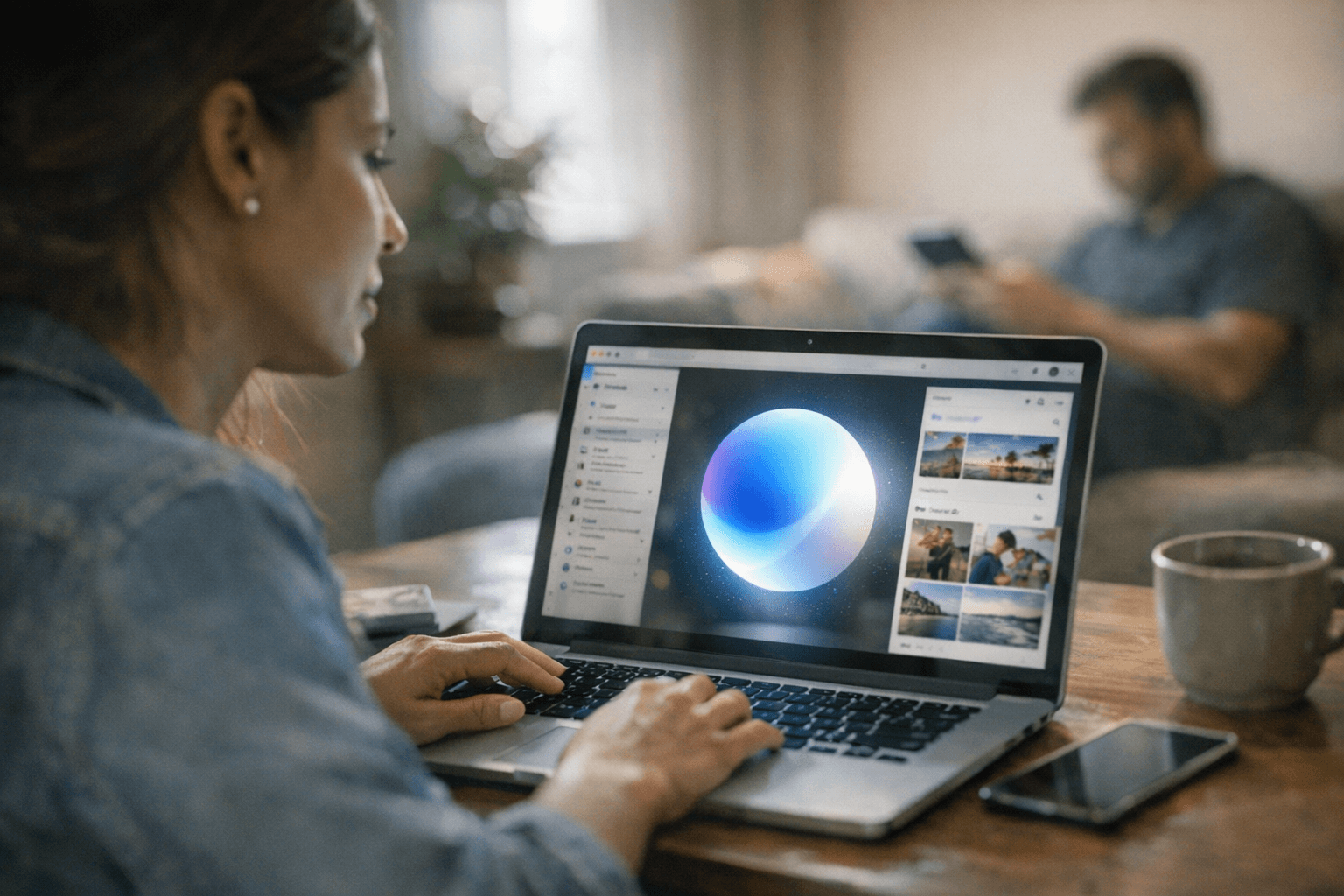
The feature, which connects Gemini to a user's Gmail, Google Photos, YouTube history, and Google Search data, is now available across three surfaces: AI Mode in Google Search, the Gemini app, and Gemini inside Chrome. Personal Intelligence had been restricted to subscribers on Google's paid AI Pro and AI Ultra tiers, as well as a group of trusted testers, since Google formally announced the beta on January 14, 2026.
The practical pitch is seductive. Google described the feature in a blog post as solving the problem of context: "Whether you're looking for a specific brand of sneakers you previously purchased, or planning a family getaway based on your hotel confirmations and past travel memories, Personal Intelligence helps you find exactly what you need without having to give all the context." A tire shop scenario illustrates the ambition more concretely: rather than simply identifying a car's tire size, Gemini could recommend all-weather tires after recognizing family road-trip photos in a user's Google Photos library.
The rollout is opt-in and the feature is off by default. Users select which apps to connect and can disconnect them at any time. The feature is available only for personal Google accounts; Workspace business, enterprise, and education accounts are explicitly excluded.
Google has also attempted to draw a clear line around how the data is used. The company said Gemini and AI Mode "do not train directly on Gmail inboxes or photo libraries, but only on limited prompt and response data." Google framed the design philosophy around user agency: "Personal Intelligence was designed with transparency, choice and control at its core. You choose if and when you want to connect apps like Gmail and Google Photos, and you can turn those connections" off, according to language cited in multiple reports.
Those assurances, while explicit, leave significant technical questions unanswered. What constitutes "limited prompt and response data," how long that data is retained, and whether any derivatives inform future model updates are details Google has not publicly defined. The feature is currently labeled as experimental.
The expansion also raises a structural question about scale. Personalized AI assistance tied to private communications and media has previously existed as a niche, premium product. Moving it to a free tier serving potentially tens of millions of users transforms both the opportunity and the exposure surface.
Google says expansion to more countries and additional tiers is planned but has not announced a timeline. The company's commercial model positions the free tier as an entry point, with paid subscribers on AI Pro and AI Ultra receiving earlier access to more advanced models and extended context windows.
For privacy advocates and regulators watching how consumer AI interacts with personal data at scale, the free-tier rollout is the more consequential moment. When a feature this intimate costs nothing, the calculus around who uses it, and how broadly, changes entirely.
This article was produced by Prism’s automated news system from verified source data, official records, and press releases, then run through automated quality and moderation checks before publishing. The system is built and supervised by the people who set the standards it runs under. Read our full AI policy.
Did this article answer your question?