Google touts AI growth at I/O as search shifts fast
Google said AI Overviews reached 1.5 billion users as Pichai cast I/O as a shift from research to reality, even as publishers worry about clicks.

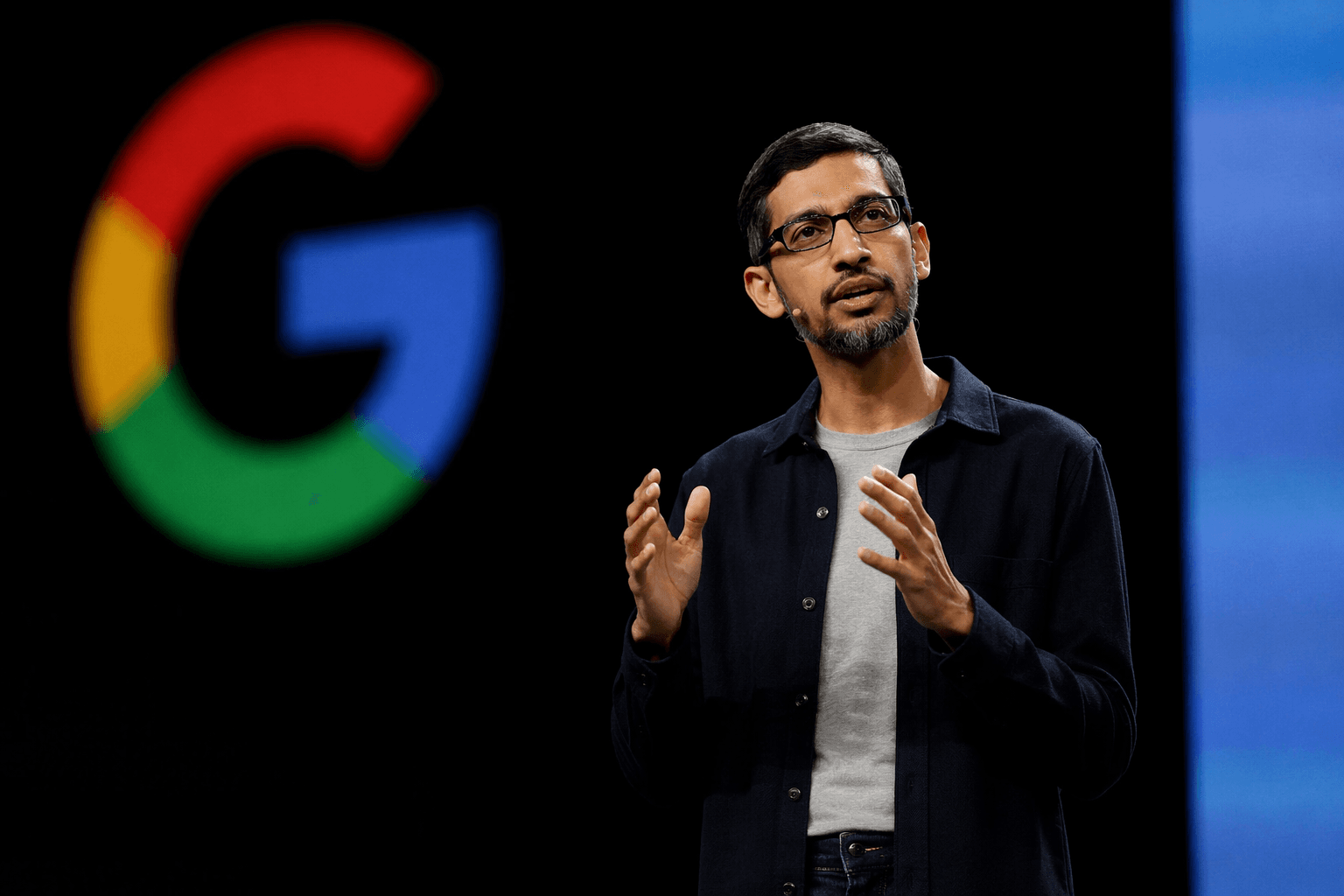
“This is the only recent gathering of a large number of people where mentions of A.I. did not produce a large chorus of boos.” At Google’s I/O conference in Mountain View, California, Sundar Pichai used that calm to argue that the company’s AI push is not theater but the next operating system for Search, Android and Gemini. The pitch was simple: Google is moving “from research to reality,” and the rest of the internet will have to live with the consequences.
The scale of that bet was the story line. Google said AI Overviews had reached 1.5 billion monthly users across 200 countries and territories, and that in its biggest markets, including the United States and India, the feature was driving more than a 10% increase in usage for the queries that show it. The Gemini app now has more than 400 million monthly active users. More than 7 million developers are building with Gemini. Token processing across products and APIs has surged from 9.7 trillion a month a year earlier to more than 480 trillion.
Google also widened the practical reach of its AI tools. AI Mode in Search started rolling out to users in the U.S., alongside deep research and Search Live features. The company added agentic capabilities that can handle tasks such as booking event tickets, making restaurant reservations and setting local appointments. That is the clearest sign yet that Google wants search to do more than retrieve information. It wants the search box to become a decision layer that can act for the user, not just answer the user.
That ambition is why the applause at I/O does not settle the bigger question. Publishers and other web businesses have warned that AI summaries and answer engines could pull traffic away from outside sites, cutting into the clicks that support digital ads and subscriptions. The Reuters Institute for the Study of Journalism found that public use of standalone generative AI systems rose from 40% to 61%, while weekly use nearly doubled from 18% to 34%. Even so, it said audiences in most countries remain skeptical about AI in news.
Google is betting that normalization will outrun that skepticism. By wrapping AI into search, consumer apps and developer tools at massive scale, the company is trying to make the technology feel less like a novelty than a utility. Whether users see that as convenience or disruption will shape not just Google’s next chapter, but how Americans search, work and use their phones.
Know something we missed? Have a correction or additional information?
Submit a Tip