G.O.P. blocks war powers vote as Iran conflict drags on
The House rejected a war powers rebuke by one vote, but the April 28 clock is tightening and Republicans may have a harder time holding the line.
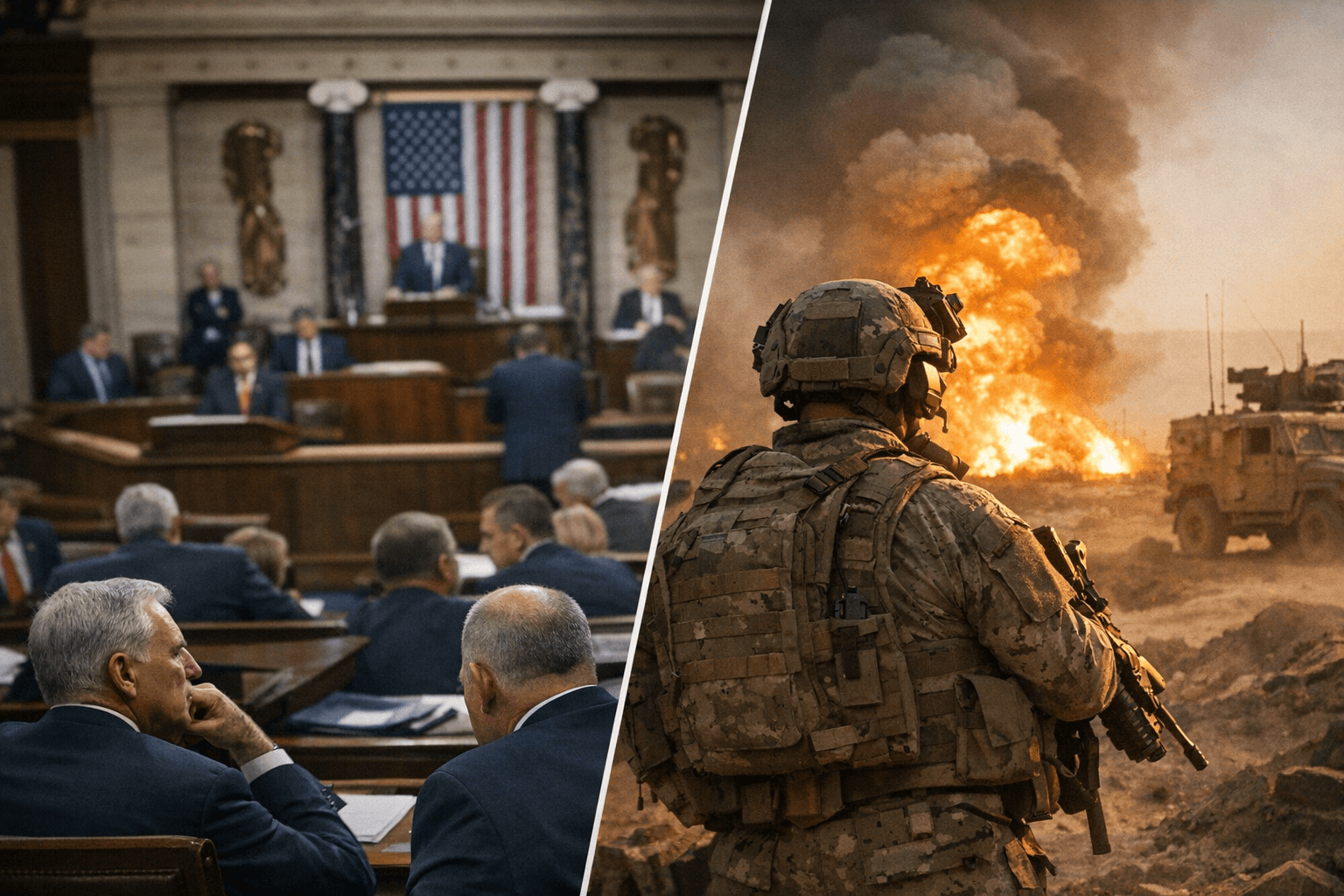
The House narrowly blocked a Democratic effort to restrain President Donald Trump’s Iran campaign, but the 213-214 vote left Republicans exposed to a coming statutory deadline that could turn symbolic dissent into a real constraint.
House lawmakers defeated the nonbinding resolution on Thursday, with Rep. Thomas Massie of Kentucky the only Republican to vote for it. Rep. Warren Davidson of Ohio voted present after backing the earlier war powers effort in March, while Democrats reclaimed three lawmakers who had broken ranks in the first round: Reps. Henry Cuellar of Texas, Greg Landsman of Ohio and Juan Vargas of California. Rep. Jared Golden of Maine opposed the resolution again.
The measure, sponsored by House Foreign Affairs ranking Democrat Gregory Meeks of New York, would have directed the president to remove U.S. armed forces from hostilities against Iran unless Congress explicitly approved continued action. It did not require the president’s signature or a veto, making it a messaging vehicle rather than binding law, but the vote still exposed the balance of power in Washington as the conflict stretched into its third month.
That balance is now colliding with the War Powers Resolution of 1973. The law requires a president to withdraw forces after 60 days unless Congress authorizes the mission, though the White House can seek a 30-day extension for national security reasons. POLITICO reported that the Iran war is nearing an April 28 deadline, putting pressure on the administration to show a clearer end state or more tangible progress if it wants to keep Republican support. A separate Senate war powers push failed again the day before, the fourth time senators have rejected efforts to rein in Trump’s authority on Iran.
The political stakes are rising alongside the economic toll. Oil and gas prices spiked after Iran closed the Strait of Hormuz, and the United States responded with a blockade of Iranian ports. Peace talks led by Vice President JD Vance ended without agreement, and a fragile ceasefire is set to expire next week.
Trump and top aides have said they are confident the conflict can end soon, but the administration has not settled the internal tension at the heart of the debate. House Speaker Mike Johnson said the United States was not formally at war and described the operation as a “defensive” mission, while Trump has continued to call it a war. Democrats said the White House has kept Congress in the dark and changed its rationale for the operation, and Meeks argued the campaign was becoming an endless war without a viable endgame.
Republicans have so far shown little appetite to break with Trump, but the approaching war powers clock may make that coalition harder to hold.
This article was produced by Prism’s automated news system from verified source data, official records, and press releases, then run through automated quality and moderation checks before publishing. The system is built and supervised by the people who set the standards it runs under. Read our full AI policy.
Did this article answer your question?

