GOP gains edge in mid-decade redistricting battle as House control hangs in balance
Two court rulings in one week shifted the map fight toward Republicans, as redrawn districts in Texas, California and Virginia could shape House control.

A Virginia court ruling and a Supreme Court voting-rights decision in the same stretch of days gave Republicans fresh momentum in a redistricting fight that could decide control of the House. Democrats need to net just three seats to flip the chamber, and that means a handful of new district lines may matter more than months of campaign messaging.
The battle began after Donald Trump urged Texas Republicans last year to redraw House districts to help the GOP keep its narrow majority. That push spread quickly into a mid-decade scramble across the country, with several states moving maps outside the usual census cycle. By early May, eight states had already enacted new congressional lines, giving Republicans a narrow edge overall even as several maps remained tied up in court. The National Conference of State Legislatures said the pace of mid-decade redistricting was unlike anything seen since the 1800s.
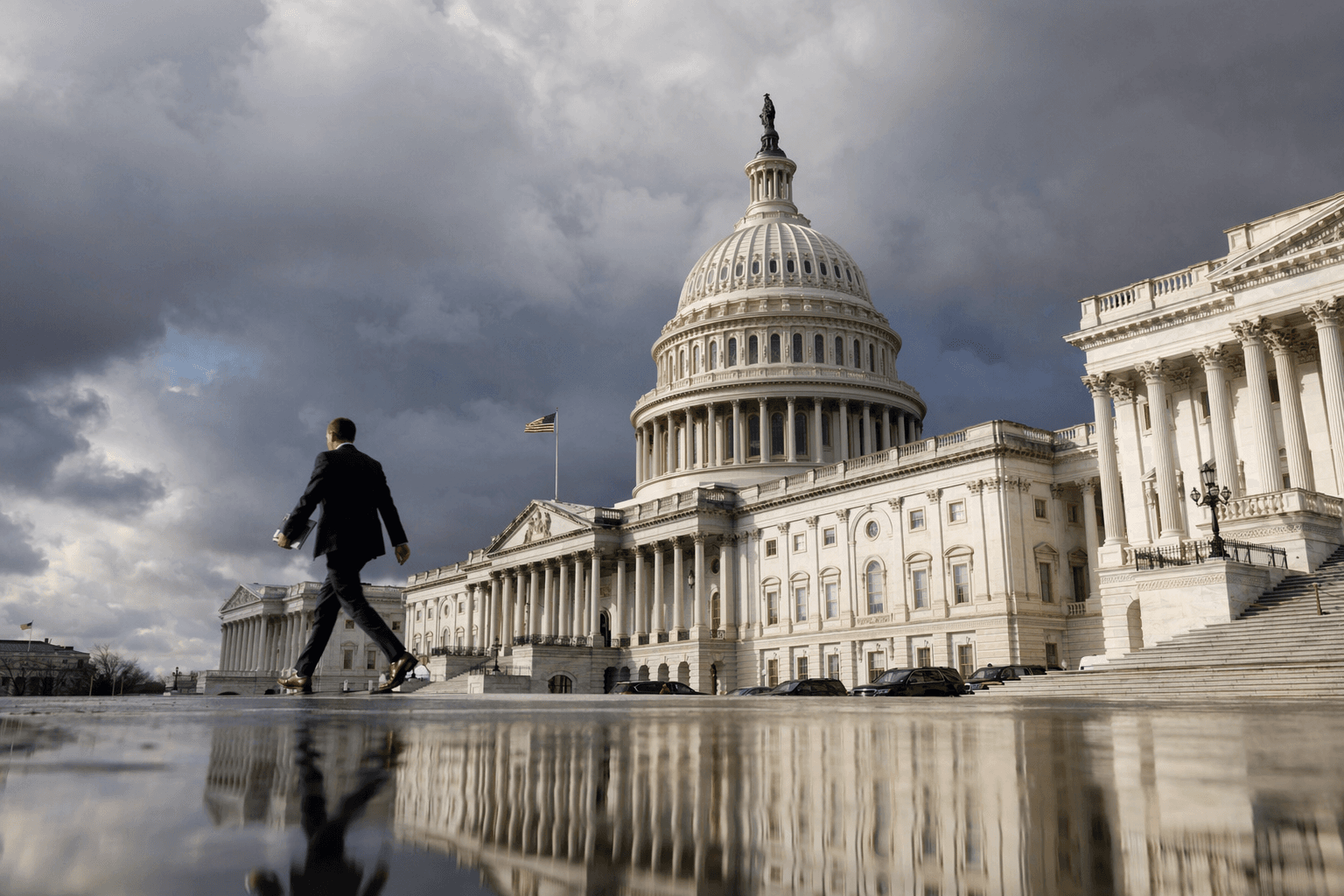
Republicans gained ground in late April and early May. Virginia voters approved a Democratic-backed redistricting amendment on April 21 that could have opened the door to as many as four additional Democratic House seats. Then, on May 8, the Virginia Supreme Court blocked the map on procedural grounds. Less than two weeks earlier, the U.S. Supreme Court’s decision in Louisiana v. Callais narrowed a key Voting Rights Act protection, a ruling that Republican-led states quickly treated as a green light for more aggressive redraws in the South.
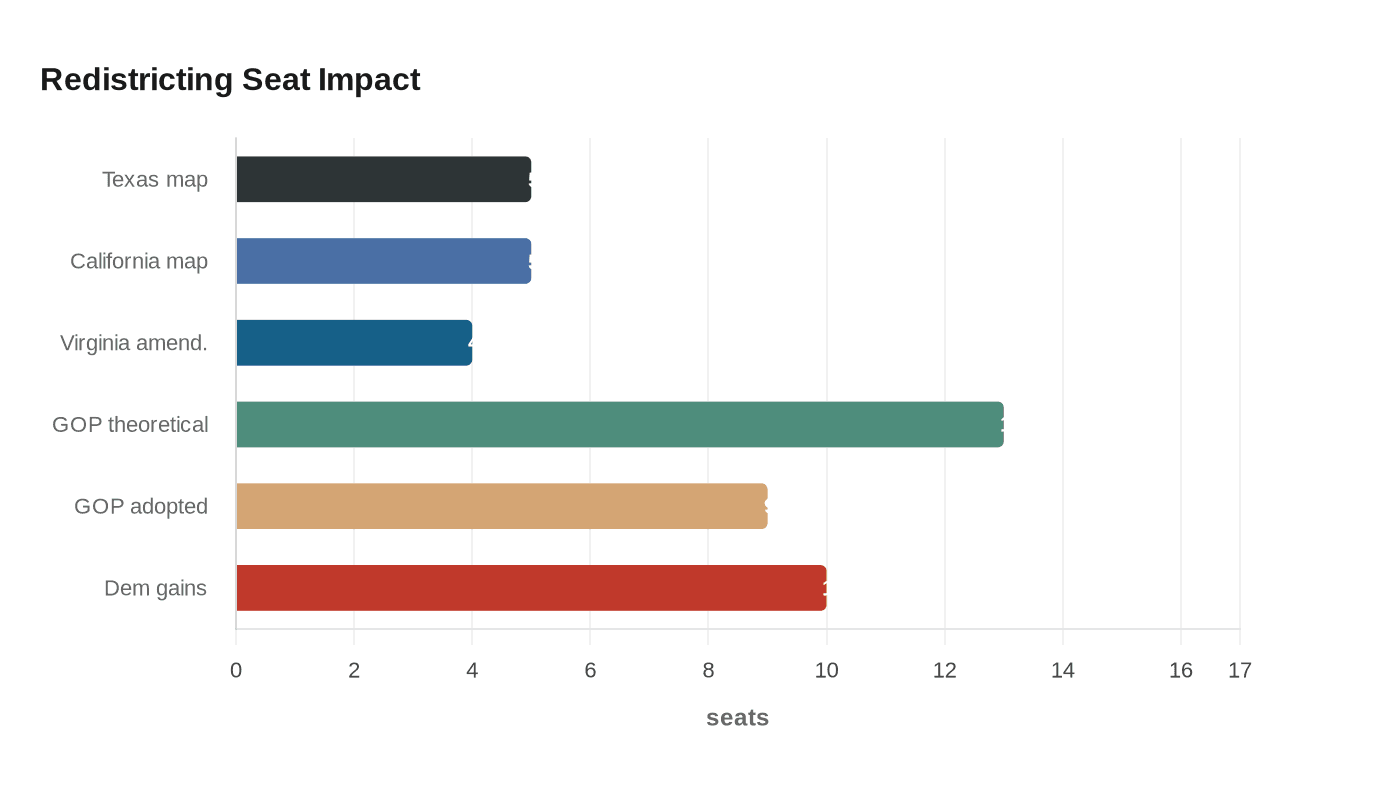
The practical effect is measured seat by seat. Texas’ revised map was reported to create five Republican-favored House districts. California’s voter-approved counter-map could create up to five Democratic pickup opportunities. Missouri moved to squeeze Democratic Rep. Emanuel Cleaver, North Carolina redrew its 1st Congressional District to favor conservatives, Florida advanced its own Republican-redistricting effort, and Utah was forced by court action to create a more Democratic-leaning district in Salt Lake City.
The totals remain fluid, but the structural edge has tilted toward Republicans. Before the Virginia court setback, one assessment put their theoretical redistricting gain at as many as 13 seats. Other estimates said Republicans could win as many as nine seats from maps already adopted, while Democrats believed they could gain up to 10 from their own redraws. After Virginia’s map was blocked, Republicans had one less Democratic opportunity to offset their own gains.
The broader political environment still matters. Trump’s approval ratings remained below 40%, and Democrats have shown strength on the economy. But the redistricting fight has already redrawn the battlefield for 2026, with Texas, California, Missouri, North Carolina, Florida and other states helping determine where control of the House can realistically be won or lost.
This article was produced by Prism’s automated news system from verified source data, official records, and press releases, then run through automated quality and moderation checks before publishing. The system is built and supervised by the people who set the standards it runs under. Read our full AI policy.
Did this article answer your question?

