Grasse’s jasmine fields revive France’s luxury perfume heritage
Grasse’s jasmine is more than a scent story. It is a high-value supply chain, where hand-picked flowers, heritage craft, and brand strategy keep luxury perfume rooted in one small French landscape.
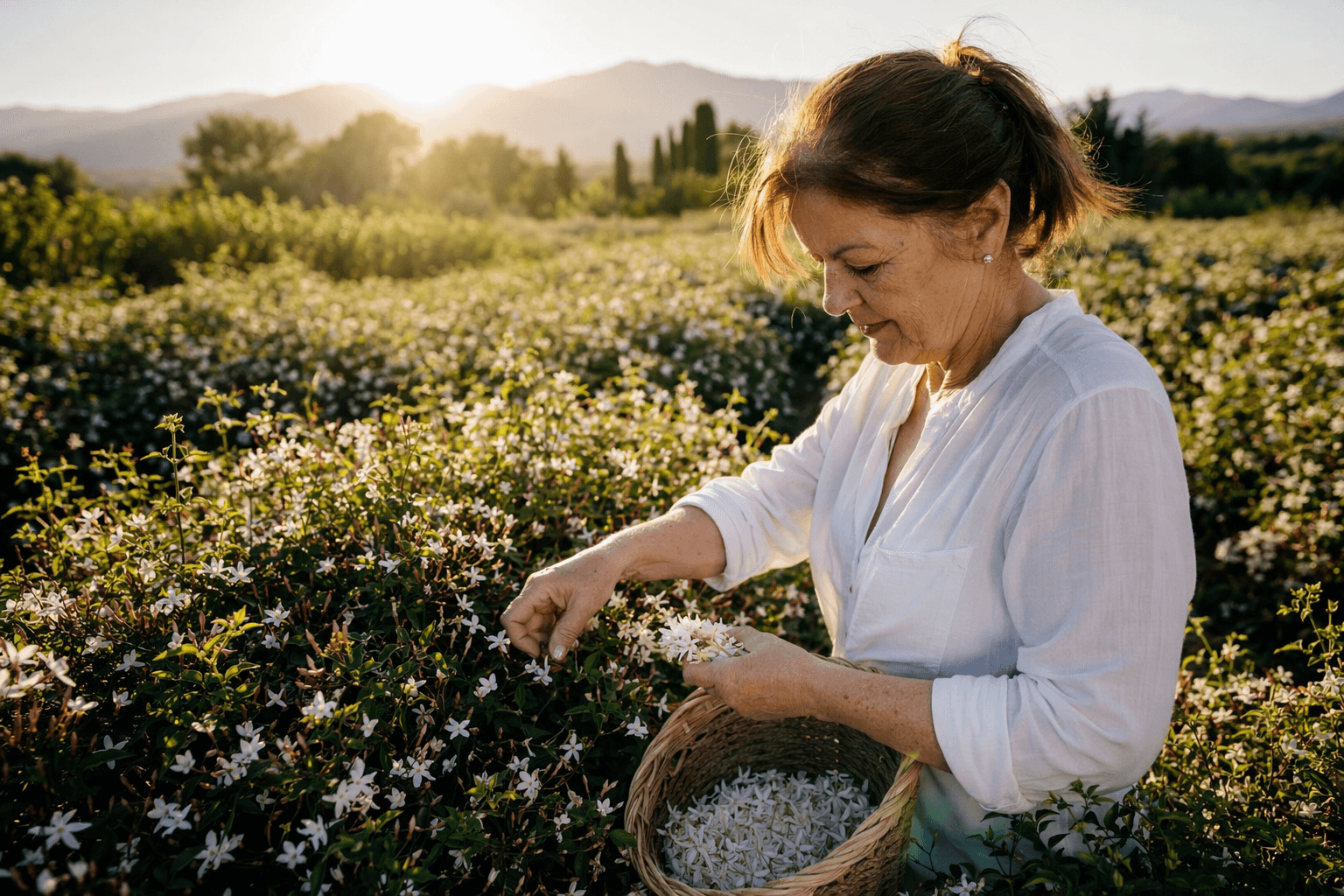
Grasse’s perfume identity begins in the fields
Grasse’s modern allure starts with jasmine, but its perfume story was built on something far less romantic: leather tanning. For centuries, the town’s sharp industrial odors gave way as tanners gradually shifted into perfumery, creating a local craft that UNESCO later recognized as a living cultural tradition in the Pays de Grasse. The result is a rare French landscape where agriculture, chemistry, and brand mythology still overlap.
UNESCO inscribed the skills related to perfume in Pays de Grasse on November 28, 2018, naming three linked practices: the cultivation of perfume plants, the knowledge and processing of natural raw materials, and the art of perfume composition. That recognition matters because it places the town’s flowers in a much larger economic frame. Grasse is not simply a picturesque hillside near the Riviera. It is a production zone whose cultural cachet now helps justify the premium pricing of some of the world’s best-known fragrances.
Why this small geography still matters
Grasse sits about 20 kilometers north of Cannes in a region that rises from roughly 100 to 1,000 meters above sea level. That elevation and terrain have helped shape the character of its flower-growing tradition, but they have also limited how far the system can scale. In an age of synthetic aroma molecules and industrial sourcing, the persistence of hand-harvested jasmine in such a compact area is striking precisely because it is inefficient by modern manufacturing standards.
That inefficiency is part of the value proposition. Luxury perfume houses rely on Grasse not just for ingredients, but for provenance, scarcity, and a sense of continuity. The town’s revival as a perfume center is tied to heritage tourism as well as the protection of a fragile agricultural tradition that cannot simply be replicated anywhere else. In market terms, the fields are doing two jobs at once: supplying raw materials and reinforcing brand narratives.
Chanel turned heritage into a strategic asset
CHANEL is central to that equation. The house launched N°5 in 1921, born from Gabrielle Chanel’s partnership with perfumer Ernest Beaux, and says it has sourced flowers from Grasse for close to a century. That long relationship is not a side note in the brand’s history. It is part of how the company presents its fragrances as both modern and rooted in a specific place.
CHANEL also says it has supported sustainable farming of jasmine and rose in Grasse since 1987. The company’s Grasse-grown ingredients now include jasmine, May rose, iris, geranium, and tuberose, a mix that shows how the local supply chain extends well beyond one emblematic flower. In products such as Huile de Jasmin and N°5 Parfum Grand Extrait, Grasse appears as both a raw-material source and a mark of distinction, with neroli, May rose, and jasmine tied directly to the region.
The economics of exclusivity
The real story behind Grasse is not nostalgia alone. It is the economics of exclusivity in a market that could, in theory, rely on synthetic alternatives. CHANEL says its Grasse jasmine is exclusive to the house and hand-picked on the day it blossoms, a labor-intensive practice that protects the flower’s properties and also tightens control over supply. That kind of harvesting is expensive, but it gives the brand a narrative of precision and freshness that mass production cannot match.
This is where heritage agriculture becomes a strategic asset. When a perfume house can point to a specific hillside, a specific crop cycle, and a specific harvesting method, it builds more than scent. It builds defensible value. The premium is not just for the fragrance itself, but for the story embedded in the supply chain, from field to bottle.
Climate pressure and land pressure are reshaping the model
The revival of Grasse’s flower fields is happening under constraints that make the tradition more fragile, not less. Land on the Côte d’Azur is valuable, and hillside agriculture competes with development pressure in a region shaped by tourism and high-end real estate. At the same time, climate risk threatens the stability of cultivation itself, making the continuity of jasmine and rose production a strategic concern for brands that depend on them.
That combination helps explain why major perfume houses have become more active in supporting local farming. The decision to keep sourcing from Grasse is not only about honoring heritage; it is also about securing access to a volatile but essential part of the luxury pipeline. As synthetic ingredients became easier to source, the value of a place like Grasse shifted upward in another way: its scarcity became part of the product.
What the revival says about luxury today
Grasse’s appeal lies in the fact that it compresses history, craftsmanship, and commercial power into a few hillside communities. UNESCO’s recognition confirms that the town’s perfume practices are more than a brand asset, yet the brands are also what keep the system economically alive. The relationship is reciprocal. Heritage gives perfume houses authenticity; perfume houses give the heritage a viable future.
That is why the jasmine fields matter far beyond the town itself. They show how luxury now depends on protecting small geographies that cannot be easily duplicated, automated, or scaled away. In Grasse, the future of perfume looks less like a factory model and more like a carefully defended landscape, where a few hand-picked flowers still carry global weight.
This article was produced by Prism’s automated news system from verified source data, official records, and press releases, then run through automated quality and moderation checks before publishing. The system is built and supervised by the people who set the standards it runs under. Read our full AI policy.
Did this article answer your question?