Guided fossil walk yields rare marine crocodile jaw on Jurassic Coast
A beachcomber who came expecting an ammonite uncovered a rare marine crocodile upper jaw, one of only about 11 ever recorded.
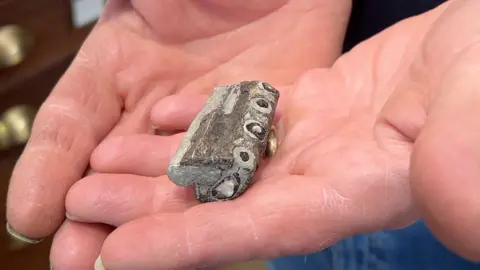
A guided fossil walk on the Jurassic Coast produced an exceptionally rare marine crocodile maxilla, an upper jaw bone, giving scientists a fresh specimen from a group known from only around 11 recorded fossils worldwide. The discovery was made on the Lyme Regis shore in Dorset and has been placed on public display at Lyme Regis Museum.
Heather Salt of Solihull, near Birmingham, found the fossil while walking with guide Casey Rich. She first thought it was a piece of wood with nails in it, then realized it was stone and showed it to Rich. She had gone to Lyme Regis hoping to find a small ammonite, but after learning how unusual the jawbone was, she donated it to the museum.
Lyme Regis Museum said preliminary identification suggests the specimen belongs to the same type of early Jurassic crocodile as Turnersuchus hingleyae, a rare marine crocodylomorph known from very few examples. Of the roughly 11 specimens ever recorded, two are held by the Natural History Museum, one is displayed at Dinosaurland Fossil Museum, and a small number remain in private collections. The museum says the new find matters because it may help researchers understand how these crocodiles hunted in the world’s earliest oceans.
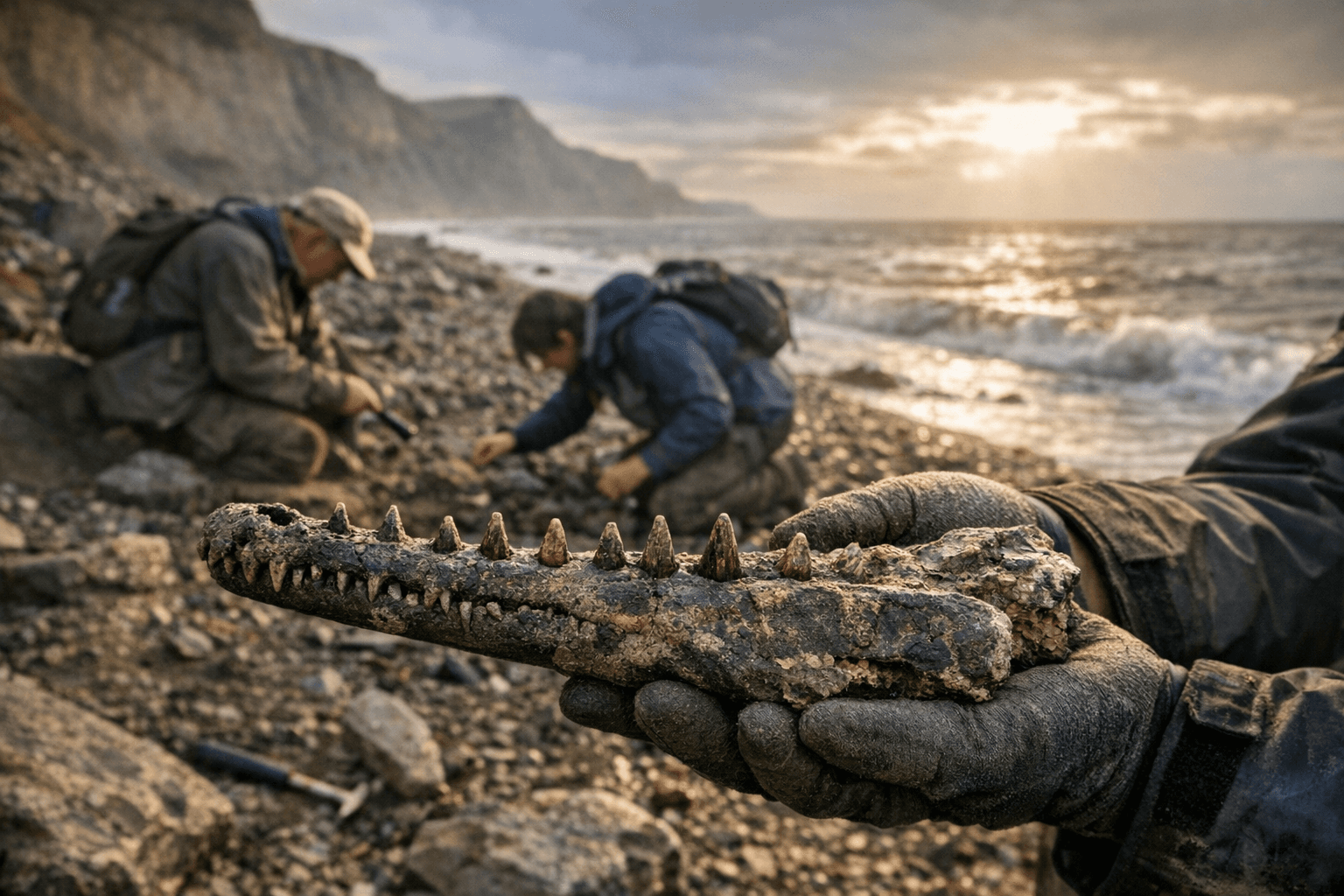
The fossil is now part of the museum’s exhibit on the Charmouth Crocodile, first discovered in 2017 in nearby Charmouth. That earlier specimen, Turnersuchus hingleyae, came from the Charmouth Mudstone Formation and was dated to about 185 million years ago in the Early Jurassic. Researchers described it as one of the oldest specimens of its type ever found, and said it helps fill a gap in the fossil record while suggesting thalattosuchians may have originated in the Triassic, about 15 million years earlier.
Lyme Regis Museum said the find reinforces the international importance of the Jurassic Coast for ongoing scientific discovery and shows that major fossils can still surface today, more than two centuries after the work of Mary Anning. For a visitor expecting a modest ammonite, the day ended with a specimen that belongs to one of the rarest branches of early marine crocodile evolution.
This article was produced by Prism’s automated news system from verified source data, official records, and press releases, then run through automated quality and moderation checks before publishing. The system is built and supervised by the people who set the standards it runs under. Read our full AI policy.
Did this article answer your question?


