Guinea Junta Chief Doumbouya Opens Wide Lead in Presidential Vote
Provisional partial results from the Dec. 28 presidential election show Guinea’s junta leader Mamady Doumbouya commanding substantial majorities in the districts released so far, often above 80 percent in parts of Conakry and other prefectures. The early tallies intensify questions about the credibility of a ballot held under military rule and will shape regional and international responses to Guinea’s transition.
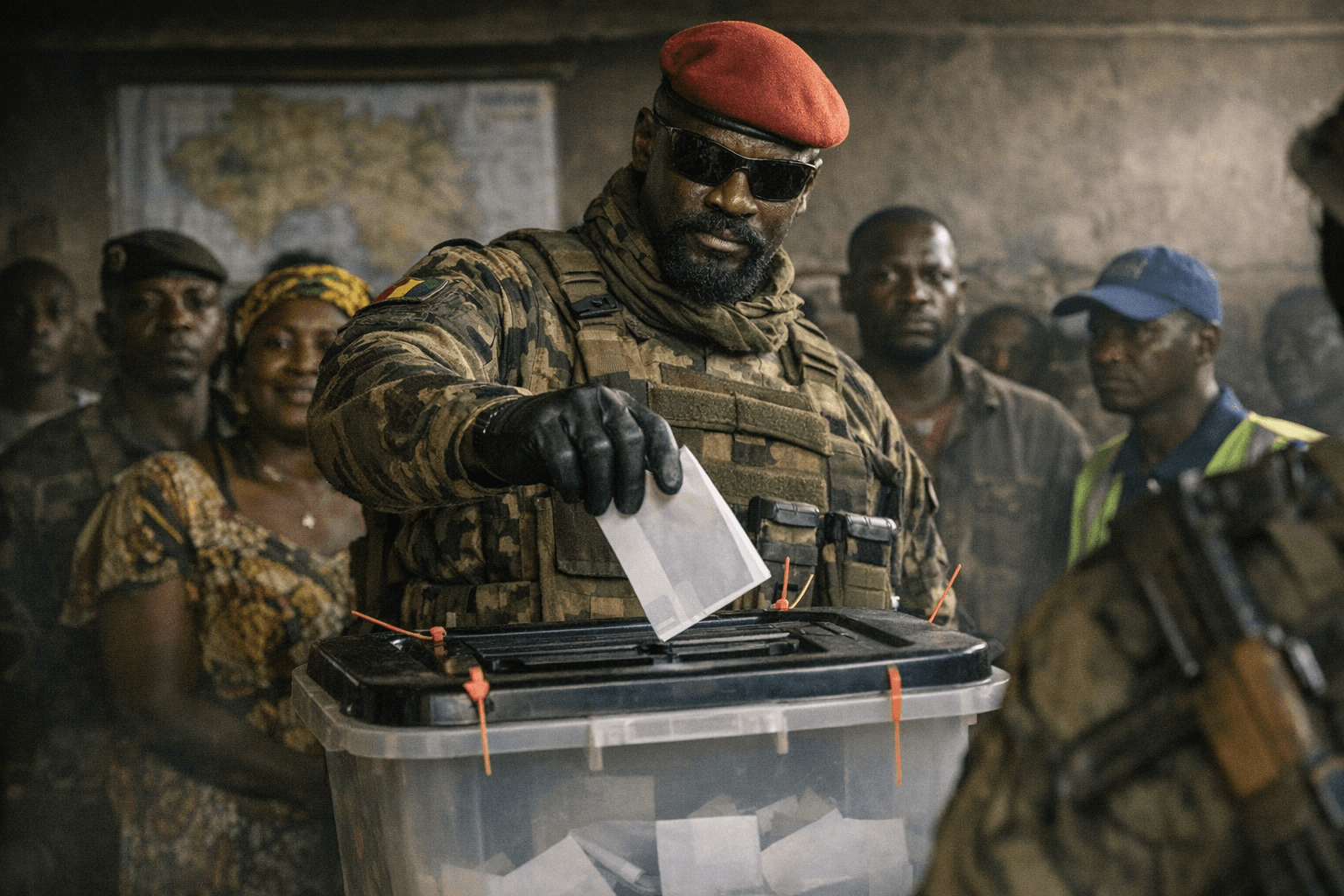
Provisional partial results from the Dec. 28 presidential election show Guinea’s junta chief Mamady Doumbouya leading by large margins in the polling districts released so far, according to tallies announced on Dec. 30. In many precincts of the capital Conakry and in several prefectures, Doumbouya is recorded at more than 80 percent of the vote in the limited returns published by local electoral authorities.
The results, partial and concentrated in areas where vote counts have been finalized, do not yet constitute a national picture. Electoral officials have warned that full tabulation across Guinea’s diverse and logistically challenging regions will take days. Still, the lopsided nature of the initial tallies is likely to shape the narrative at home and abroad about the likelihood of a decisive outcome, and whether the election will be accepted as a credible transfer of power.
Doumbouya, who led a military coup in 2021 that ousted President Alpha Condé, has presided over a transition that has been closely watched by West African neighbors, pan African bodies and international partners. His prominence in these early returns underscores the advantage that an incumbent transitional leader can hold over a fragmented and politically weakened opposition field. Observers note that an electoral environment dominated by a military-aligned administration raises difficult questions about fairness, media access and the space for dissent.
The vote also carries broader geopolitical stakes. Guinea is a major global supplier of bauxite and a focal point for foreign investment in mining. The direction of governance after the election will influence relations with key partners and investors, many of whom have been cautious since the coup. Regional organizations that suspended Guinea after the 2021 seizure of power have consistently linked normalization to a credible and inclusive return to constitutional order. The scale of Doumbouya’s early advantage will test the willingness of neighbors and international actors to recognize results issued under the current transitional framework.
Domestically, the provisional numbers are likely to alter political calculations for opposition figures and civil society groups that have questioned the conditions of the contest. If the final results mirror the early tallies, the immediate consequence will be a consolidation of authority by a leader who has tightened control over state institutions since assuming power. If discrepancies emerge as more precincts report, disputes are likely, and the credibility of the electoral commission’s processes will come under scrutiny.
Electoral authorities say further results will be released as counting continues, and the national picture will only emerge when rural and remote prefectures report. For now, the partial returns put Doumbouya in a commanding position and deepen the diplomatic dilemma facing regional and international actors who must decide whether to endorse an outcome produced under military oversight or to press for additional transparency and guarantees for political pluralism. The coming days will determine whether these early margins translate into an accepted mandate or prompt renewed contestation over Guinea’s political future.
This article was produced by Prism’s automated news system from verified source data, official records, and press releases, then run through automated quality and moderation checks before publishing. The system is built and supervised by the people who set the standards it runs under. Read our full AI policy.
Did this article answer your question?


