Gul Plaza blaze deepens crisis in central Karachi shopping district
Search teams continue recovery at Gul Plaza after a deadly blaze in central Karachi; officials report a rising death toll and many still missing.
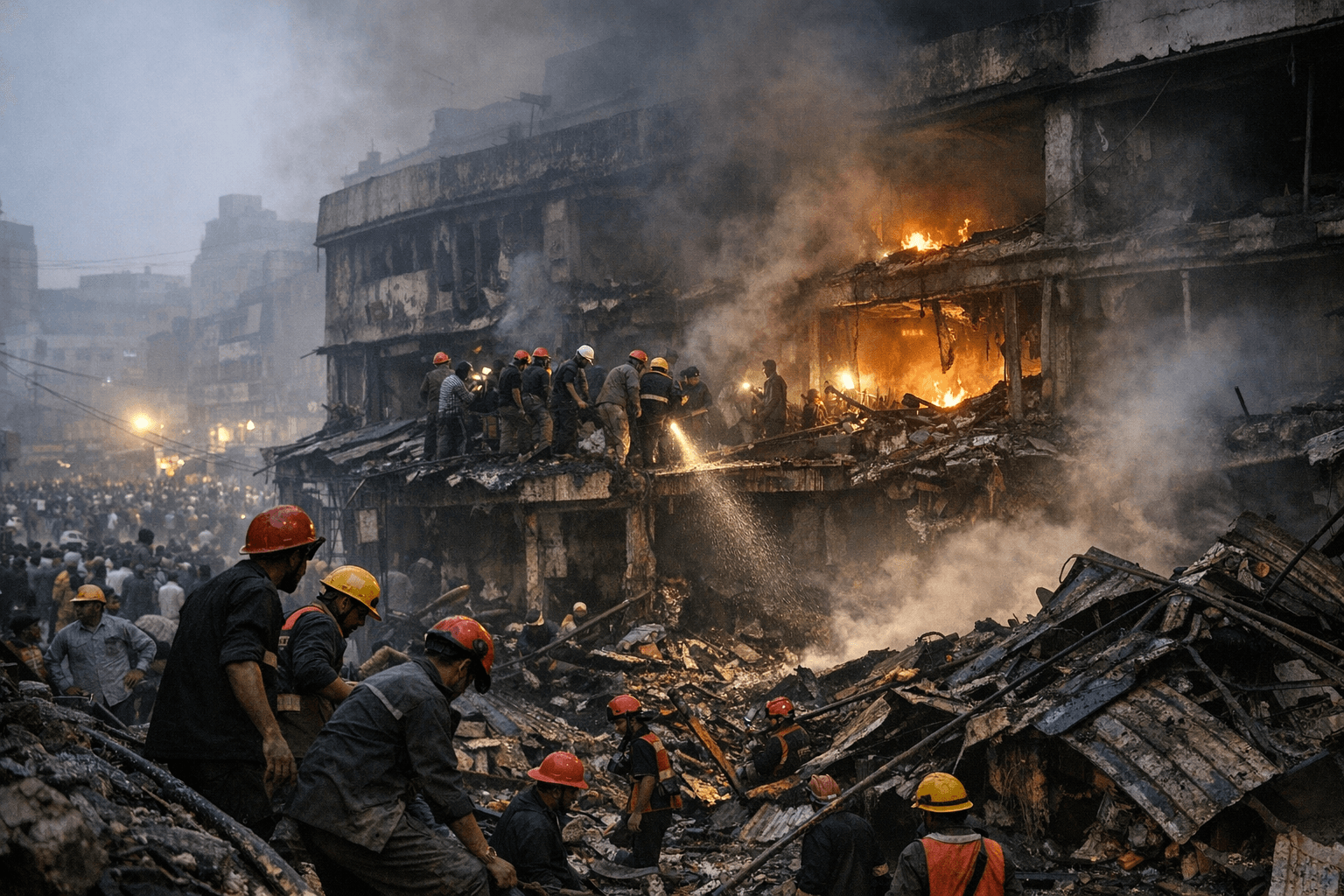
Rescue teams continued recovery operations at Gul Plaza in central Karachi on Monday, a day after a devastating fire ripped through multiple floors of the multi-storey shopping centre. The blaze, which began on January 25, destroyed retail outlets and offices in the heart of one of Pakistan's busiest commercial areas and left authorities grappling with a mounting death toll and large numbers unaccounted for.
Emergency workers spent a second day combing through charred floors and corridors, carrying victims from the wreckage and searching for survivors amid unstable structures and lingering smoke. Local hospitals received people treated for burns and smoke inhalation, while families gathered near the scene seeking news of relatives. Officials warned that recovery efforts could take days as crews work cautiously to avoid triggering further collapses in the damaged building.
The scale of the disaster has quickly highlighted deep anxieties about building safety and emergency preparedness in Karachi, Pakistan's largest city. Gul Plaza is a popular indoor market and office hub serving thousands daily; its destruction has disrupted livelihoods for traders, employees, and suppliers who depend on the centre for income. Business owners and residents in the surrounding neighbourhood face immediate economic shock as cleanup and investigations proceed.
Karachi's municipal and provincial services mobilised firefighting units and rescue teams, but the catastrophe is likely to prompt scrutiny of fire prevention measures, enforcement of safety codes, and inspection regimes that govern older commercial blocks. Observers note that multi-storey markets and mixed-use buildings in South Asian cities often present acute challenges for firefighters because of crowded interiors, narrow access, and complex wiring or storage arrangements that can accelerate fires.
The provincial government has signalled an intent to investigate the causes of the blaze and to coordinate relief for victims, though details of any probe are still emerging. Search operations remained the priority as authorities sought to account for people reported missing and to recover bodies for identification. The emotional toll was visible around the site, with relatives and neighbours praying and pleading for news amid an atmosphere of shock and grief.
Beyond immediate rescue and relief, the fire at Gul Plaza raises broader questions about urban governance and the balance between economic activity and safety regulation in rapidly growing cities. Karachi's dense commercial districts are integral to Pakistan's economy, and disasters of this kind can quickly reverberate through supply chains, small businesses, and household incomes. The incident may renew calls for stricter inspections, better emergency access, and investment in firefighting capacity across the city.
International aid agencies and diaspora communities often play a role after such calamities, providing medical assistance, temporary shelter, and financial support; who will lead longer-term recovery for the affected families remains to be seen. For now, the focus remains on the painstaking work of search and recovery at Gul Plaza and on the urgent needs of those who lost loved ones, livelihoods, and the everyday security of life in a busy urban marketplace.
This article was produced by Prism’s automated news system from verified source data, official records, and press releases, then run through automated quality and moderation checks before publishing. The system is built and supervised by the people who set the standards it runs under. Read our full AI policy.
Did this article answer your question?


