Harvard economist says math could help end gerrymandering fights
Roland Fryer says math could expose rigged districts, but courts have already balked. The fight now is whether judges and lawmakers will accept the numbers.

Harvard economist Roland Fryer is betting that numbers can do what politics has not: put a stop to gerrymandering fights that keep spilling into court and back into state capitols. His pitch lands at a moment when redistricting is once again shaping national power, with mid-decade map fights already tied to the Supreme Court’s Louisiana case and to new efforts in southern states.
The basic idea is simple in plain English. The efficiency gap asks which party wastes more votes. A vote is wasted if it goes to a losing candidate or if it goes beyond what a winner needed to win. Under that framework, a map can be tested for whether one side’s voters are being packed into a few districts or cracked across many districts so their votes count less often. Nicholas Stephanopoulos and Eric McGhee developed the metric, and Harvard Law School materials say they proposed presumptive constitutional thresholds of two seats for congressional plans and eight percent for state house plans.
That is not the only mathematical route. Harvard researchers have also described an algorithmic approach from 2022 that generates thousands of nonpartisan alternatives and compares an enacted map against them. In theory, that kind of simulation can show whether a legislature’s plan is an outlier or just one acceptable version among many. In practice, it still depends on who agrees to treat the numbers as legitimate evidence.
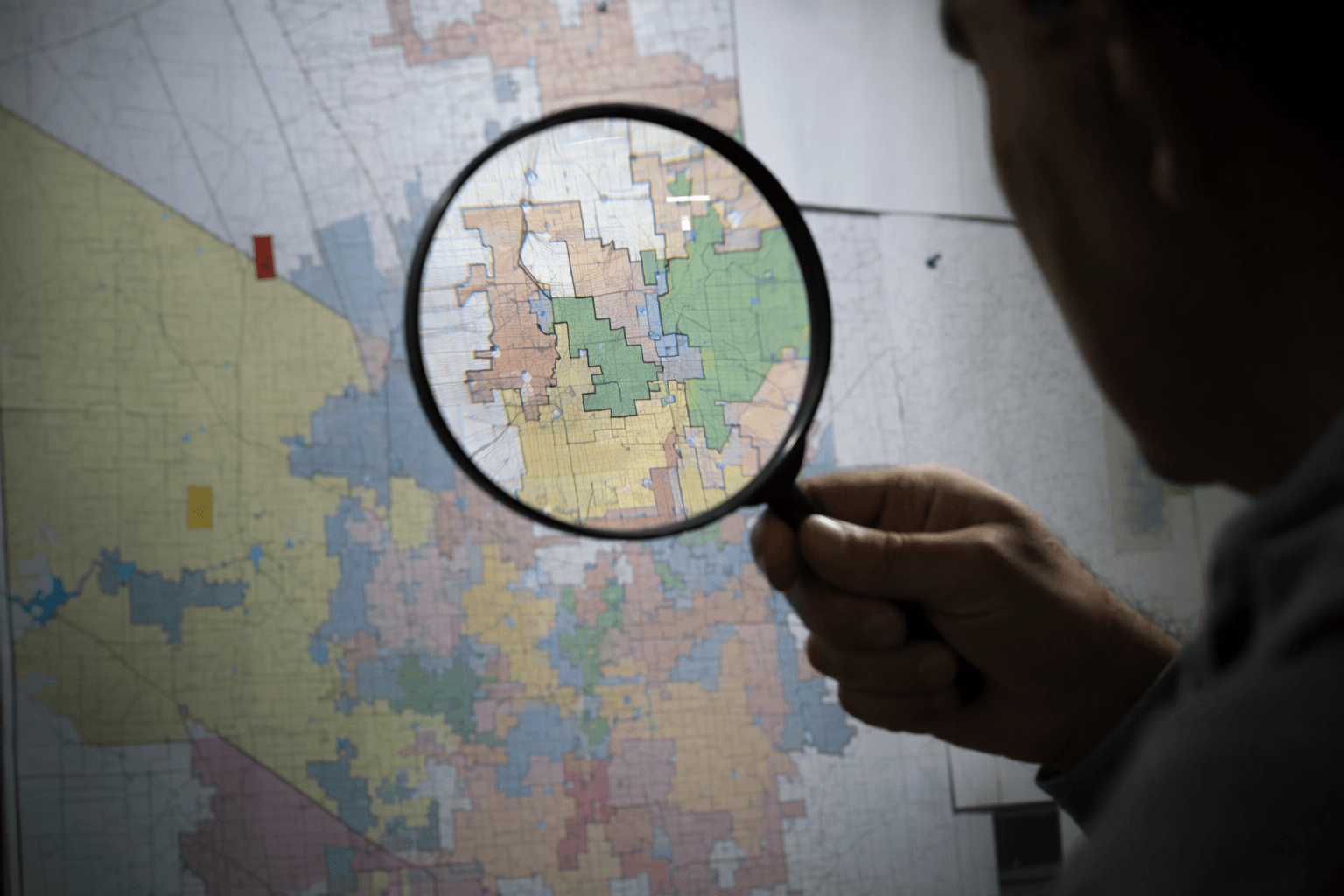
The Supreme Court has already shown how hard that is. In Gill v. Whitford, justices considered Wisconsin’s map and the efficiency gap, but the Court vacated the ruling in 2018 on standing grounds. A year later, in Rucho v. Common Cause, the Court said partisan gerrymandering claims present political questions beyond the reach of federal courts. That left reformers with a basic problem: a metric can be precise, but precision does not matter much if the forum rejects the claim.
The stakes remain national. CBS News reported on May 1, 2026, that the Louisiana map decision could affect several states, and that Republican officials in some southern states were already moving toward mid-decade redraws. CBS News also reported on April 22, 2026, that Virginia voters approved a new congressional map projecting Democrats an advantage in 10 of 11 House seats. With control of the U.S. House potentially hanging on a small number of districts, the real test is not whether math can describe unfairness. It is whether judges, lawmakers and mapmakers will let math decide it.
This article was produced by Prism’s automated news system from verified source data, official records, and press releases, then run through automated quality and moderation checks before publishing. The system is built and supervised by the people who set the standards it runs under. Read our full AI policy.
Did this article answer your question?

