Health Experts Warn Ice Baths Could Constrict Uterine Blood Flow, Harm Fertility
Emily says regular ice baths improved her recovery, but health experts warn cold plunges may constrict uterine blood flow and disrupt hormones.
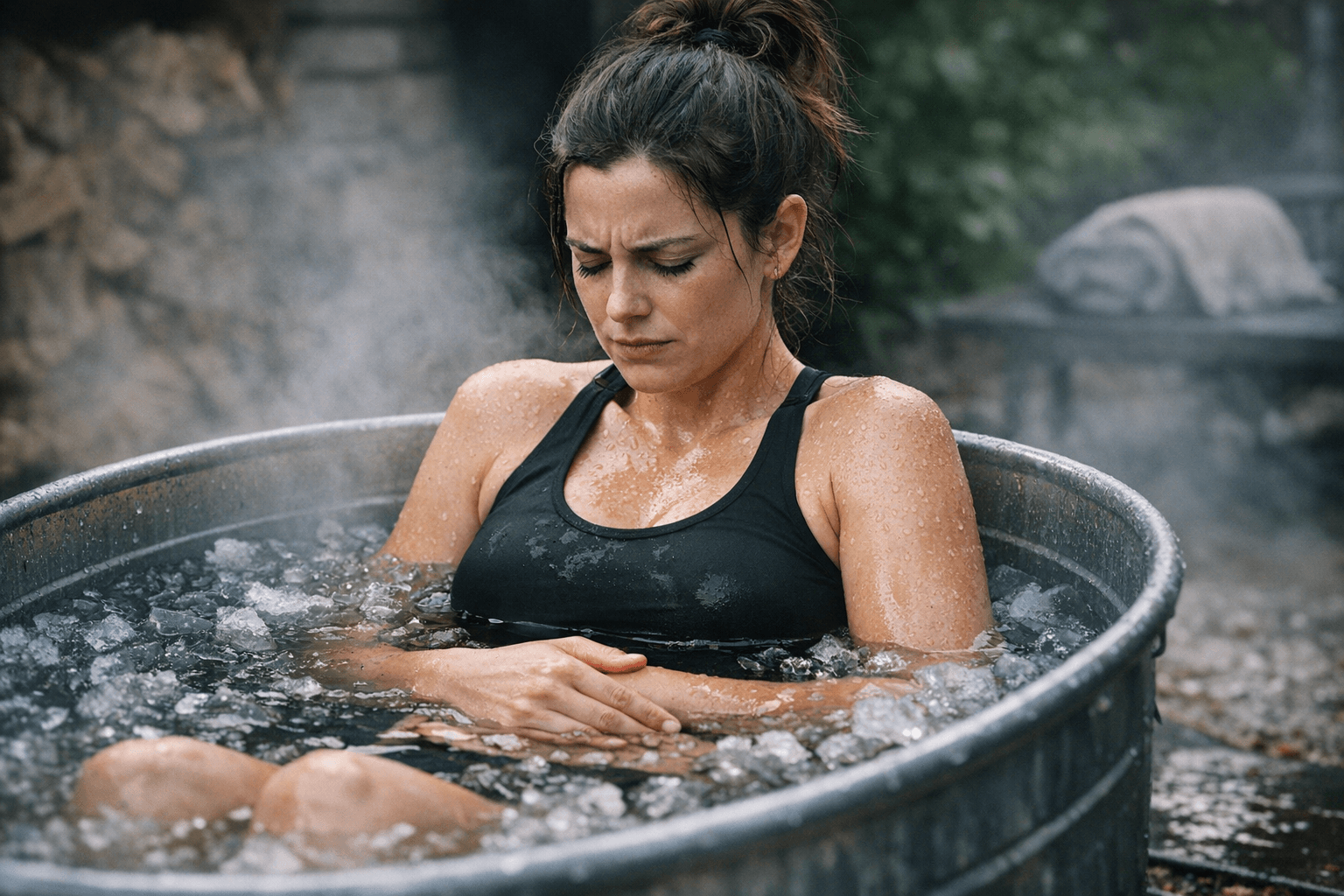
Emily, who told WomensHealthMag she took regular plunges "before and after exercise," said she felt "reduced stress, increased energy, lower inflammation and better recovery." That personal payoff sits beside a stark warning quoted in an original report: "Health experts and authors caution women to avoid cold plunges, claiming they constrict blood flow to the uterus, mimic life-threatening stress, and harm fertility and hormones. They advocate warm baths to promote circulation and parasympathetic rest instead."
The cultural context for those warnings is longstanding. Wildwholistic notes that across traditional medical systems "the wisdom is surprisingly unified: Cold weakens, while warmth nourishes the female reproductive system," and points out modern women often use ice baths during periods that those systems would caution against - the week before a period, menstruation, postpartum and times of fertility struggle.
Physiological arguments behind the cautions are described as theoretical but specific. Wildwholistic writes that "repeated exposure to freezing temperatures can significantly increase cortisol and adrenaline levels. In theory, those stress hormones could suppress progesterone (the 'calming' hormone) and worsen PMS or menstrual symptoms, although direct evidence is scarce." That line frames a possible mechanism linking repeated intense cold to cycle disruption while also acknowledging the evidentiary gap.
Clinical and anecdotal voices complicate a simple ban. Dr Stacy told WomensHealthMag that "Women on the other hand tend to vasodilate after exercise... Cold water immersion for women can help speed up vasoconstriction after hard exertion, to get blood back centrally helping to increase blood pressure and circulation into the muscles." Emma added that "physiological differences between genders may influence individual responses to cold exposure... Women are more sensitive to cold extremities," which could mean women need less extreme exposure to gain recovery benefits.
What human studies exist are limited and inconsistent. Wildwholistic summarizes a review of winter swimmers that "found no consistent changes in reproductive hormones like FSH or LH, though one small study did find prolactin levels went up after a season of cold swimming." By contrast, animal work summarized by Wildwholistic reports that "when female rodents were kept in cold environments over long periods, their cycles became irregular, hormone production shifted, and inflammation in the ovaries and uterus increased." Foodbabyco concludes the balance this way: "Cold plunges can feel amazing and might nudge metabolism and stress hormones in the short term... but there’s no solid evidence they boost testosterone, sperm quality, or egg health. When it comes to ice baths and fertility it’s unlikely they cause harm."
Practical guidance in the sources is concrete. Wildwholistic lists explicit times to avoid cold - "late luteal phase (the week before your period), menstruation, postpartum period, times of illness, adrenal fatigue, or active fertility struggles" - and recommends beginners "begin with cool to moderately cold water (around 15-18°C / 59-64°F)," noting that "most commercial ice baths used in studies typically range from 10°C (50°F) to 0°C (32°F)" and that "women don't need extreme cold to see benefits." Foodbabyco echoes a separate thermal risk: "Early pregnancy overheating (from fever, hot tubs or saunas) has been linked with a higher risk of neural tube defects in babies. That’s why most pregnancy guidelines advise avoiding saunas and hot tubs once you’re trying or in the first trimester," and adds practical advice to "skip the sauna and hot pools while TTC."
The bottom line across these sources is uncertainty and a split between tradition, theory and limited human data. Wildwholistic cautions "For most healthy individuals, a brief cold shower or polar dip is unlikely to cause harm," while Foodbabyco notes "So while an occasional ice bath probably won’t tank your hormones, there’s no good evidence that it will reliably raise testosterone either." Until targeted human studies measure uterine perfusion, cortisol-progesterone dynamics and fertility outcomes after controlled cold exposure, women who are trying to conceive, are pregnant, postpartum, or notice worsened period or mood symptoms are advised by these sources to favor milder, shorter exposures or warm baths.
Know something we missed? Have a correction or additional information?
Submit a Tip