Heavy rains trigger deadly landslide in West Bandung, at least seven dead
A predawn landslide in Pasirlangu village killed at least seven people and left dozens missing, raising urgent questions about disaster preparedness and recovery costs.
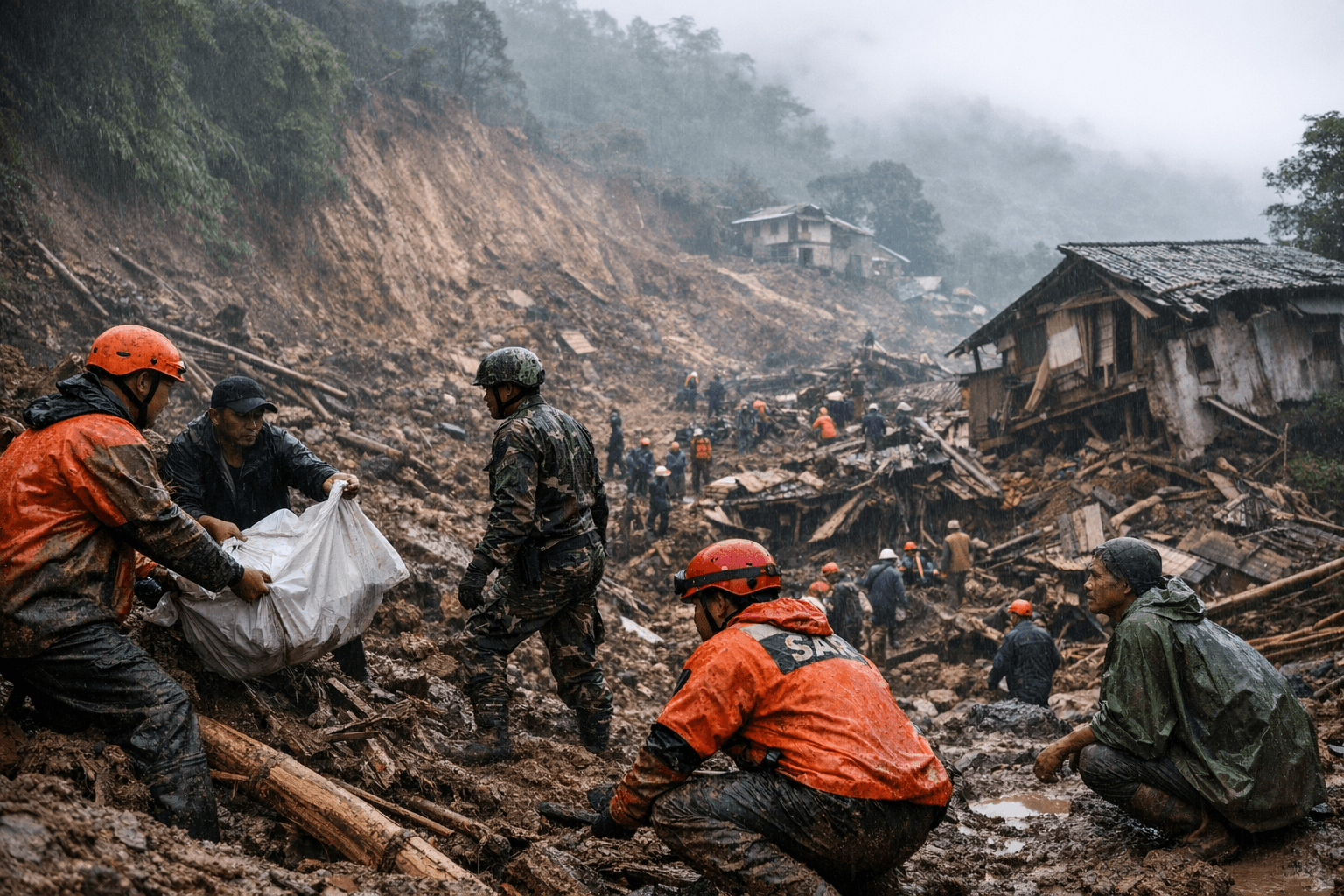
A predawn landslide buried part of Pasirlangu village in West Bandung regency, West Java province, after intense overnight rains, killing at least seven people and leaving dozens unaccounted for, officials said. The disaster on January 24 flattened homes and choked access roads as search-and-rescue teams raced to find survivors in unstable mud and debris.
Indonesia’s National Disaster Mitigation Agency (BNPB) reported the fatalities and said teams were continuing operations to locate the missing. Local authorities described chaotic scenes as residents and emergency crews dug through earth and timber to reach buried houses. Communications were intermittent, complicating efforts to compile a full tally of victims and damage.
The landslide struck a hilly, densely settled area where slopes meet smallholder farms and cluster housing. Such peri-urban landscapes are particularly vulnerable to runoff from heavy storms, and residents often lack formal protections such as retaining walls or engineered drainage. The timing during the predawn hours contributed to high casualty risk, as many people were asleep and unable to evacuate.
The human toll is only the first-order consequence. The immediate economic impact will fall on households that lost homes, crops and productive assets, and on local governments that must finance emergency shelter, medical care and debris removal. Reconstruction needs will include repairing damaged roads and restoring utilities, tasks that can strain regency budgets already stretched by routine service demands. For agricultural families in West Bandung, the loss of planted areas and livestock at a critical time in the growing season could translate into months of income shortfall.
More broadly, the event underscores enduring vulnerabilities in Indonesia’s disaster management and land-use systems. Recurrent heavy rainfall events have exposed settlements on unstable slopes across Java and other islands, creating a pattern of acute shocks that require both short-term relief funding and longer-term investment in risk reduction. Climate scientists and meteorologists have warned that warming seas and a warming atmosphere can increase the intensity and variability of precipitation in the region, raising the frequency of extreme downpours that trigger landslides and floods.
Policy responses will test the capacity of national and local authorities to combine emergency response with prevention. In the immediate term, authorities must prioritize search-and-rescue capacity, accurate accounting of the missing, and the rapid provision of temporary housing and livelihoods support. Over the medium term, effective measures would include slope stabilization, improved drainage, stricter settlement controls for high-risk areas and improved early-warning systems tied to evacuation plans.
As rescue efforts continued into the next day, local officials appealed for additional resources to sustain operations and to care for displaced residents. The combination of intense rainfall, exposed slopes and settlement patterns in Pasirlangu reflects a wider challenge for Indonesia: reducing the human and economic costs of frequent climate and weather-related disasters without undermining the livelihoods of vulnerable rural and peri-urban populations.
This article was produced by Prism’s automated news system from verified source data, official records, and press releases, then run through automated quality and moderation checks before publishing. The system is built and supervised by the people who set the standards it runs under. Read our full AI policy.
Did this article answer your question?